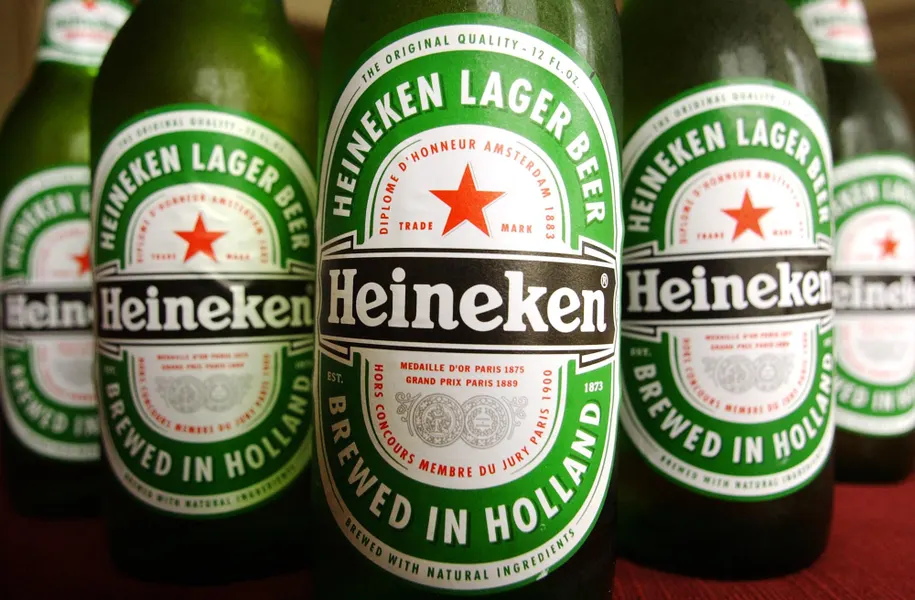
In a victory years in the making, six South African workers who were dismissed after a peaceful protest outside Heineken’s headquarters have finally won their case against the global brewing giant and its labour broker. The battle—which has lasted over seven years—has culminated in a legal settlement that not only compensates the workers but signals a powerful statement against exploitative labour practices.
The six workers, formerly employed by labour brokers at Heineken’s Sedibeng plant, were dismissed in 2018 after being accused of participating in an unprotected strike. Their dismissal came after a peaceful demonstration outside Heineken’s head office in Sandton, held in response to the company’s claim—during a Commission for Conciliation, Mediation and Arbitration (CCMA) hearing—that it did not know who the workers were.
A Battle Born in Protest
The confrontation dates back to October 22, 2018, when over 400 workers employed through labour brokers were attending a CCMA hearing related to Section 198 of the Labour Relations Act. During the session, Heineken reportedly denied knowledge of the workers’ identities.
In a bold and symbolic move, the workers took two taxis to Heineken’s Sandton office to “introduce” themselves, only to be met with silence. After management refused to engage, the group held a peaceful protest outside the premises. Not long after, labour broker Imperial dismissed only the protest leaders, alleging that they had taken part in an unprotected strike.
The six dismissed workers referred the case to the CCMA, which eventually passed it on to the National Bargaining Council for the Road Freight and Logistics Industry. However, Heineken and its labour brokers—first Imperial, then Liquor Runner—fought the case for years, delaying justice.
A Legal U-Turn and Settlement
After years of stalling, a dramatic twist came just as the case was about to proceed to trial in the Labour Court. Liquor Runner, the current labour broker, abruptly reversed its position and conceded that no unprotected strike had taken place. The concession not only exposed the weakness of their case but opened the door to potential reinstatement of the workers.
Rather than risk an adverse ruling, Liquor Runner opted to settle. According to the Simunye Workers Forum (SWF), Centre for Applied Legal Studies (CALS), and Lawyers for Human Rights (LHR), the settlement exceeded the maximum compensation amount that the Bargaining Council could have awarded had it ruled in favour of the workers.
On Friday, the Labour Court officially made the settlement an order of court.
A Hard-Earned Victory
In a joint statement, the CWAO (Casual Workers Advice Office) and LHR applauded the workers’ unwavering commitment:
“We salute the courage and resilience of these workers, who stood firm in the face of years of delay and denial, and who never wavered in their struggle against labour broking at Heineken.”
For the workers, the victory is deeply personal. Gladys Thaane, one of the dismissed leaders, expressed relief at the outcome:
“I’m glad that finally there is a settlement. At least we can restart our lives.”
Labour Broking Under Fire
This legal breakthrough follows another key moment in 2023, when the CCMA issued an award in the original Section 198 case from 2018. That award found that Imperial was indeed acting as a labour broker at Heineken. Although Heineken and Imperial have taken that decision on review at the Labour Court, the ruling remains a powerful precedent for other workers entangled in similar disputes.
The use of labour brokers—third-party agencies who supply workers to companies—has long been a contentious issue in South Africa. Critics argue that it allows big corporations to shirk their responsibilities to workers, while workers are left with little job security and few rights. The Heineken case has become emblematic of these struggles, shining a spotlight on the power imbalances inherent in outsourced labour.
The Bigger Picture
While the court victory marks the end of one chapter, the broader fight against labour broking in South Africa is far from over. Legal experts and workers’ rights activists hope this outcome will embolden other workers to challenge similar injustices.
It’s a rare moment of triumph in a labour landscape where cases often drag on for years and few reach this kind of conclusion. But for six former Heineken workers, the wait—long as it was—has finally paid off.




![A worker checks labelling of bottles of beer at the production line of Dutch brewer Heineken factory on June 7, 2011 in Schiltigheim, eastern France, during an official visit announcing the group's goals for sustainable development, by reducing the amount of glass in some beer bottles' production, and lowering by 20 percent the energy needed at its Alsacian factory. [Photo by PATRICK HERTZOG/AFP via Getty Images]](https://myvirgo.co.za/wp-content/uploads/2026/02/heineken-plant-330x220.jpeg)