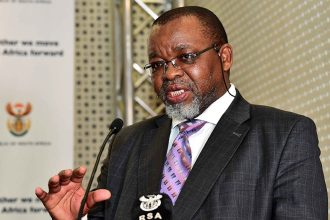
South Africa is actively engaging Zambia and Zimbabwe on a proposal to run a transmission line through their territories to tap into the massive Grand Inga Hydropower Project in the Democratic Republic of Congo (DRC), Minister of Mineral Resources and Energy Gwede Mantashe confirmed on Tuesday.
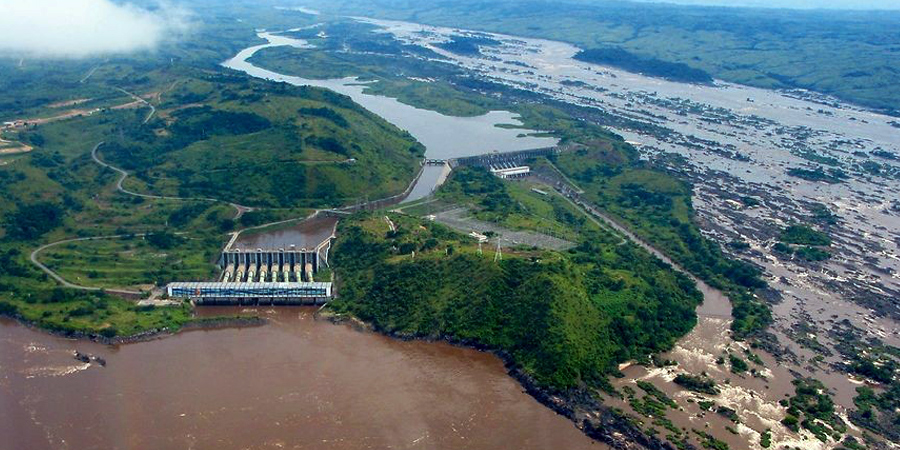
Responding to questions from Parliament’s Portfolio Committee on Minerals and Petroleum Resources, Mantashe said while South Africa is not managing the Grand Inga project directly, it remains committed to securing a portion of the energy output—specifically 2,500 megawatts (MW).
“The Grand Inga project is not ours,” Mantashe clarified. “It’s a DRC project, given to the Spanish and Chinese. We have the right to buy equity, but haven’t done so. We are only off-takers in this case.”
Despite South Africa’s limited jurisdiction over the project, the country has made energy planning assumptions that include importing 2,500 MW by 2030, with the potential to double that figure to 5,000 MW as demand grows.
Transmission Talks Underway
According to Mantashe, early-stage discussions with Zambia and Zimbabwe are exploring the feasibility of constructing a high-voltage transmission line to carry electricity from the Congo River down to South Africa. The plan would see the line traverse multiple countries—potentially including Angola, Namibia, and Botswana—to reach Gauteng, South Africa’s economic heartland.
“Electricity is not loaded into trucks; it’s transmitted through lines that cross borders,” said Mantashe. “The Grand Inga plan includes a route through at least two countries, and discussions with Zimbabwe and Zambia are ongoing. So, yes, it is possible.”
Political Pushback and Calls for Clarity
However, not all MPs were convinced. MKP MP Crown Prince Adil Nchabaleng challenged Mantashe’s optimism, questioning whether South Africa could realistically rely on a project it does not control.
“You cannot power South Africa from the Grand Inga project,” Nchabaleng argued, pressing for clarity on whether South Africa was exploring a resale concession or any form of energy investment partnership tied to the 2,500 MW.
Mantashe stood firm, reiterating the feasibility of importing energy through regional collaboration—even without ownership of the dam.
The Grand Vision: Continental Energy Grid
The Grand Inga Hydropower Project, one of the world’s most ambitious clean energy initiatives, is expected to generate tens of thousands of megawatts from the Congo River. With Inga 3 as the initial phase, South Africa remains a key customer, hoping to supplement its unreliable power grid with imported hydroelectric energy.
The long-term vision for Grand Inga extends beyond South Africa, with the potential to power much of sub-Saharan Africa and create an integrated continental power pool.
Agreements between the DRC and South Africa have already been signed, and project backers are in the process of finalizing legal, logistical, and financial arrangements to move the project forward.
New Energy Focus: Petroleum Gets Spotlight
Separately, Minister Mantashe also addressed concerns about the restructuring of his department and the creation of the South African National Petroleum Corporation (SANPC). He noted that while the move may appear controversial, it gives government the ability to prioritize petroleum exploration and development—a sector still responsible for over 80% of the world’s energy.
“Petroleum is too important to be sidelined by the renewables agenda,” Mantashe said, suggesting that the new structure will allow for a more balanced national energy mix.