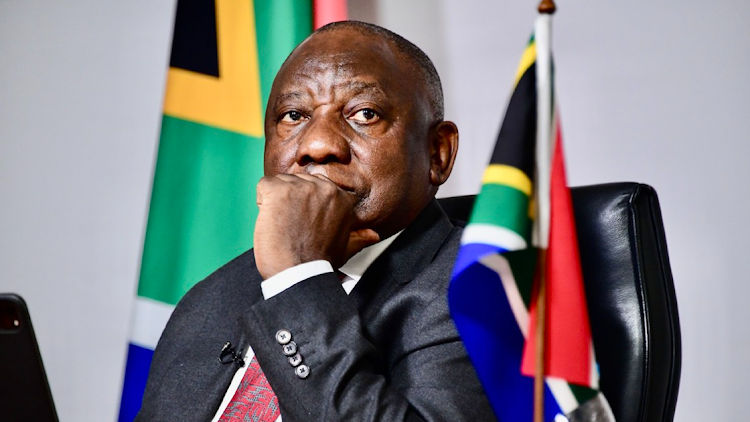
South Africa’s push for cleaner governance has taken a significant turn, with 24 officials in President Cyril Ramaphosa’s Cabinet flagged for suspected undeclared income or concealed assets.
- Presidency Confirms Ongoing Investigations
- Capacity Constraints Force Government to Seek External Help
- Wider Probe Reveals 117 Officials With Financial Irregularities
- Government Tightens Accountability Measures
- Lifestyle Audits Expand Across Government Structures
- Analysis: A Critical Test of Political Will
- What Happens Next?
The findings form part of ongoing lifestyle audits aimed at strengthening accountability and rooting out corruption within the executive.
While the process is still underway, the early results suggest potential gaps in financial disclosures at the highest levels of government.
Presidency Confirms Ongoing Investigations
Responding to questions in Parliament from Athol Trollip, President Ramaphosa confirmed that all members of the executive had consented to the audits.
The process is being overseen by Phindile Baleni, who is leading the initiative as part of broader efforts to improve transparency and governance.
“The lifestyle audit process is still ongoing,” Ramaphosa stated, indicating that further findings are expected.
Capacity Constraints Force Government to Seek External Help
Public Service and Administration Minister Mzamo Buthelezi provided additional details, confirming that the flagged cases have been referred for internal investigation.
However, he acknowledged that the Presidency currently lacks the capacity to fully investigate all cases efficiently.
As a result, government plans are underway to appoint an external service provider to assist in handling the investigations.
Where evidence of criminal conduct emerges, cases will be escalated to law enforcement authorities.
Wider Probe Reveals 117 Officials With Financial Irregularities
Beyond the Cabinet, the scope of the audits is far broader.
Buthelezi revealed that 117 public officials across departments have been flagged for potential financial disclosure anomalies.
The outcomes so far present a mixed picture:
- 22 cases remain under active investigation
- 24 are pending external investigation
- 7 were cleared of wrongdoing
- 53 resulted in disciplinary action, including warnings
- 11 cases were closed after officials exited their positions
Notably, none of the completed investigations have yet been referred for criminal prosecution.
Government Tightens Accountability Measures
In a move to strengthen oversight, government is rolling out a Central Register for Discipline, expected to become operational this month.
This system will require:
- National, provincial, and municipal departments to record disciplinary outcomes
- Employers to consult the register before making appointments
The aim is to prevent officials implicated in misconduct from moving between departments to avoid accountability.
Lifestyle Audits Expand Across Government Structures
Currently, lifestyle audits are primarily enforced at national and provincial levels, where senior officials and executives are required to undergo financial scrutiny.
However, the policy is not yet mandatory in local government.
The Department of Public Service and Administration is working alongside cooperative governance bodies to develop a framework that will extend lifestyle audits across all three spheres of government.
Analysis: A Critical Test of Political Will
The flagging of Cabinet officials marks a critical moment in South Africa’s anti-corruption efforts.
While lifestyle audits have long been proposed as a tool to detect unexplained wealth, their effectiveness depends on:
- Swift and transparent investigations
- Consequences for misconduct
- Political will to act, even at senior levels
The decision to bring in external investigators may improve credibility, but it also highlights institutional capacity challenges within government.
What Happens Next?
Key developments to watch include:
- The appointment of external investigators
- The outcome of the 24 flagged Cabinet cases
- Potential referrals to law enforcement
- Implementation of the Central Register for Discipline
For South Africans, the stakes are high. The success of these audits could signal a turning point in restoring public trust—or reinforce concerns about accountability gaps in government.