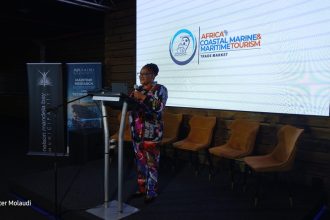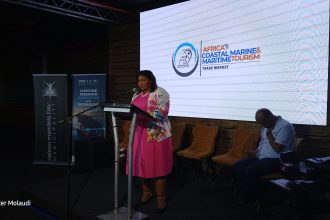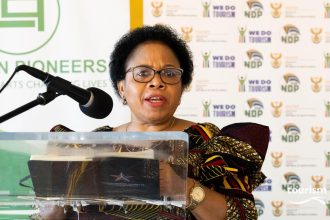
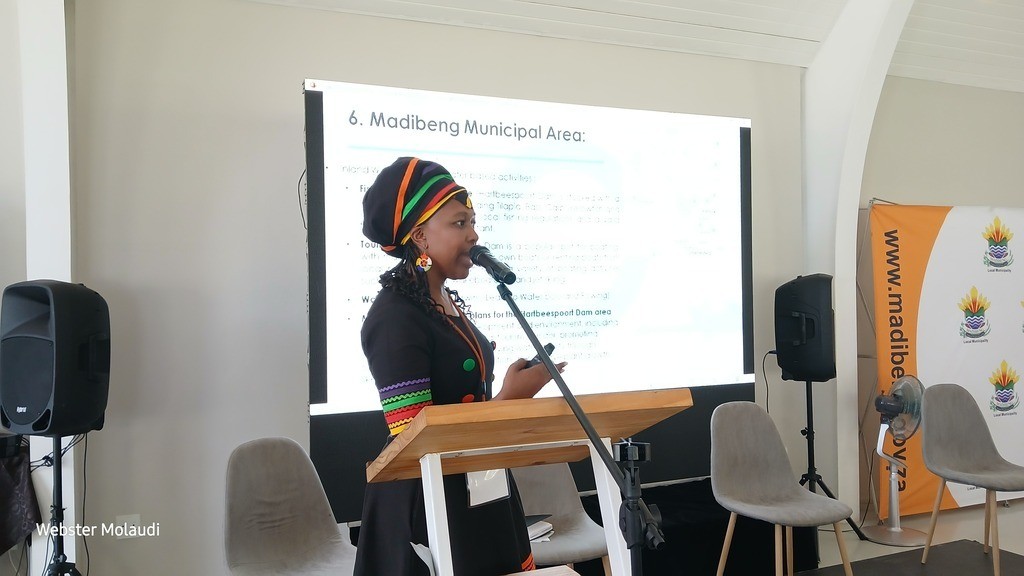
South Africa’s maritime future took centre stage at the Coastal & Waterways Tourism Investment Summit, where Dr. Nomtha Hadi, Director of Research at the South African International Maritime Institute (SAIMI), reaffirmed the enduring importance of Operation Phakisa. Far from being obsolete, she stressed, the initiative has been “reimagined” to align with emerging opportunities in the Blue Economy.
Operation Phakisa: Still Relevant, Now Reimagined
Responding to concerns raised during the summit, Dr. Hadi was clear: “Operation Phakisa is not dead — it has been reimagined.”
She explained that the initiative continues to prioritise areas such as aquaculture, which not only stimulates local economies but also strengthens food security and renewable energy value chains.
“Here in Hartbeespoort, we already see successful aquaculture farmers,” Dr. Hadi noted. “These inland successes prove that aquaculture is a cornerstone of the broader ocean economy.”
Tourism, Manufacturing, and Inclusive Growth
Drawing attention to the interconnectedness of the ocean economy, Dr. Hadi highlighted the ripple effect of coastal and marine tourism. Tourists, she said, often extend their journeys to nearby attractions, generating wider regional benefits.
She pointed to the Western Cape’s thriving boat manufacturing sector as a model of success, while noting that additional opportunities exist to expand production and foster inclusive growth across both coastal and inland regions.
Education, Training, and Skills Development
For Dr. Hadi, building human capital remains central to South Africa’s maritime ambitions. She outlined how SAIMI collaborates with traditional leaders, students, and educational institutions to expand opportunities in the sector.
Through partnerships with 19 TVET colleges, SAIMI has advanced training programmes in aquaculture, boat building, and skipper licensing. Notable institutions such as Majuba, Motheo, Northlink, and Umfolozi TVET Colleges are already playing a role in shaping a new generation of maritime professionals.
Recently, SAIMI backed the Northern Cape River Rafting Project, where youth underwent intensive training before earning formal certification — a practical example of skills development leading directly to employability.
“Students are key to this journey,” Dr. Hadi stressed. “They are not just learning — they are building the future of our maritime and inland economies.”
A Vision for Transformative Change
Dr. Hadi, whose PhD in Development Studies examined long-term scenarios for South Africa’s ocean economy up to 2060, remains a passionate advocate for inclusive, transformative growth.
Her call to action at the summit was clear: South Africa must leverage both inland and coastal waterways to empower youth, attract investment, and foster sustainable economic expansion.
“Good governance, research, and lifelong learning are the foundation,” she said. “The ocean economy is not only about the sea — it is about people, communities, and a sustainable future.”
The Bigger Picture
With Operation Phakisa reframed and SAIMI spearheading training programmes nationwide, South Africa’s ocean economy is steadily aligning with both national development goals and global sustainability standards.
Dr. Hadi’s message was as much about urgency as it was about opportunity: the youth must be empowered now to ensure that the Blue Economy becomes a driver of growth, resilience, and equity for decades to come.