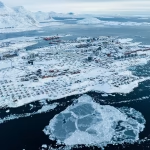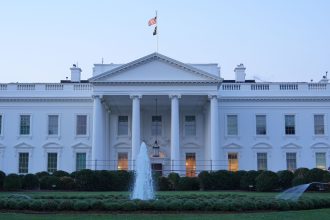
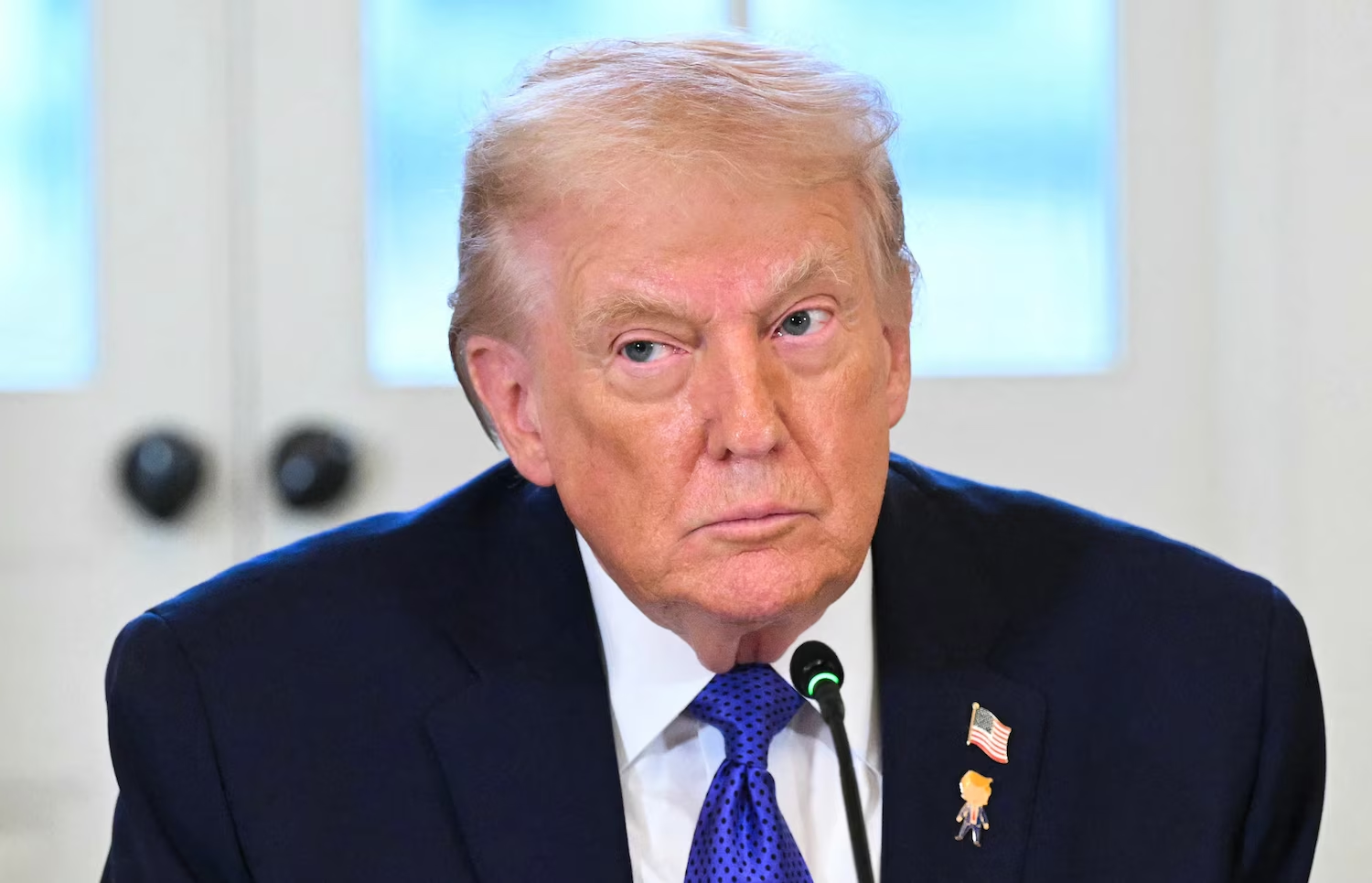
United States President Donald Trump has once again placed Greenland at the centre of an international storm, declaring that Washington will “do something on Greenland whether they like it or not”. The remark, delivered during a White House meeting with oil executives, has drawn renewed criticism from Greenlandic leaders, Denmark, and lawmakers across the US political spectrum.
Trump argued that American action is necessary to prevent Russia or China from expanding their influence in the Arctic. According to him, inaction would risk allowing rival powers to gain a strategic foothold uncomfortably close to US territory. While the statement carried his trademark bluntness, it also reopened sensitive questions about sovereignty, alliances and international law.
National Security Claims Drive Trump’s Argument
Trump has repeatedly framed Greenland as a critical asset for US national security, pointing to its location in the Arctic and its relevance to missile defence systems. He suggested that US involvement is not optional but inevitable, presenting the issue as a defensive necessity rather than territorial ambition.
Despite this framing, his comments have unsettled allies. Greenland is an autonomous territory within the Kingdom of Denmark, and both Copenhagen and Nuuk have consistently rejected any suggestion that the island could be sold, transferred, or militarily occupied.

Greenland and Denmark Draw a Firm Line
Greenlandic officials were swift and unequivocal in their response. Jacob Isbosethsen, Greenland’s head of representation to the United States, stressed that the island is not for sale and never has been. He reiterated that Greenland belongs to its people, not to foreign powers seeking strategic advantage.
Denmark has echoed this stance, with officials emphasising that Greenland’s status is not open for negotiation. The message has been consistent: cooperation is welcome, ownership is not.
US Lawmakers Distance Themselves From Takeover Talk
Trump’s comments have also met resistance within Washington. Senior Republicans and Democrats alike have downplayed the idea of any negotiation over Greenland’s sovereignty. Senate Armed Services Committee chair Roger Wicker noted that neither Denmark nor Greenland has shown any willingness to discuss a transfer of control.
Democratic Senator Jeanne Shaheen reinforced the point, highlighting the long-standing alliance between the US, Denmark and Greenland. She stressed that shared values and cooperation, not coercion, define the relationship.
Even House Speaker Mike Johnson, a close Trump ally, dismissed speculation about military action, stating that Congress is not considering such an approach.
Vice President Vance Urges Allies to Take Trump Seriously
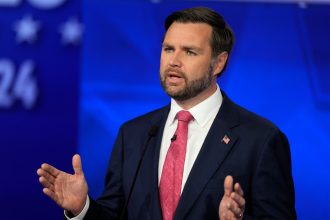
While many have attempted to cool the rhetoric, Vice President JD Vance struck a more assertive tone. He urged European leaders to take Trump’s words seriously, arguing that Greenland plays a vital role in global missile defence and is attracting interest from hostile adversaries.
Vance’s remarks suggest that, regardless of Trump’s personal style, concerns about Arctic security are being taken seriously within sections of the US administration.
Diplomatic Talks Loom as Tensions Simmer
In response to the renewed controversy, Denmark and Greenland have requested urgent talks with US Secretary of State Marco Rubio. The meeting, expected next week, aims to clarify Washington’s position and ease mounting diplomatic tension.
While the idea of forcibly acquiring Greenland remains widely dismissed, Trump’s comments have once again demonstrated how rhetoric alone can strain alliances. In a region where ice is melting faster than tempers, even hypothetical claims carry real-world consequences.