South Africa has landed its largest private freight rail investment to date, with rail operator Traxtion committing R3.4 billion to expand and modernise the country’s freight rail network. The announcement marks a milestone in the government’s ongoing rail reform efforts as the sector gradually opens its doors to private operators after decades under Transnet’s dominance.
The investment hinges on the acquisition of 46 diesel-electric locomotives sourced from New Zealand’s KiwiRail. For South Africa, this represents more than a purchase order. It signals renewed confidence from private industry in the direction of national rail reform and in the broader effort to revive the country’s logistics backbone.
Traxtion CEO James Holley said the company’s decision reflects robust confidence in policy shifts aimed at liberalising the rail sector. As Transnet prepares to allow more private operators onto the national network, Holley described Traxtion’s move as both strategic and historic.
According to the company, the R3.4 billion programme comprises R1.8 billion allocated to locomotives and another R1.6 billion to wagons. It is the largest private freight rail investment in South Africa in terms of fleet size, local content requirements and projected economic impact. Traxtion has committed to a minimum of 60% local content, estimating 662 direct jobs during the build and deployment phases.
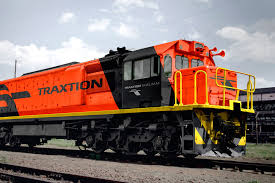
The locomotives themselves come with an interesting backstory. KiwiRail recently replaced the units as part of its own fleet renewal programme, creating what Holley called a rare and timely opportunity to source high-quality narrow-gauge locomotives ideal for southern African conditions. Traxtion will upgrade the fleet in partnership with Wabtec, a global leader in diesel-electric rail technology.
These upgrades—ranging from fuel-efficient engines to modern control systems—will be carried out at Traxtion’s Rail Services Hub in Rosslyn. The first six Wabtec locomotives are expected to arrive in May 2026. They will be upgraded to the C30MEI specification and prepared for deployment within 12 months. The full fleet is scheduled to be operational by 2028.
“This will be a high-capacity and high-reliability locomotive we can deliver to industry quickly and cost-effectively,” Holley said, highlighting that the technology is already in use across the continent and aligns well with Transnet’s existing systems.
For South Africa’s rail sector, long plagued by inefficiencies and capacity shortfalls, the investment could not come at a more critical moment. The country operates the largest rail network in Africa—spanning roughly 20,986 kilometres—but persistent bottlenecks have dragged down the economy and undermined export competitiveness.
Transnet currently transports between 160 million and 165 million tons of freight annually, far below national demand, which exceeds 250 million tons. The gap has slowed mining exports, pushed freight onto deteriorating roads, and strained logistics networks across the value chain.
Private capital is increasingly seen as the missing ingredient required to ease these constraints. Traxtion’s entry into South Africa marks its first formal venture into the local market despite 38 years of operating across 10 African countries. The company currently runs 55 locomotives and maintains more than 450 wagons daily across the continent, positioning it as a seasoned operator ready to integrate quickly.
Holley emphasised that the investment goes far beyond importing locomotives. With 79% of the contract value committed to South African companies, the project is expected to deliver significant economic spillovers. It includes the creation of hundreds of jobs, the strengthening of local manufacturing capacity, and the establishment of an ecosystem capable of supporting sustained private-sector participation in rail logistics.
South Africa’s position as a regional logistics hub is also expected to strengthen. As neighbouring countries adopt similar rail liberalisation policies, the country’s network, industrial base and reform momentum could set it apart as the preferred destination for future rail investment.
The broader message from the deal is clear: private operators now see opportunity where uncertainty once dominated. With reforms accelerating and demand for efficient freight movement rising, South Africa’s rail sector may be entering a new era—one powered by collaboration, competition and long-overdue revitalisation.