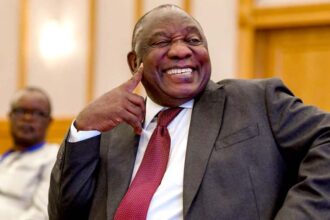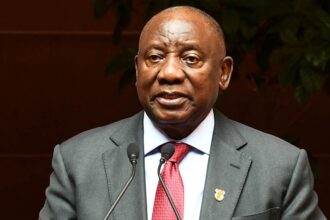
President Cyril Ramaphosa has made it clear that he has no intention of holding a referendum to test public opinion on the secession of any part of South Africa, including the Western Cape.
Ramaphosa was responding to a parliamentary question from EFF MP Thapelo Mogale, who asked whether the president would consider a referendum on Western Cape independence, the creation of a Volkstaat for Afrikaners, or any other form of secession.
“The founding provisions of our Constitution state that the Republic of South Africa is one, sovereign, democratic state,” Ramaphosa said.
He stressed that the Constitution obliges him, as president, to uphold and defend the supreme law of the country and to promote national unity.
“In line with the constitutional responsibility of the president to uphold, defend, and respect the Constitution as the supreme law of the Republic and to promote the unity of the nation, I have no intention of considering a proposal or holding a referendum on the secession of any part of the country,” Ramaphosa said.
The president also confirmed that he has not been lobbied by any component of the Government of National Unity (GNU) to pursue a referendum on secession.
Deputy ministers and performance agreements
In the same parliamentary session, Ramaphosa responded to questions from EFF leader Julius Malema regarding the role and accountability of deputy ministers within the GNU.
Malema questioned whether deputy ministers had been assigned delegated authority and whether they had signed performance agreements. The issue follows testimony at the Ad Hoc Committee, where Deputy Ministers Cassel Mathale and Polly Boshielo revealed that they had not been assigned functions by suspended Police Minister Senzo Mchunu.
The revelations reignited debate around the necessity of deputy ministers and the public funds used for their salaries, benefits, and allowances. ActionSA has since tabled a Private Member’s Bill in Parliament calling for the scrapping of deputy ministers altogether.
Ramaphosa said there are 43 deputy ministers appointed in terms of Section 93 of the Constitution, whose role is to assist ministers.
He confirmed that he has signed performance agreements with ministers, which include indicators requiring ministers to delegate responsibilities to their deputies.
“The performance agreements signed between the president and the ministers contain an indicator that requires the delegation of responsibilities by the minister to the deputy minister,” Ramaphosa said.
He added that ministers would be held accountable for this during performance review engagements and that it remains the president’s prerogative to determine appropriate sanctions where necessary.
Cabinet appointments and dual citizenship
Ramaphosa also addressed questions relating to Cabinet appointments and dual citizenship, saying there is no record of how many Cabinet members hold dual citizenship.
He explained that dual citizenship does not play a role in the appointment of ministers and that the Constitution does not require Cabinet members to be vetted before their appointment.
“According to Section 47(1) of the Constitution, every citizen of the Republic of South Africa who is qualified to vote for the National Assembly, and who is not disqualified by the Constitution, can be a member of the National Assembly and by extension can be appointed as a minister,” Ramaphosa said.
He further clarified that the Constitution allows the president to appoint ministers from among members of the National Assembly, as well as up to two individuals from outside Parliament.
“The Constitution does not require members of Cabinet to be vetted and cleared by the State Security Agency before they are appointed by the president,” he added.
Ramaphosa concluded by stating that all current Cabinet ministers meet the constitutional requirements to serve in their positions.