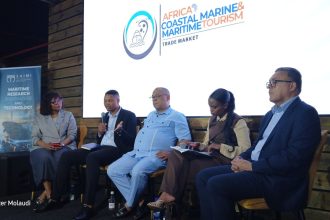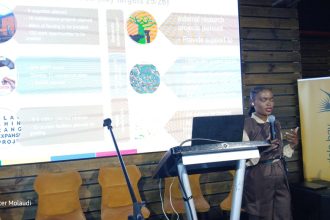

Tourism entrepreneurs and small business owners gathered at the Township and Village Tourism Expo held at The Soshanguve Hotel where Ursula Zondo from the National Department of Tourism delivered an insightful presentation focused on strengthening tourism SMMEs through policy support, funding opportunities, and digital transformation.
Her presentation addressed some of the key challenges facing small tourism enterprises in South Africa. Despite the significant contribution made by Micro, Small and Medium Enterprises (MSMEs) to the national economy, the sector continues to experience several barriers to growth. These challenges include limited access to finance and credit, restricted market access, lack of information, regulatory compliance burdens, unstable business operations, and slow government bureaucracy.
To address these challenges, the Department of Tourism continues to align its programmes with key national frameworks including the National Development Plan (NDP), the National Small Enterprise Act, the National Integrated Small Enterprise Development Strategic Framework, the White Paper on the Development and Promotion of Tourism in South Africa (2024), the National Tourism Sector Strategy (NTSS) and the Tourism Sector Master Plan (TSMP). These policy frameworks guide government efforts to strengthen tourism enterprises and ensure inclusive growth within the sector.
A key focus of the discussion was the importance of digital transformation in tourism. Ursula Zondo emphasized that modern travelers expect convenience, speed, and seamless online booking experiences. As a result, tourism businesses — especially those in townships and rural communities — must strengthen their digital presence and online visibility.
She highlighted that global tourists increasingly search, compare, and book travel experiences online, making digital exposure essential for tourism enterprises wanting to compete internationally. Innovative digital agencies such as Virgo Digital Agency (which attended the expo), are helping tourism SMEs bridge the digital gap by providing platforms and strategies that allow businesses to showcase their offerings online and reach tech-savvy international and domestic travelers.
Beyond digital innovation, the Department of Tourism also outlined several business support programmes designed to accelerate transformation and growth within the tourism sector.
One of the key initiatives is the Tourism Transformation Fund (TTF), which provides a combination of grant funding and debt finance to support new and expanding tourism businesses that have majority black ownership. The programme is administered in partnership with the National Empowerment Fund (NEF).
Additional support programmes available to tourism enterprises include:
-
Green Tourism Incentive Programme (GTIP) – supporting sustainable and energy-efficient tourism practices
-
Market Access Support Programme (MASP) – assisting tourism businesses to access local and international markets
-
Tourism Grading Support Programme (TGSP) – helping establishments achieve official tourism grading standards
Ursula Zondo also announced that the Community Tourism Enterprises Incubation Programme is currently supporting six community-based tourism projects, aimed at strengthening grassroots tourism development and empowering local communities.
Another key development currently underway is the review of the Enterprise Development (ED) Framework, which will guide how government supports tourism SMEs in the future. Stakeholders across the tourism industry have been invited to contribute their insights and recommendations to ensure the framework reflects the realities and needs of small tourism enterprises.
Industry stakeholders and entrepreneurs can submit their inputs before the end of March 2026 by emailing:
edframework@tourism.gov.za
The presentation reinforced the importance of collaboration between government, private sector partners, and tourism entrepreneurs to unlock the full potential of township and village tourism.
Events like the Township and Village Tourism Expo continue to provide an important platform where tourism businesses can gain valuable knowledge, access support programmes, and position themselves for growth in an increasingly competitive and digitally driven tourism landscape.