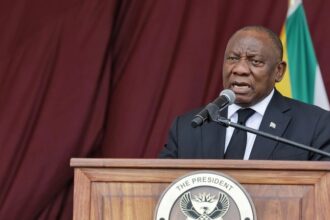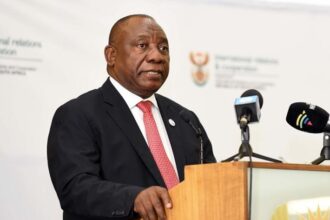
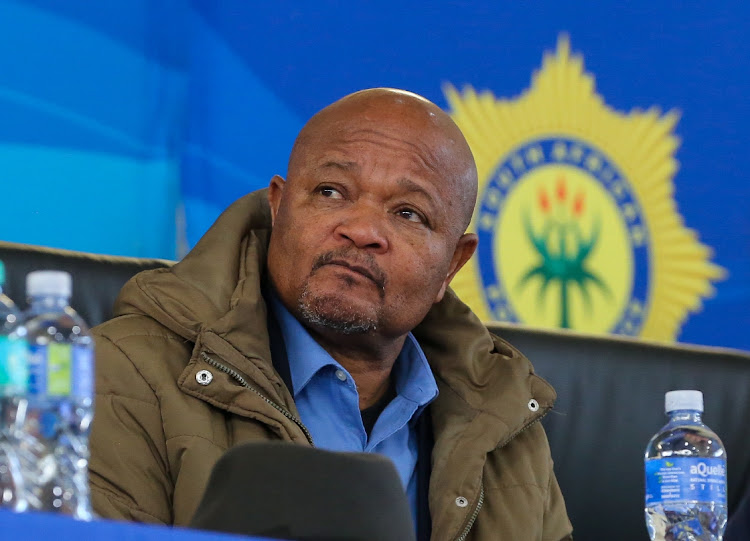
KwaZulu-Natal Police Commissioner Nhlanhla Mkhwanazi has publicly questioned Police Minister Senzo Mchunu’s decision to classify the Independent Police Investigative Directorate (Ipid) report on President Cyril Ramaphosa’s Phala Phala farm scandal as “top secret.”
The Ipid report, completed in October 2023, allegedly contains details of police conduct during the controversial Phala Phala investigation, which involved serious allegations such as defeating the ends of justice, kidnapping suspects, interrogations conducted on private property, and bribery.
The controversy traces back to a June 2022 complaint by African Transformation Movement (ATM) leader Vuyo Zungula, who accused senior members of the Crime Intelligence Division of unlawfully tracing the stolen U.S. dollars hidden in furniture at Ramaphosa’s Limpopo farm.
Mchunu Defends His Decision
Minister Senzo Mchunu, a known ally of President Ramaphosa, has defended the classification of the report, saying it was necessary to protect witnesses involved in the probe. He denied accusations of political interference, insisting that his decision was made “in good faith” and not under pressure from any party.
“Part of classifying the report was to protect witnesses and ensure their safety. There is no political agenda in withholding the report,” Mchunu said earlier this week.
Mkhwanazi Raises Accountability Concerns
Speaking at a public event on Wednesday, Commissioner Mkhwanazi questioned why a minister — rather than an intelligence structure — would classify an Ipid document.
“When you hear a Minister of Police say, ‘I have a report from Ipid that is classified,’ you need to ask yourself: you are not an intelligence structure, and yet you classified a report you don’t want to release,” Mkhwanazi said.
He further challenged the legality and transparency of the classification, asking whether Mchunu had the necessary security clearance or authority to make such a decision.
“These are things that need to be checked because it is where the system of government fails. You worked to create legislation to protect citizens, but if it is manipulated — that a minister can just decide ‘I’m classifying this’ — then the question becomes, does the minister even have vetting clearance?” Mkhwanazi added.
Calls for Transparency
The remarks have reignited calls for the declassification of the Ipid report, with opposition parties and civil rights groups demanding that its contents be made public in the interest of accountability.
The Phala Phala scandal, first exposed in 2022, continues to shadow Ramaphosa’s presidency, raising questions about state transparency, police conduct, and the politicization of investigative institutions.