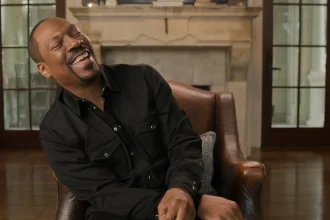
Mike Epps has never been one to over-polish uncomfortable truths, and his recent comments about fellow comedian Chris Rock suggest that some professional distances are less about drama and more about mismatched worlds.
Appearing on Club Shay Shay with former NFL star Shannon Sharpe, the Upshaws actor revisited moments from his early career that, in his view, shaped a long-standing disconnect between himself and Rock. The conversation drifted back to the Def Jam Comedy era, a period that launched multiple careers but also sharpened rivalries, sometimes unintentionally.
When Sharpe referenced an old Def Jam moment involving the character “Shuckey Duckey”, Epps did not retreat into nostalgia. He maintained that Rock’s joke about the character effectively stalled what little momentum it had at the time. For Epps, this was not framed as bitterness decades later, but as a factual recollection of how comedy stages could be unforgiving and careers fragile.
The exchange opened the door to a broader reflection on Rock’s reputation as a polarising figure in comedy. That reputation, Epps suggested, has followed Rock well beyond stand-up clubs, resurfacing dramatically during the 2022 Oscars incident involving Will Smith. While making it clear he does not support violence, Epps acknowledged that he understood the emotional boiling point behind the slap, describing it as a moment where long-standing tensions finally spilled over. The tone remained careful, recognising the seriousness of the incident without turning it into spectacle.
Epps also recalled a more personal interaction that left a lasting impression early in his career. According to him, Rock once remarked, “You can’t act rich if you ain’t rich.” While Epps said he grasped the surface meaning of the comment, he felt it missed the context of his background. Coming from what he described as a “drug-dealer world”, displays of jewellery or confidence were not about pretending to have Hollywood wealth, but about an identity formed long before fame entered the picture.
That moment, Epps suggested, highlighted a deeper misunderstanding between the two comedians. In his view, Rock was making assumptions rather than seeing the full person in front of him. It was not an accusation so much as an explanation of why their paths never truly aligned.
When asked whether there had ever been an attempt to clear the air, Epps was direct. There was no falling-out to fix, because there was never a relationship to begin with. He described the situation plainly: they do not really get each other, and that mutual distance has simply remained over time.
Despite the candid tone, Epps was careful to separate personal connection from professional respect. He left little doubt about Rock’s talent, describing him as “funny as hell” and acknowledging his impact on comedy. The lack of closeness, Epps implied, does not diminish Rock’s status, nor does it require a public reconciliation.
In an industry where feuds are often exaggerated for headlines, Epps’ comments offered something quieter and more realistic: a reminder that not every big name clicks, and that mutual respect can exist without friendship. Sometimes, even in comedy, people just speak different languages.