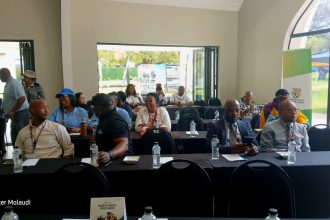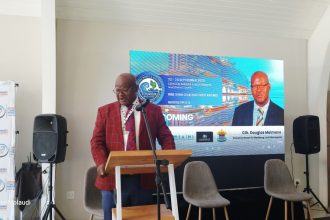
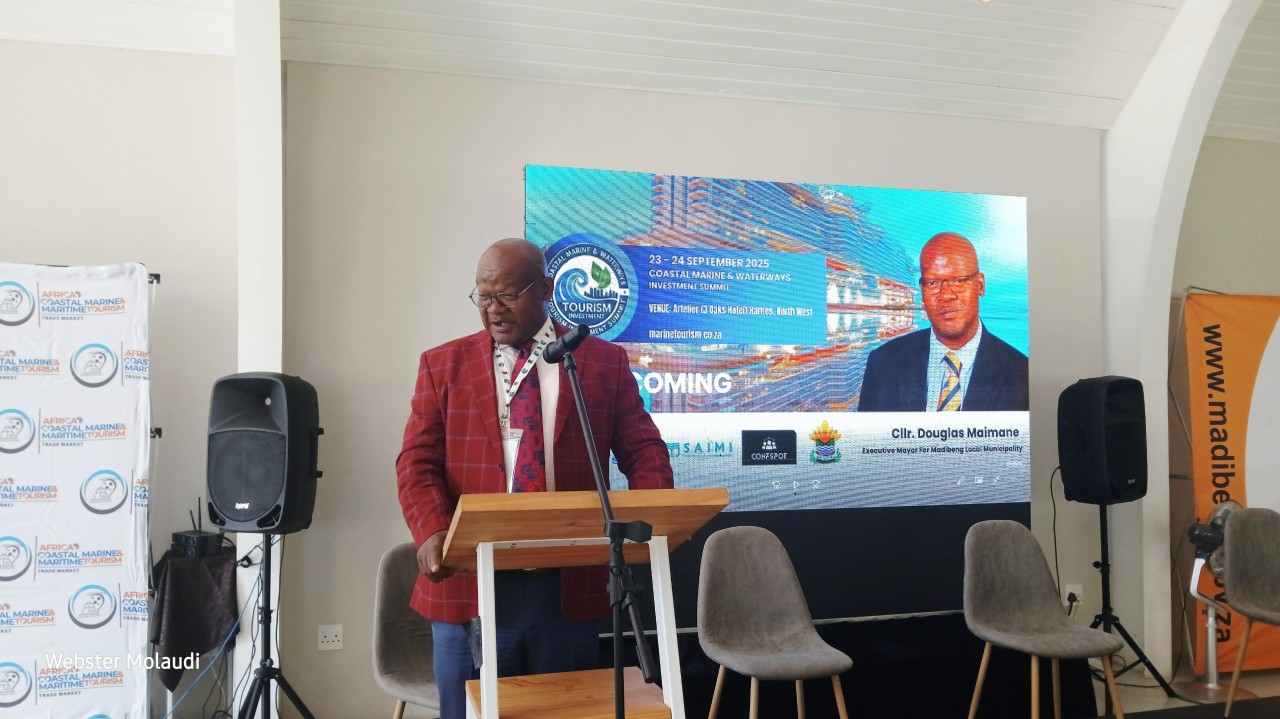
The Executive Mayor of Madibeng Local Municipality, Cllr. Douglas Maimane, officially welcomed dignitaries, investors, and industry leaders to the Coastal & Waterways Tourism Investment Summit 2025, casting the Bojanala Platinum District as South Africa’s next great destination for water-based tourism and investment.
Inland Waterways as “Blue Gold”
In his opening remarks, Mayor Maimane highlighted the untapped potential of inland dams and rivers to drive job creation, community empowerment, and sustainable growth.
“While we are a landlocked district, our dams and rivers are our coasts and waterways. They are our blue gold, offering immense untapped potential for tourism and investment,” he said.
Maimane added that inland water-based tourism could become an economic anchor for the region, expanding beyond conservation to embrace recreation, culture, and eco-tourism.
Unlocking the Blue Economy in Bojanala
Globally, coastal and marine tourism is linked to oceans. In Bojanala, the spotlight is on inland waterways, offering a wide range of opportunities:
-
Recreational tourism: boating, kayaking, fishing, jet-skiing.
-
Eco-tourism: birdwatching, wildlife viewing, and nature trails.
-
Adventure tourism: rafting, abseiling, and water sports.
-
Cultural and heritage tourism: showcasing community histories along dams and rivers.
“Tourism is no longer limited to game drives and resorts,” Maimane explained. “With the right strategy, our inland waterways can become magnets for domestic and international visitors.”
Harnessing Bojanala’s Water Assets
The mayor outlined a tourism vision anchored around the district’s major dams:
-
Hartbeespoort Dam – opportunities for expanded cruises, waterfront dining, and water sports.
-
Vaalkop Dam – ideal for birding, eco-lodges, and nature-based tourism.
-
Bospoort Dam – positioned for family recreation and fishing.
-
Koster Dam – identified for integrated agri-tourism and recreation.
Integrated tourism nodes combining activities, accommodation, and retail spaces will form the backbone of this strategy, balancing growth with environmental stewardship.
History, Heritage, and Community Pride
Mayor Maimane also reminded delegates of the district’s deep history. Hartbeespoort was once home to the Bapo tribe, forcibly removed from their land. What many call “Magalies” is historically “Mogale,” named after Chief Mogale, an ancestor of the Maimane lineage.
“This heritage is not just history — it is a living identity,” he said. “Tourism must celebrate who we are in Bojanala, in the North West, and in South Africa.”
Infrastructure, Events, and Investor Confidence
To attract investment, Maimane highlighted the need for marinas, ablution facilities, secure parking, and hospitality nodes. Public-private partnerships (PPPs), he added, will be crucial for scaling large projects while reducing risks for investors.
Annual water-based events — such as fishing tournaments, sailing regattas, and canoe marathons — were positioned as key crowd-pullers that could boost local business.
“Just as an information desk guides shoppers in a mall, a tourism hub guides visitors to every opportunity in our towns — from clubs and restaurants to accommodation and cultural attractions,” Maimane said.
A Call to Collaboration
Concluding his address, the mayor introduced the Deputy Minister of Tourism and other delegates, stressing the need for partnerships between government, business, and communities.
“This is a new frontier for us,” Maimane concluded. “Together, we can turn our blue vision into reality and make Bojanala a premier destination for water-based tourism and investment.”
The Coastal & Waterways Tourism Investment Summit runs from 23–24 September 2025 in Hartbeespoort, bringing together policymakers, investors, academics, and industry leaders to explore the untapped potential of South Africa’s inland waterways and coastal tourism.