
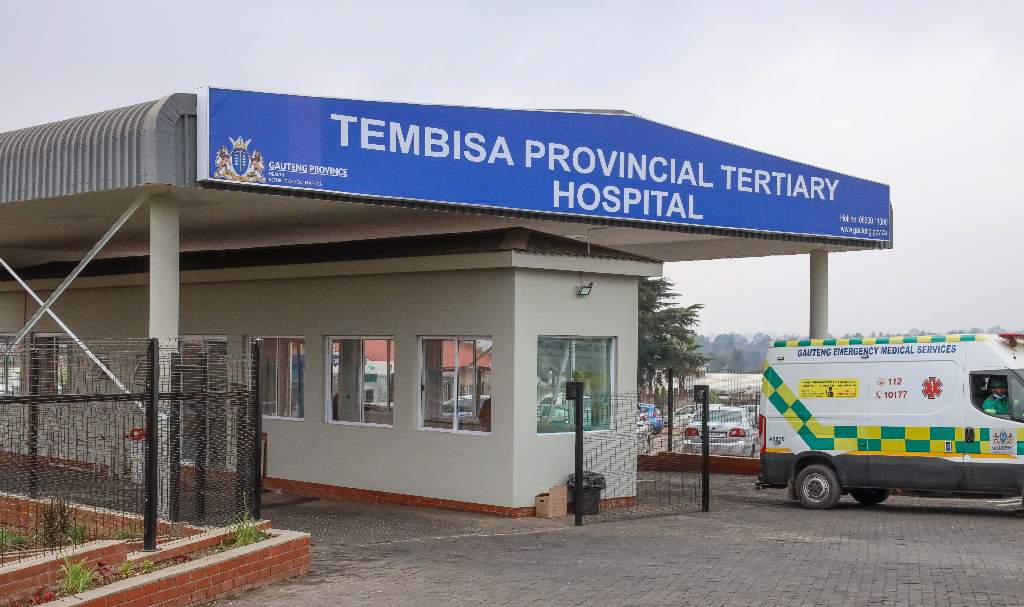
The Gauteng Department of Health has admitted that it lacks the power to blacklist companies implicated in the R2 billion Tembisa Hospital corruption scandal, exposing what lawmakers have called “a procurement system wide open to abuse.”
The admission came in response to ActionSA MP Kgosi Letlape’s parliamentary questions, which revealed that despite 207 service providers being flagged by the Special Investigating Unit (SIU), none have been blacklisted.
Health Minister Confirms Blacklisting Power Lies With National Treasury
In a written response dated 10 October, Health Minister Aaron Motsoaledi confirmed that only the National Treasury has the legal authority to blacklist suppliers under the Public Finance Management Act (PFMA).
Motsoaledi said that while his department has taken steps to strengthen anti-corruption mechanisms, including convening meetings with senior management, the National Health Council (NHC), and hospital executives, it remains powerless to take direct punitive action against implicated suppliers.
“In the meantime, the SIU has been asked to submit to provinces the list of such companies so that, even if there is no blacklisting yet, the HODs pay special due diligence before awarding tenders,” Motsoaledi said.
He added that a workshop is planned for 27–28 November to strengthen procurement safeguards and improve coordination across government entities.
ActionSA Slams Lack of Accountability
ActionSA’s Kgosi Letlape condemned the government’s failure to act, describing the revelations as “deeply alarming.”
“Despite the SIU’s report revealing how more than R2 billion was siphoned from Tembisa Hospital through 207 service providers and over 4,500 purchase orders, our procurement system remains wide open to exploitation for fly-by-night companies,” Letlape said.
He noted that many of the companies implicated were registered just days or weeks before receiving multimillion-rand contracts, often with no operational history, tax compliance, or delivery record.
Letlape accused the government of ignoring SIU recommendations, saying this allowed corrupt entities to continue securing public contracts unchecked.
“Even after the SIU exposed these criminal networks and recommended blacklisting, no decisive action has been taken. The Department of Health admits it cannot blacklist suppliers, and this loophole lets those under investigation continue trading while awaiting Treasury action,” he said.
Only One of 467 Entities Blacklisted
In what Letlape called “a shocking accountability failure,” out of 467 individuals and companies recommended for the Restricted Suppliers Register, only one has been officially listed.
He warned that systemic weaknesses, poor interdepartmental coordination, and outdated systems were enabling recurring corruption in government contracts.
“Until the government implements a transparent, centralised vetting system that flags and suspends companies under investigation, procurement abuse will continue unchecked,” he said.
SIU and Treasury Urged to Tighten Oversight
Motsoaledi said the Health Sector Anti-Corruption Forum and whistleblower hotlines remain crucial to exposing ongoing corruption. However, critics argue that without enforcement powers, such initiatives have limited impact.
Analysts say the Tembisa scandal — one of South Africa’s largest health-sector corruption cases — illustrates how fragmented oversight allows looting to persist across multiple departments.
Letlape concluded by calling for urgent legislative reform to ensure that shell companies and individuals implicated in corruption are permanently banned from doing business with the state.
Image Alt Text Suggestion:
Health Minister Aaron Motsoaledi addresses Parliament amid revelations that the Department of Health cannot blacklist companies in the R2 billion Tembisa Hospital corruption scandal.