
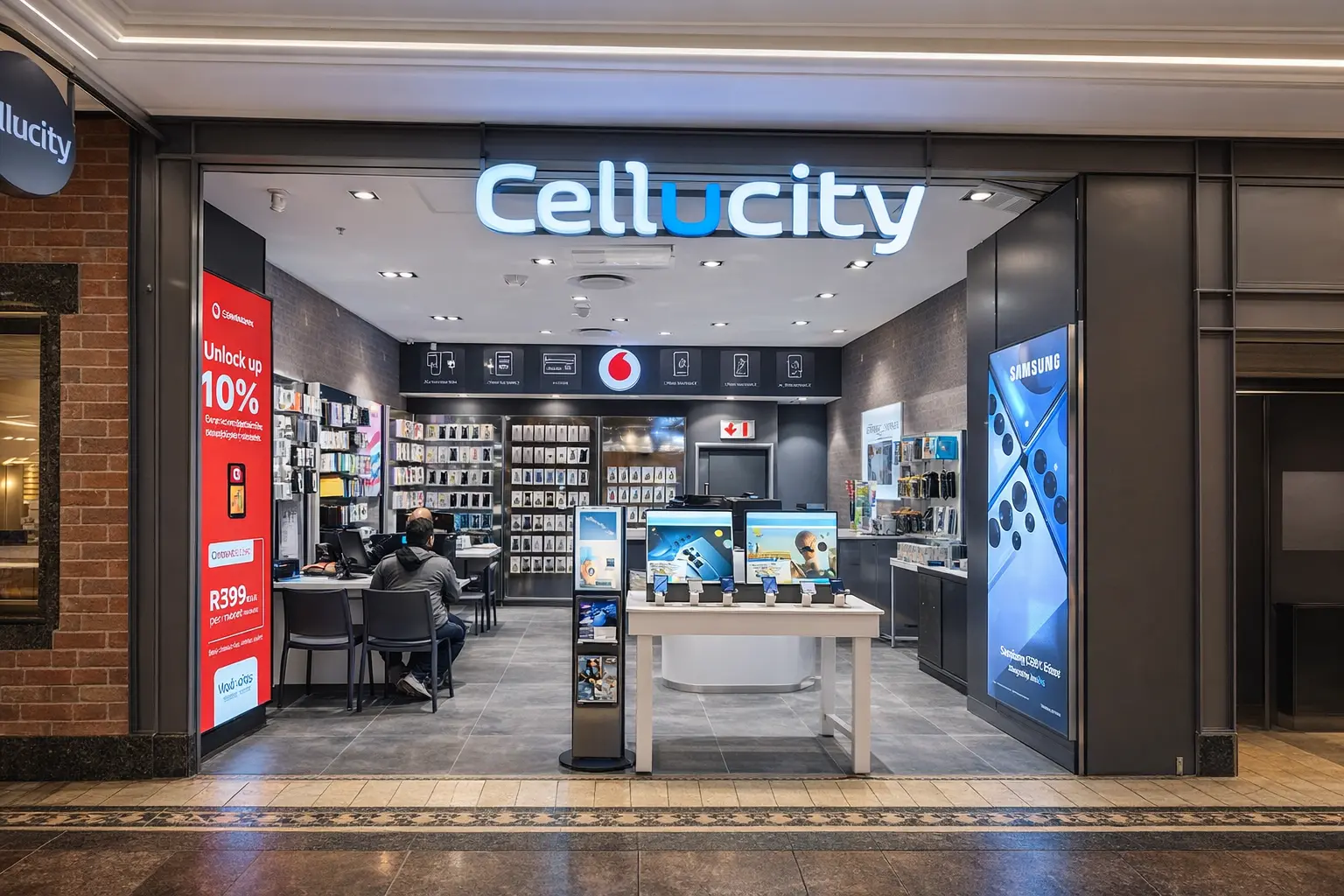
The Western Cape High Court has ordered a former Cellucity employee to repay more than R50.68 million after uncovering a large-scale fraud scheme that saw at least R70 million siphoned from the mobile phone retailer over nearly a decade.
Sharlene Phillipson-Garcia, who worked at Cellucity for approximately 16 years, resigned abruptly in July 2024 after being confronted about suspicious accounting entries linked to her role. At the time, she was employed as an assistant to the finance manager and was responsible for processing financial records that later became central to the investigation.
According to court papers, Phillipson-Garcia stole the money between May 2016 and shortly before her resignation. She did not dispute that the theft had occurred. Initially, Cellucity was able to trace about R10.1 million of the missing funds and successfully obtained an urgent court order freezing two of her bank accounts and preventing the sale or transfer of nine immovable properties.
Phillipson-Garcia was ordered to repay the R10.1 million identified at that stage. However, further forensic investigation revealed that the true scale of the theft was far greater, exceeding R70 million. Cellucity then returned to court seeking to recover the remaining balance of more than R60 million.
In her defence, Phillipson-Garcia argued that the earlier judgment barred Cellucity from pursuing additional claims. Acting Judge Gavin Cooper rejected this argument, ruling that each act of theft constituted a separate cause of action, allowing the company to bring a further claim for the outstanding amount.
She also claimed that more than R9.15 million of the stolen funds had been used to pay Cellucity’s creditors during her employment. The court viewed this explanation with scepticism, noting that it was raised only in her answering affidavit during the second application, despite earlier requests for full disclosure.
The judgment details how stolen funds were channelled through Phillipson-Garcia’s company, Basic Blue Trading 450 (Pty) Ltd, and used to support several family-controlled businesses. These included Ohana Beauty and Wellness, operated by her daughter, and Little Phase, owned by her niece. Phillipson-Garcia served as a director of both entities. She also spent R6.2 million to acquire a member’s interest and trading stock in Rolling Thunder Distributors.
Financial records showed that she provided interest-free loans exceeding R6.9 million to her daughter’s business and a R2 million loan to her niece’s company. Judge Cooper noted that Phillipson-Garcia earned just over R41,500 per month during her employment, making it implausible that she could have funded these ventures legitimately on her salary alone.
After the fraud was uncovered, Phillipson-Garcia resigned as a director of the family businesses and transferred half of her interest to her son-in-law. The court heard that she is suspected of transferring remaining funds to her son, raising further concerns about asset dissipation.
Judge Cooper found prima facie evidence that the family businesses may have been used as vehicles to launder stolen money and conceal assets. He ordered that oral evidence be heard to determine whether the R9.15 million was genuinely used to pay Cellucity’s creditors and whether the related companies should be held personally liable for benefiting from the fraud.
The court emphasised that oral evidence is necessary where disputes cannot be fairly resolved on affidavit, particularly when key facts lie within the exclusive knowledge of the alleged fraudster.
In the meantime, Phillipson-Garcia and Basic Blue Trading 450 (Pty) Ltd have been ordered to pay Cellucity more than R50.68 million, along with interest calculated from the date the application was served. They are also liable for legal costs on the attorney-and-client scale.
The oral evidence hearing is scheduled for 4 November 2026, where the court will further examine the flow of funds and the potential liability of the family-linked businesses.