FIFA has issued a measured response to Donald Trump’s claims that he could influence the relocation of 2026 World Cup matches from certain US cities he considers “unsafe.”
The upcoming men’s World Cup, set to be jointly hosted by the United States, Canada, and Mexico, will feature 104 matches — with 78 of those taking place across multiple US cities, including New York, Los Angeles, and Boston.
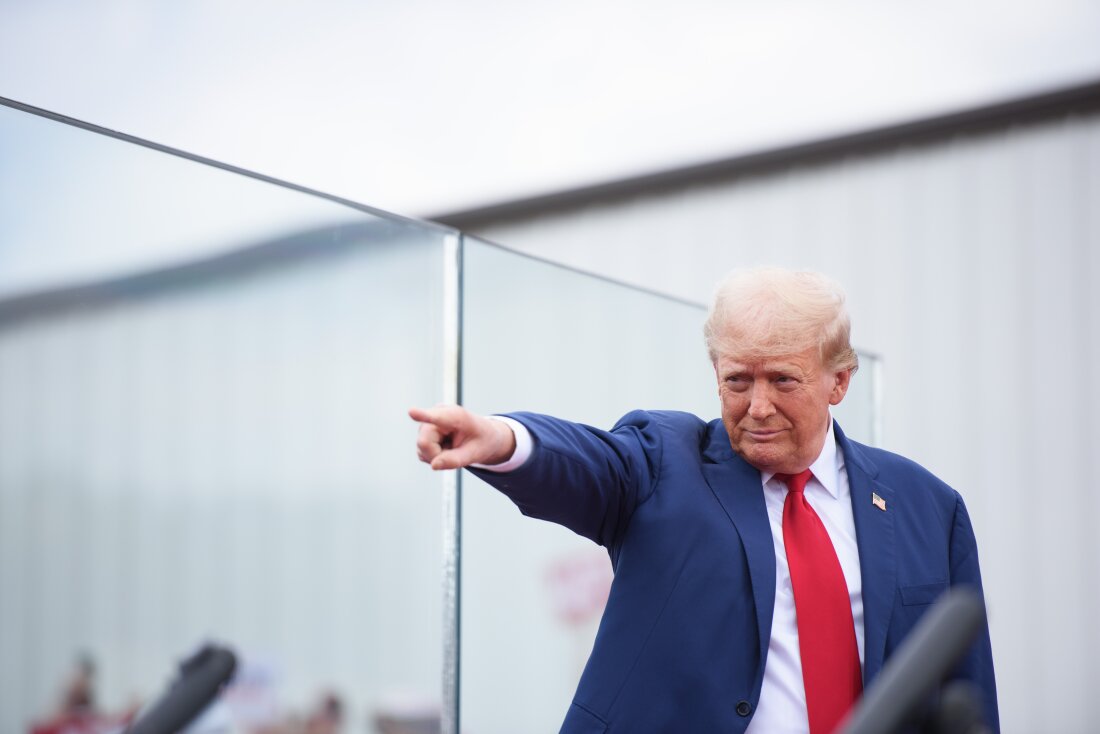
Trump recently reignited controversy by suggesting he could convince FIFA President Gianni Infantino to “easily” move matches away from cities “run by radical left mayors.” The former president said during a rally that he would contact Infantino directly if he felt a city posed safety concerns.
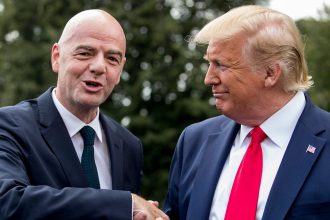
While Trump has no legal authority over World Cup logistics, he does maintain a cordial relationship with Infantino, whom he has praised publicly in the past.
In a statement addressing the remarks, FIFA reaffirmed that public safety remains the responsibility of national and local governments.
“Safety and security are the top priorities at all FIFA events worldwide,” the governing body said. “Governments decide what is in the best interest of public safety. We hope all 16 host cities will meet the necessary requirements to successfully host the tournament.”
Boston Mayor Michelle Wu pushed back against Trump’s comments, saying the hosting arrangements were “locked down by contract” and “cannot be undone by any single person.” She added that the city would not compromise its values in response to “hateful rhetoric.”
Officials from other host cities, including Santa Clara, California, also dismissed Trump’s safety claims as “not based in fact,” emphasizing that local authorities have been preparing for the event for years.
The 2026 World Cup will mark the first time the tournament features 48 teams, expanding from the traditional 32. Political interference in sports has long been discouraged by FIFA, with vice-president Victor Montagliani previously remarking that “football is bigger than any government or individual.”
Despite the political noise, preparations continue across North America as FIFA and local organizers finalize logistics for what is expected to be the largest World Cup in history.