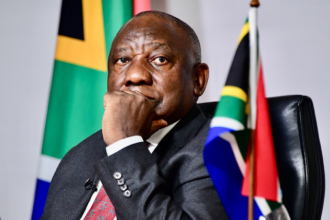
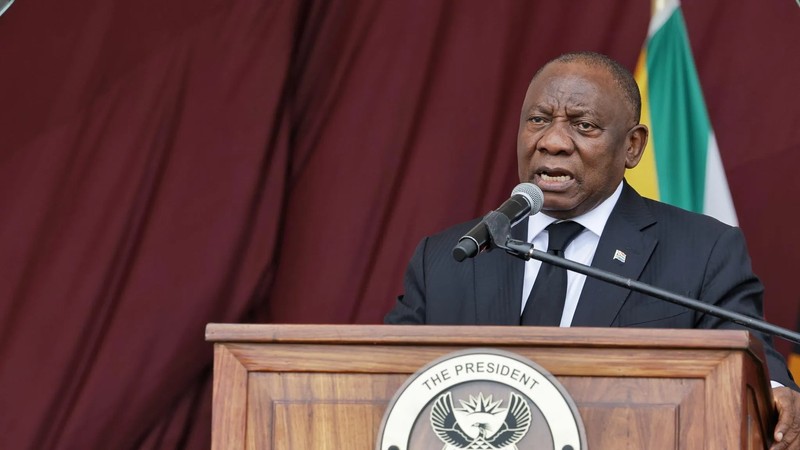
The African National Congress (ANC) is facing internal discord over President Cyril Ramaphosa’s consideration of appointing a white Afrikaner as South Africa’s next ambassador to the United States—a move aimed at easing strained relations with Washington.
Highly placed sources within the ruling party say the proposed appointment is seen as a strategic attempt to rebuild diplomatic bridges with US President Donald Trump, who has previously accused South Africa of targeting white farmers and hinted at possible sanctions.
Two prominent names have emerged as frontrunners for the ambassadorial role: Roelf Meyer, a former Minister of Defence and key figure in the 1990s Codesa negotiations, and Marthinus Van Schalkwyk, the former National Party leader who later served as Minister of Tourism under the ANC government. Both have long-standing political ties to Ramaphosa.
A Divided Party, A Strategic Dilemma
Although the matter has not been formally tabled before the ANC’s National Executive Committee (NEC), it has generated significant discussion in the corridors of power. Some party members argue that selecting an Afrikaner with ANC affiliations could serve as a diplomatic gesture toward Trump’s administration, while others believe it risks undermining the ANC’s broader political narrative.
“There are whispers that this is the president’s way of ending a cold war of words with Washington,” the insider added. “But a large part of the NEC is opposed, seeing it as unnecessary pandering.”
Other Contenders Emerge
Among alternative candidates being discussed is Mcebisi Jonas, the current special envoy to the US. Jonas, however, has come under scrutiny following the resurfacing of a 2020 video in which he referred to Trump as a “racist and homophobe.” The video has reignited concerns over his suitability for a formal ambassadorial position.
Another name floated is former Trade and Industry Minister Ebrahim Patel, who is considered a steady and experienced hand in international relations but lacks the specific US engagement experience.
Ramaphosa’s Tightrope Walk
Presidency sources suggest that although Ramaphosa will make the final decision, ANC input will heavily influence the outcome. The president, who has faced increasing pressure over his foreign policy direction, reportedly believes that selecting a moderate Afrikaner figure could defuse diplomatic hostilities and reframe South Africa’s image in the eyes of the current US administration.
Still, the move has sparked criticism from opposition parties, including the uMkhonto WeSizwe (MK) Party. Spokesperson Nhlamulo Ndhlela accused Ramaphosa of advancing the “Afrikaner agenda.”
“Ramaphosa sold out 30 years ago with Roelf Meyer. Today he wants to sell out again,” Ndhlela declared.
Political Analyst: Van Schalkwyk ‘Best Shot’ at Mending Ties
Political commentator Justice Malala believes that if Ramaphosa is serious about resetting relations with Trump, Van Schalkwyk is the logical choice.
“He’s experienced, politically fluent, and has the gravitas to open doors in Washington,” said Malala. “When Trump won again, the diplomatic landscape changed overnight. Any strategist in Pretoria should have seen the storm coming.”
Malala added that diplomacy under a second Trump administration would require adaptability, bold appointments, and a clear understanding of shifting global dynamics.
US–SA Relations at a Crossroads
Relations between South Africa and the United States have grown increasingly tense since Trump returned to office. The US has threatened sanctions against South African officials accused of aligning with America’s adversaries and has publicly condemned land reform policies perceived as targeting white landowners.
Ramaphosa’s outreach began with Jonas’s appointment as special envoy, but the friction has not eased. The ambassadorial appointment is now seen as a crucial test of the president’s diplomatic balancing act—between party loyalty, national interest, and international pressure.
No official comment has been made by the ANC or the Presidency. ANC spokesperson Mahlengi Bengu-Motsiri was unavailable, and Presidential spokesperson Vincent Magwenya declined to speak on the matter.