
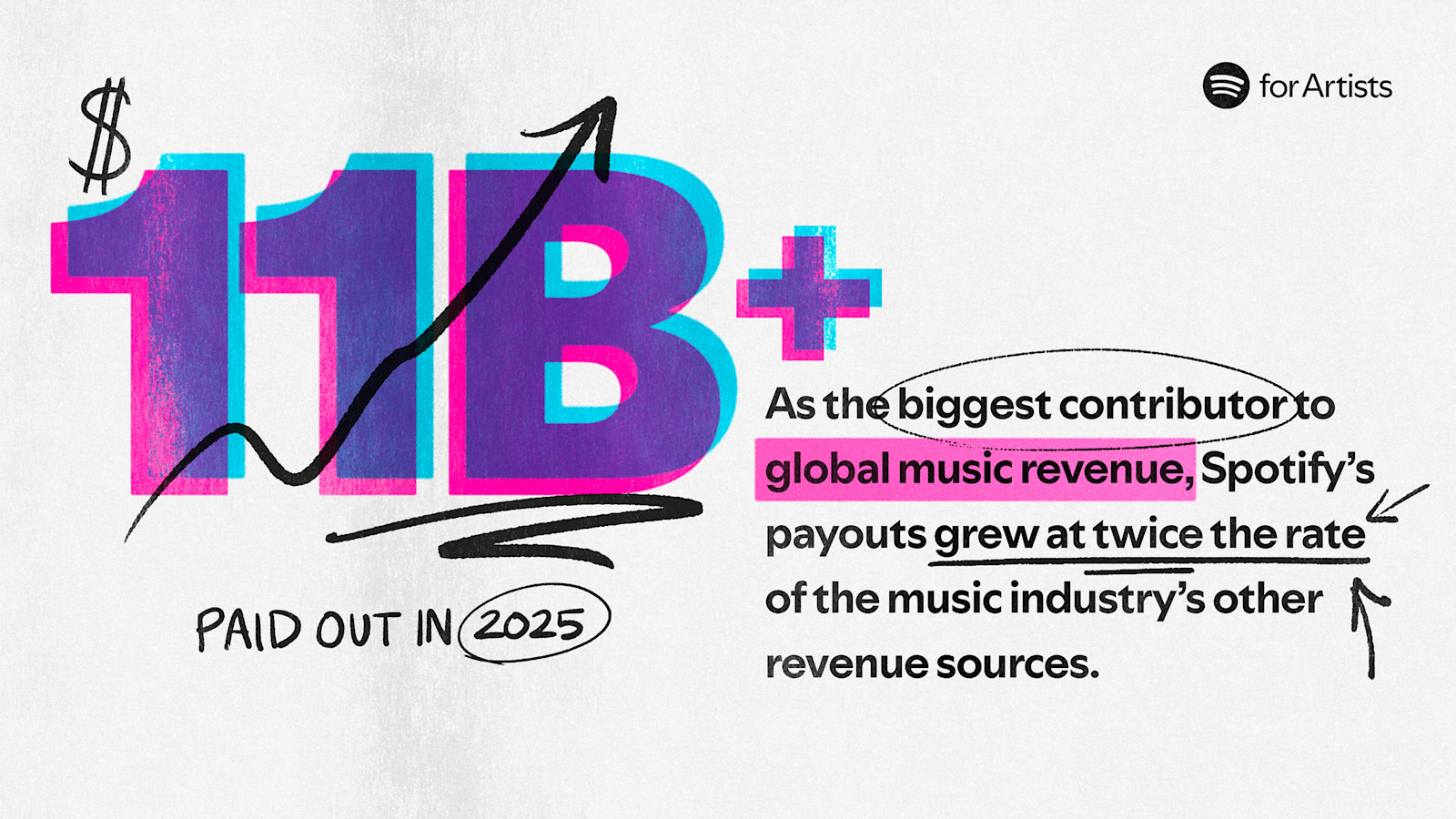
Spotify paid out more than R200 billion to the global music industry in 2025, marking the largest annual payment to music from any retailer in history, according to the company’s Head of Music, Charlie Hellman.
Reflecting on the past year and outlining priorities for 2026, Hellman said the scale of Spotify’s payouts underscored how streaming has become the central driver of recorded music revenue worldwide.
Once again, independent artists and labels accounted for roughly half of all royalties paid out by the platform, reinforcing the growing role of independent music in the global industry.
From abstract figures to real-world impact
While headline figures can feel distant, Hellman argued the growth is translating into tangible outcomes for artists. He noted that more artists are now earning over R1.9 million per year from Spotify alone than the total number of artists whose music was stocked on record store shelves at the peak of the CD era.
According to Spotify, this shift reflects a structural change in how artists reach audiences and generate income, despite ongoing criticism and debate around the economics of streaming.
“Despite rampant misinformation about how streaming works today, the reality is that this is an era with more success stories and more promise than at any point in history,” Hellman said.
Spotify’s role in industry growth
Spotify currently accounts for about 30% of global recorded music revenue. In 2025, payouts from the platform grew by more than 10%, compared with industry-wide income growth of closer to 4% from other sources.
This made Spotify the single largest contributor to overall industry revenue growth during the year, at a time when physical sales and downloads continue to decline in most markets.
Globally, more than 750 million people now pay for music streaming services each month. Spotify has increased subscription prices in several regions, and because the company pays out nearly 70% of its revenue to rights holders, higher revenues have translated directly into higher payouts to the industry.
Reinvestment and platform growth
Hellman addressed the often-criticised “other third” of revenue that Spotify retains. He said this portion is reinvested into the platform to improve discovery, user experience and tools that help artists connect with fans more effectively.
According to Spotify, this reinvestment has been key to expanding the global audience willing to pay for music streaming, which in turn supports continued revenue growth for artists and labels.
Helping new artists break through the noise
With more than 100,000 new songs released daily, Spotify acknowledges that breaking through has become increasingly difficult for emerging artists. Hellman said supporting new music discovery is the company’s top priority heading into 2026.
To address this, Spotify is expanding tools focused on artist storytelling, video and context. New features, such as SongDNA, are designed to help fans understand how songs are created and who is involved, encouraging deeper exploration of artists’ catalogues and collaborators.
Spotify is also increasing the role of video content, emphasising authenticity over high production values. Behind-the-scenes footage, live performances and studio moments are being positioned as ways to turn casual listeners into long-term fans.
Artist identity, trust and AI challenges
The company also plans to strengthen protections around artist identity, particularly as artificial intelligence is increasingly used to flood platforms with low-quality or misleading content.
Spotify says it will introduce changes to artist verification, song credits and identity protection systems to prevent impersonation, scams and royalty diversion. The aim is to ensure listeners and rights holders can trust who created the music they are hearing.
Editorial curation and live music focus
Human editorial curation remains central to Spotify’s strategy. While algorithms personalise listening, editorial playlists provide cultural reference points and can be career-changing for developing artists.
In 2026, Spotify plans to expand editorial programmes that offer sustained support for emerging artists, alongside more visibility for the editors behind playlist decisions.
Live music is another focus area. Spotify says it has already helped generate more than R19 billion in ticket sales through partnerships that connect artists with fans most likely to attend shows. New features are planned to further convert streaming audiences into live supporters.

Looking ahead to 2026
Hellman said the modern music industry is defined by unprecedented competition alongside unprecedented opportunity. Spotify’s stated goal for 2026 is to ensure that growth creates clear and reliable pathways for artists to reach fans and sustain careers.
As streaming cements its place at the centre of the global music economy, Spotify’s record payouts highlight both the scale of the transformation and the ongoing debate about how value is distributed in the digital era.