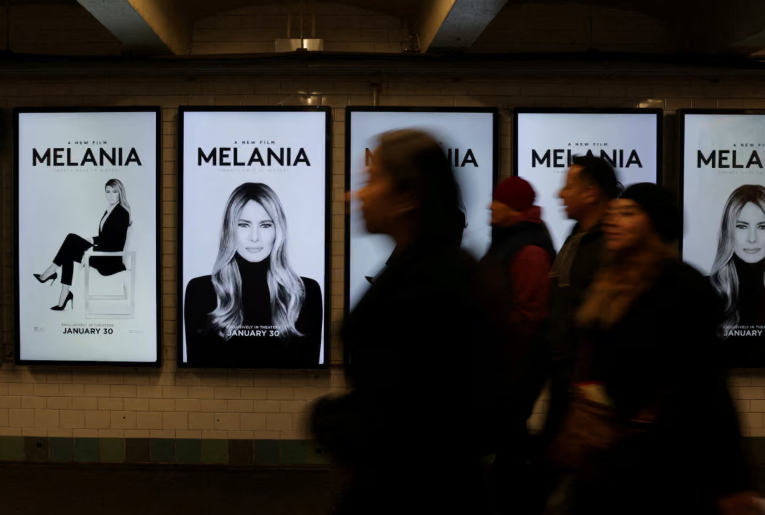
Melania, a new documentary focused on former First Lady Melania Trump, is expected to have a rough opening weekend at the box office, according to early projections and cinema industry feedback in both the United States and the United Kingdom.
Directed by Brett Ratner, the film opens in approximately 1,500 cinemas across North America on Friday. Industry publication Variety estimates the documentary will earn around R57 million over its first Friday-to-Sunday weekend, a modest figure given the scale of its release.
The official synopsis describes the film as offering “unprecedented access” to the 20 days leading up to the 2025 presidential inauguration, documenting Melania Trump’s return to the White House and her role in managing the transition. The documentary promises exclusive footage of private meetings, behind-the-scenes conversations and moments not previously seen by the public.
Soft sales reported in UK cinemas
Early signs from the UK market suggest a similarly muted response. Major cinema chain Vue has confirmed that advance ticket sales for Melania have been “soft”, with only one ticket sold for the first screening at its flagship Islington cinema in London, and two tickets booked for a later showing on the same day.
At several Vue branches, including Blackburn, Castleford and Hamilton, all seats reportedly remained unsold across dozens of scheduled screenings. Cineworld locations showed slightly better, but still limited, interest, with single-digit ticket sales reported at branches in Wandsworth and Broughton.
Vue chief executive Tim Richards told the Telegraph that the company had received complaints from members of the public about screening the film. He defended the decision, stating that cinemas do not censor films that meet British Board of Film Classification requirements, regardless of public opinion.
Questions over release strategy
An unnamed industry analyst suggested that the film’s rollout may rely on a strategy known as “four-walling”, where distributors pay cinemas a fixed fee to screen a title, rather than sharing box office revenue. This could explain why so many cinemas agreed to screen a documentary with limited commercial appeal, particularly at a time when award-season films are competing for screen space.
Given the unusually large number of cinemas showing Melania, analysts warn that even if attendance improves, the film’s per-screen average is likely to be low. For context, most documentaries in the UK open on fewer than 30 screens.
Recent UK documentaries have posted far more modest totals. Prime Minister, about former New Zealand leader Jacinda Ardern, earned roughly R792,000 during its opening weekend across 28 cinemas, while Becoming Victoria Wood made about R504,000 on 23 screens earlier this year.
Big investment, uncertain returns
The documentary was acquired by Amazon MGM Studios for approximately R760 million, with reports suggesting that the deal included a significant payment to Melania Trump herself. A further R665 million has reportedly been spent on global marketing, much of it concentrated in the United States, including television advertising, billboards and a high-profile promotional presence at Las Vegas’s Sphere venue.
Despite this investment, box office expectations remain cautious. Earlier this month, industry forecasts predicted an opening weekend of between R19 million and R38 million in the US. More recent estimates have revised that figure upward to around R95 million, though still well below the performance of historically successful documentaries.
By comparison, Michael Moore’s Fahrenheit 9/11 earned approximately R456 million in its opening weekend in 2004, while 2024’s top-performing documentary, Am I Racist?, opened to around R103 million.
Political spotlight and controversy
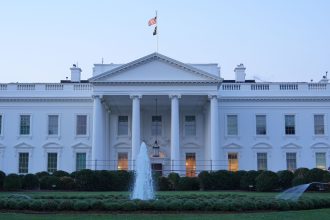
The film documents the period leading up to Donald Trump’s return to power in January 2025 and has already been screened at the White House. Its official premiere is scheduled to take place at Washington’s Kennedy Center, which President Trump controversially renamed the Trump-Kennedy Center, a move that is reportedly facing legal challenges.
Donald Trump has promoted the documentary heavily on social media, describing it as a “must watch” and claiming tickets are “selling out fast”, a statement that appears at odds with early box office data.
Melania Trump is listed as an executive producer and has been described by senior adviser Marc Beckman as being deeply involved in all aspects of the film, from editing and music selection to marketing and trailer design.
The documentary also marks Brett Ratner’s first project since he faced multiple allegations of sexual misconduct in 2017. Ratner denied the claims and was not charged. He is best known for directing the Rush Hour film series, with a fourth instalment reportedly back in development.
A cautious outlook
While political documentaries often attract attention beyond traditional cinema audiences, early indicators suggest Melania may struggle to convert controversy and publicity into ticket sales. Whether curiosity, political loyalty or renewed marketing efforts can shift momentum remains to be seen, but for now, the film’s box office journey appears uncertain.