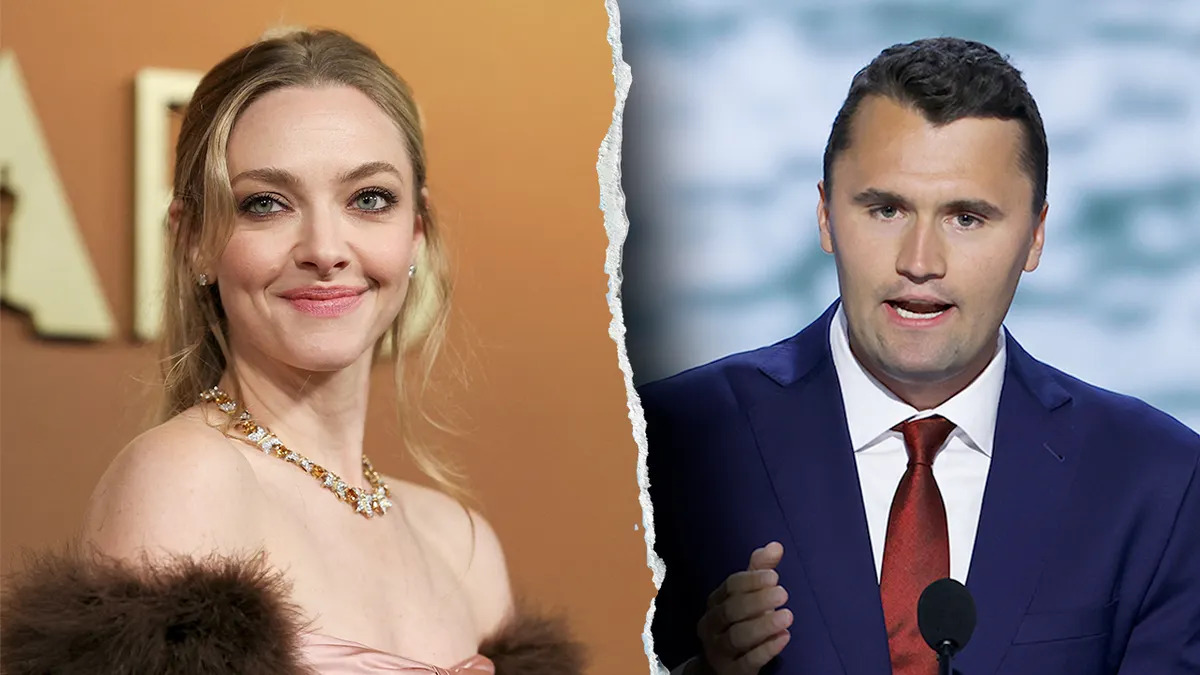
Amanda Seyfried has made it clear she will not apologise for describing assassinated conservative activist Charlie Kirk as “hateful,” reigniting debate around political speech, accountability and the limits of public discourse in the aftermath of violence.
Kirk, a prominent right-wing figure credited with energising Republican youth voters and supporting Donald Trump’s 2024 election campaign, was shot dead in September while speaking at Utah Valley University in Orem, Utah. His death shocked the United States and triggered a wave of reactions from politicians, commentators and celebrities.
Shortly after the killing, Seyfried shared a social media post describing Kirk’s rhetoric as hateful — a remark that drew swift backlash from conservatives and online critics. Kirk had long been a polarising figure, known for outspoken opposition to abortion, gun control, diversity and inclusion initiatives, and LGBTQ rights.
As criticism mounted, the actress later clarified her position, stressing that condemning violent murder and criticising political rhetoric were not mutually exclusive. She wrote that people were “forgetting the nuance of humanity,” adding that while she strongly opposed misogynistic and racist rhetoric, Kirk’s killing was “absolutely disturbing and unimaginable.” She emphasised that no one should experience such violence and called attention to the broader crisis of senseless shootings in the US.
Despite her attempt to add context, Seyfried has now doubled down on her original stance. Speaking to Who What Wear, she said she stood by her words and rejected calls for an apology.
“I’m not apologising for that,” she said. “What I said was based on actual reality and actual footage and actual quotes. What I said was pretty damn factual, and I’m free to have an opinion.”
She explained that the backlash left her feeling misrepresented, but social media gave her an opportunity to reclaim her voice. According to Seyfried, her clarification was less about walking anything back and more about correcting what she saw as deliberate recontextualisation of her words.
Her renewed comments were met with strong support online. Many argued that acknowledging Kirk’s documented rhetoric does not diminish the seriousness of his murder. Others praised her for standing firm, saying accountability does not disappear simply because a public figure has died.
However, the controversy has widened. Former Selling Sunset star Christine Quinn also faced backlash this week after criticising Kirk’s widow, Erika Kirk, who has since taken over Turning Point USA and embarked on a nationwide tour promoting Kirk’s posthumous book. Quinn’s remarks on social media were labelled by some as cruel, while others defended them as fair commentary.
The broader debate reflects lingering tensions following Kirk’s assassination. His rhetoric was frequently described by critics as divisive, racist, xenophobic and extreme, even before his death. In the days that followed the shooting, reactions from celebrities became a flashpoint, with comedian Jimmy Kimmel briefly taking his show off air after controversial remarks about the political fallout of the killing. Kimmel later clarified that he never intended to make light of the murder.
Meanwhile, the legal process continues. Tyler Robinson, 22, has been charged with aggravated murder and other offences in connection with Kirk’s assassination.
As emotions remain raw, Seyfried’s refusal to apologise underscores a growing cultural fault line: how society grapples with condemning political violence while still confronting the language and ideologies that shape public life.