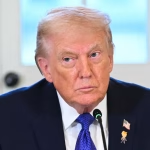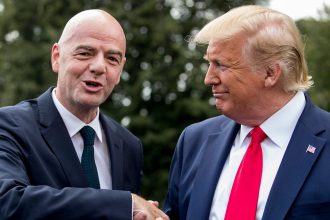
Donald Trump’s interest in Greenland is not new, but his latest remarks have taken the issue to a more confrontational level. The White House has confirmed that discussions are under way about a potential US offer to buy the island, with Trump insisting that American control is essential for national security.
Greenland’s leaders and Denmark, a fellow Nato member, have firmly rejected the idea. Greenland is a semi-autonomous territory within the Kingdom of Denmark, and its government has repeatedly stated that the island’s future is not up for negotiation.
Where Greenland Is and Why It Matters
Greenland is the world’s largest island that is not a continent, covering around 2.2 million square kilometres. That makes it roughly six times the size of Germany. Despite its vast landmass, it is home to only about 56,000 people, most of whom are indigenous Inuit, making it one of the most sparsely populated places on Earth.
Its location is what makes it geopolitically powerful. Sitting between North America and the Arctic, Greenland is ideally positioned for early warning systems that detect missile launches and for monitoring naval activity in the increasingly contested Arctic region.
During the Cold War, the United States explored the idea of placing nuclear weapons on the island, plans that were eventually dropped due to technical challenges and Danish opposition. Even so, the US has maintained a military presence there since World War Two.
The Role of Pituffik Space Base
The Pituffik Space Base, formerly known as Thule Air Base, remains a cornerstone of US and Nato defence strategy. It plays a critical role in missile detection and space surveillance, forming part of the wider global missile defence network.
For Trump and many US lawmakers, this base symbolises why Greenland is seen as strategically indispensable. They argue that losing influence over the island would weaken Western defence capabilities at a time of growing tension with Russia and China.
Natural Resources and Climate Change
Although Trump has insisted that minerals are not his primary motivation, Greenland’s natural resources cannot be ignored. The island’s economy is currently dominated by fishing and substantial financial support from Denmark.
However, Greenland is believed to hold significant deposits of rare earth minerals, uranium and iron. Scientists also suggest there may be large oil and gas reserves beneath the ice. As climate change accelerates the melting of Greenland’s ice sheet, access to these resources becomes more feasible.
Trump has shown strong interest in strategic minerals elsewhere, including in his dealings with Ukraine, which has led many analysts to question whether resources play a larger role than he publicly admits.
Trump’s Claims About Security Threats
Trump has repeatedly stated that Greenland is vital to US security, warning that Russia and China are expanding their presence in the Arctic. He has claimed that vessels from both countries are increasingly active around Greenland, framing the issue as a defensive necessity rather than territorial ambition.
Many Republican lawmakers support this view, arguing that failing to act could allow rival powers to gain influence in a region that is becoming more accessible and strategically important due to melting ice.
How Trump Could Try to “Take” Greenland
Trump first floated the idea of buying Greenland in 2019, during his first term, only to be told bluntly that it was not for sale. He revived the proposal shortly after returning to the White House in January 2025.
Since then, the rhetoric has escalated. Trump has refused to rule out military options, while some of his allies have suggested that US power would go unchallenged. At the same time, Secretary of State Marco Rubio has reportedly emphasised that Washington’s preference is to purchase the territory and build long-term commercial ties rather than invade it.
Vice-President JD Vance added fuel to the fire during a visit to Greenland in March, accusing Denmark of failing to invest adequately in the island’s defence. The appointment of a special US envoy to Greenland later in 2025 further intensified concerns about American intentions.
What This Means for Nato
Perhaps the most delicate issue is what Trump’s stance means for Nato. Denmark is a founding member of the alliance, and any suggestion of coercion or military pressure against its territory cuts directly against Nato’s principles of collective defence and mutual respect.
US officials have tried to soften the message by stressing shared adversaries and common security goals within Nato. Even so, Trump’s comments risk undermining trust among allies at a time when unity is seen as essential in responding to Russia and managing China’s global ambitions.
For now, Greenland remains firmly opposed to any change in sovereignty, Denmark is standing its ground, and Nato finds itself watching nervously as one of its most powerful members flirts with an idea that could test the alliance from within.