Economic Freedom Fighters (EFF) leader Julius Malema has hit back strongly at both US President Donald Trump and South African President Cyril Ramaphosa following a controversial meeting at the White House, where Malema’s name and a contentious struggle song were brought up.
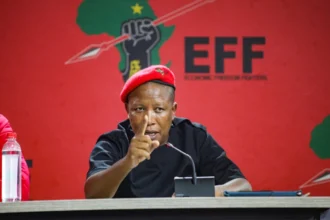
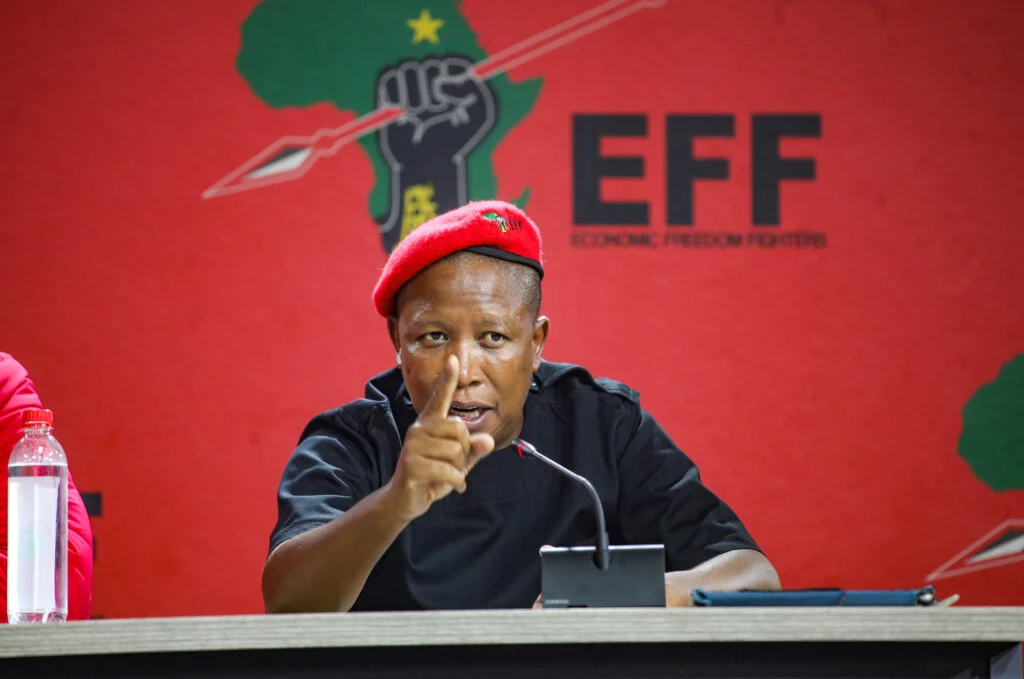
Speaking in Kwakwatsi, Free State, during a campaign event ahead of next week’s by-elections, Malema accused Ramaphosa of failing to defend South Africa and his leadership during the high-profile meeting with Trump.
Trump Plays “Kill the Boer” Clip to Ramaphosa
During the Oval Office meeting last Wednesday, Trump surprised Ramaphosa by playing a montage of video clips featuring Malema singing “Kill the Boer”—a liberation-era song often criticised by conservative commentators abroad. Trump reportedly asked Ramaphosa whether Malema would face arrest for singing it.
The moment sparked backlash across South African political circles, and now Malema has issued his response.
Malema: “Trump Will Never Do That in My Presence”
“They were speaking about me in that meeting at the White House,” Malema told supporters.
“If they were not gossiping about me, they should have called me into that meeting. I would have answered everything that Donald Trump wanted from us.”
He continued with a fiery rebuke:
“The nonsense that Trump did—he will never do that in my presence. I will confront him with the facts.”
Malema also took aim at Ramaphosa’s handling of the situation.
“Ramaphosa could not defend himself in front of Trump. You’ve got a cowardly president.”
“EFF is Hated by Imperialists”
Positioning himself and the EFF as staunchly anti-imperialist, Malema framed the incident as part of a broader campaign against his movement.
“Comrades, we must defend our country against imperialism. The only organisation that is hated by imperialists is the EFF,” he declared.
“I will never be intimidated by America.”
Context Behind the Song
“Kill the Boer” is a chant with deep roots in South Africa’s liberation history. Critics, particularly abroad, have labelled it hate speech, while defenders argue it represents symbolic resistance against apartheid-era oppression. South African courts have previously ruled on the matter, citing contextual and historical interpretations rather than incitement to violence.
Ramaphosa’s Silence Questioned
The President has yet to issue a public statement on the Oval Office exchange, prompting criticism from some quarters of the political spectrum who believe he should have challenged the portrayal of Malema and South Africa more assertively.