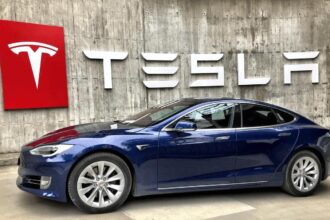

Tesla posted a record quarter of vehicle sales but saw its share price dip as investors questioned the sustainability of the growth now that U.S. federal EV subsidies have expired.
Record Deliveries Beat Expectations
The automaker delivered 497,099 vehicles worldwide in Q3 2025, up 7.4% from a year earlier and well ahead of analyst estimates of around 439,600. The surge was driven by strong demand for the Model Y SUV and Model 3 sedan, which together accounted for 481,166 units, up 9.4%. By contrast, sales of the Model X, Model S, and Cybertruck dropped by 30%.
Tesla also reported a jump in its energy division, deploying 12.5 gigawatt hours of storage products, nearly double the previous year. The company unveiled a new large-scale system called Megablock during the quarter, designed to integrate storage with transformers and switchgear.
Market Reaction and Investor Focus
Despite the sales milestone, Tesla shares fell Thursday, retreating after a record monthly market-cap gain of $401.9 billion in September. Analysts say investor attention has shifted away from car sales to higher-margin ventures such as robotaxis, artificial intelligence, and the Optimus humanoid robot.
Benchmark analyst Mickey Legg noted:
“We see no change to our thesis and believe astute investors are looking beyond near-term delivery volatility to higher-margin initiatives.”
Tax Credit Expiration Fuels Demand Spike
Much of the Q3 boost came from a rush to secure U.S. federal EV tax credits worth $7,500 before they expired on 30 September 2025. The policy change spurred demand not only for Tesla but also for rivals including GM, Ford, Hyundai, and Rivian.
Cox Automotive’s Stephanie Valdez Streaty said on Bloomberg TV:
“This sense of urgency created consumer reaction, and we’re seeing that in the data. It’s going to be challenging going forward.”
Challenges Ahead
With subsidies gone, analysts expect Tesla may face a slowdown in Q4 and into 2026. Elon Musk himself has warned of several “rough quarters” before autonomous vehicles can scale.
Additional headwinds include:
- Aging lineup of core models
- Increased competition from traditional automakers and startups
- Regulatory shifts under the Trump administration, including a rollback of fuel economy rules that previously supported Tesla’s credit revenues
CFRA Research’s Garrett Nelson cautioned:
“While the numbers were better than expected, it’s important to highlight the data is backward-looking.”
Outlook
Wall Street still expects Tesla’s annual sales to decline for the second year in a row. Analysts project 1.61 million deliveries in 2025, down from 1.79 million in 2024.
Investors will get further clarity at Tesla’s upcoming earnings release on 22 October and its annual general meeting in November, where a proposed $1 trillion compensation package for Musk will be up for a shareholder vote.