South Africa has officially been removed from the Financial Action Task Force (FATF) greylist — a major victory for the country’s financial system, investors, and ordinary citizens. The FATF, an international body that monitors compliance with global standards to combat money laundering and terrorism financing, announced the decision following its plenary meetings in Paris from 22 to 24 October 2025. The delisting means South Africa is no longer classified as a “jurisdiction under increased monitoring.”
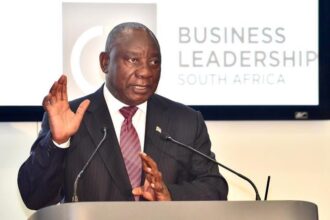
Business for South Africa (B4SA) welcomed the announcement, saying the move will “reduce transaction costs, enhance investor confidence, and improve the ease of doing business, particularly in the financial sector.”
According to B4SA, this achievement also “sends a clear signal to international partners that South Africa is committed to transparency, accountability, and global best practice.” The organisation called it a major milestone that will boost confidence in the country’s financial institutions and attract new investment.
South Africa was greylisted in February 2023 after FATF identified weaknesses in the country’s anti-money laundering and counter-terrorism financing frameworks. Since then, the government and private sector have worked closely to implement wide-ranging reforms, including new legislation, stronger oversight mechanisms, and the rebuilding of key institutions weakened during the state capture era.
National Treasury said government had “worked tirelessly to address all the deficiencies identified by the FATF,” calling the delisting “a major policy and institutional achievement for the people of South Africa.” Treasury credited government agencies, law enforcement bodies, and the private sector for their coordinated efforts to restore integrity to the financial system.
“This outcome is proof that when the public and private sectors work together in the national interest, meaningful progress is possible,” said Neal Froneman, chairman of Business Against Crime, alongside Mary Vilakazi and Jannie Durand. “These reforms are not only vital for unlocking investment but also for improving the everyday lives of South Africans.”
However, both Treasury and B4SA cautioned that the delisting should not lead to complacency. Future FATF evaluations — including South Africa’s next mutual review in 2026 — will assess whether the country continues to make measurable progress, including successful investigations and prosecutions of financial crimes.
“The work is far from over,” Treasury warned. “Exiting the greylist is only the beginning of a broader process to strengthen key institutions, improve enforcement, and ensure that reforms are sustainable.”
Through initiatives like the South African Banking Risk Information Centre (SABRIC), business continues to support law enforcement agencies such as the Directorate for Priority Crime Investigation (Hawks) by strengthening digital and financial investigation capabilities.
As B4SA concluded, “Maintaining this progress will be vital to ensuring that South Africa’s financial systems remain robust, credible, and globally competitive.”