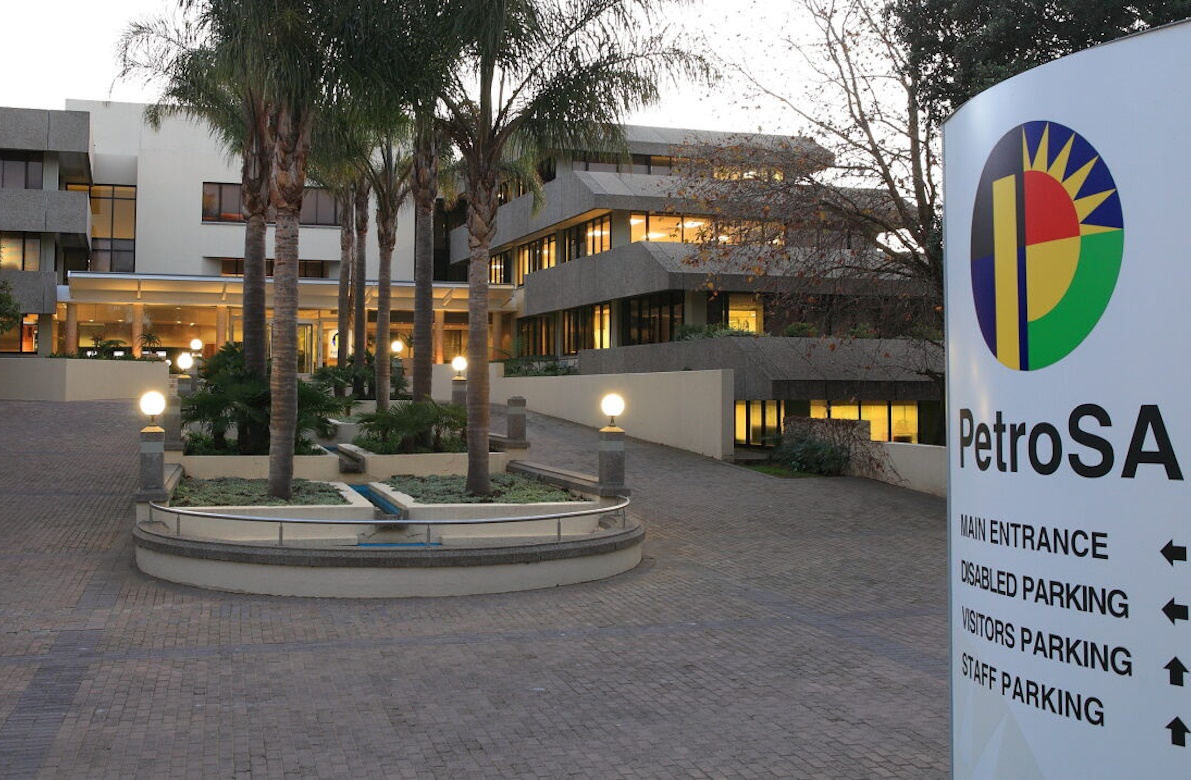
The South African Revenue Service (SARS) has taken steps to attach PetroSA’s mothballed Gas-to-Liquids (GTL) refinery in Mossel Bay as security for more than R4.5 billion in unpaid licensing and duty fees, escalating a financial crisis at the already distressed state-owned oil company.
PetroSA executives revealed to Parliament that SARS officials visited the company’s offices last Tuesday to discuss a repayment plan. This was followed by a formal notice that required a response by Friday, 5 December. If PetroSA failed to comply, SARS would proceed with attaching the Mossel Bay refinery.
The company’s chief financial officer, Nombulelo Tyandela, admitted that the value of the refinery comes nowhere close to covering the debt.
“The refinery is sitting at R340 million. We owe SARS R4.5 billion. The attachment won’t cover sufficiently what they want,” she said.
Tyandela added that SARS officials had already moved to identify the refinery as a secured asset. While PetroSA would be allowed to continue using the facility, it would be prohibited from encumbering or leveraging the asset in any way.
The financial picture presented to Parliament painted a bleak scenario. PetroSA’s current liabilities reached R9.4 billion at company level and R9.7 billion at group level, with liabilities significantly exceeding assets.
“By October 2025, current liabilities were exceeding assets. We are unable to honour liabilities as they fall due,” Tyandela told MPs. “Apart from SARS, we owe product suppliers. We depend on traders instead of refiners.”
She warned that defaulting on traders—who allow PetroSA to procure fuel on open account—would further destabilise operations. Group liabilities now stand at R20 billion, against assets valued at R13 billion, resulting in deepening cumulative losses.
Portfolio Committee Chairperson Mikateko Mahlaule called on the Department of Mineral and Petroleum Resources to intervene urgently, warning that the crisis threatens PetroSA’s ability to deliver on its mandate.
Meanwhile, Central Energy Fund chairperson Ayanda Noah said the board only learned of the planned SARS asset attachment during a parliamentary lunch break and had not yet processed its implications.
“We need to regroup. It requires invoking the intergovernmental relations process as a matter of urgency, because there are many issues around the SARS claims and some counterclaims,” Noah said.
Operationally, PetroSA remains dependent on fuel imports, using Mossel Bay and alternative storage facilities to distribute fuel to customers in Mossel Bay, Cape Town, and limited inland markets. Yet sales volumes and revenue continue to lag.
Tyandela noted that about 70% of operating costs are tied to maintaining non-operational assets, including the shut-down GTL plant. PetroSA’s revenue has also taken a knock due to declining diesel purchases from Eskom as its operations stabilised.
Despite ending the 2024/25 financial year with R1.6 billion in cash at group level, Tyandela said the company’s financial position remains precarious, with overdue creditor payments and unresolved liabilities.
PetroSA is also grappling with a R3 billion shortfall in its rehabilitation fund, which is legally required to hold around R10 billion. Although the fund has grown from R1.5bn to R3bn through money-market investments, it remains far below its mandated level.
Management has explored higher-yield investments to close the gap faster, but tax implications could erode returns, forcing the company to maintain a conservative investment strategy for now.