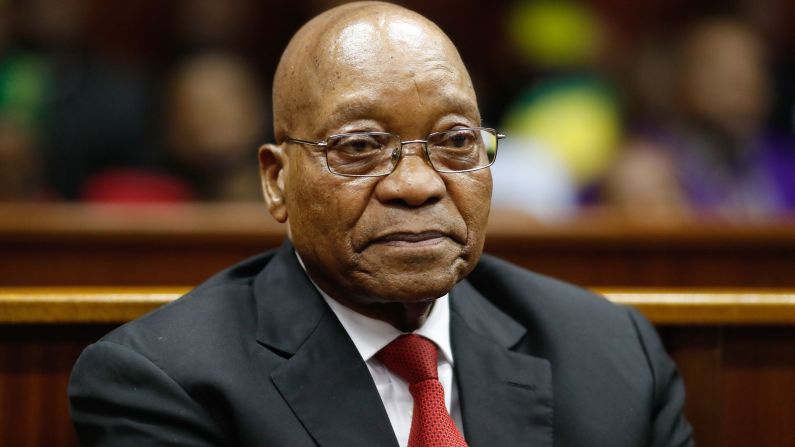
The legal showdown between the Presidency and former President Jacob Zuma is set to play out in the High Court in Pretoria, as government seeks to recover more than R28.9 million in legal fees spent on Zuma’s defence during his long-running arms deal corruption saga.
This follows a 2024 Supreme Court of Appeal (SCA) ruling that Zuma was not entitled to taxpayer-funded legal assistance and must reimburse the state.
The R28.9 million in question covered legal representation and related expenses accumulated over several years as Zuma fought corruption charges tied to the 1999 arms procurement deal — a case that has haunted South Africa’s political landscape for decades.
Government lawyers have confirmed that the state is now moving to enforce the repayment order, including the possibility of garnishing Zuma’s pension should he fail to comply.
Zuma’s legal team, however, has argued that he cannot afford to repay the amount due to “financial hardship.” Despite this claim, the Presidency and the State Attorney’s office insist that public money must be recovered to uphold principles of accountability and fiscal responsibility.
Observers say the outcome of this case could set a precedent for how future public officials are held accountable for using state funds for private legal matters.
Political analysts note that the case also underscores the tension between Zuma’s legal legacy and South Africa’s democratic institutions, as the former president continues to face scrutiny over his time in office.
The Presidency has stated that reclaiming the money is a matter of principle — not politics. “It is important that state funds used improperly are recovered in full,” a source within the Presidency said.
As the High Court hearing approaches, the case is expected to dominate headlines once again, drawing in legal experts, political observers, and the public alike.
For many South Africans, the proceedings represent more than just a financial recovery — they symbolize an ongoing effort to restore trust in public institutions and reaffirm that no one is above the law.