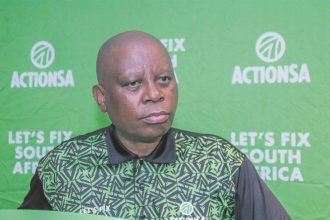
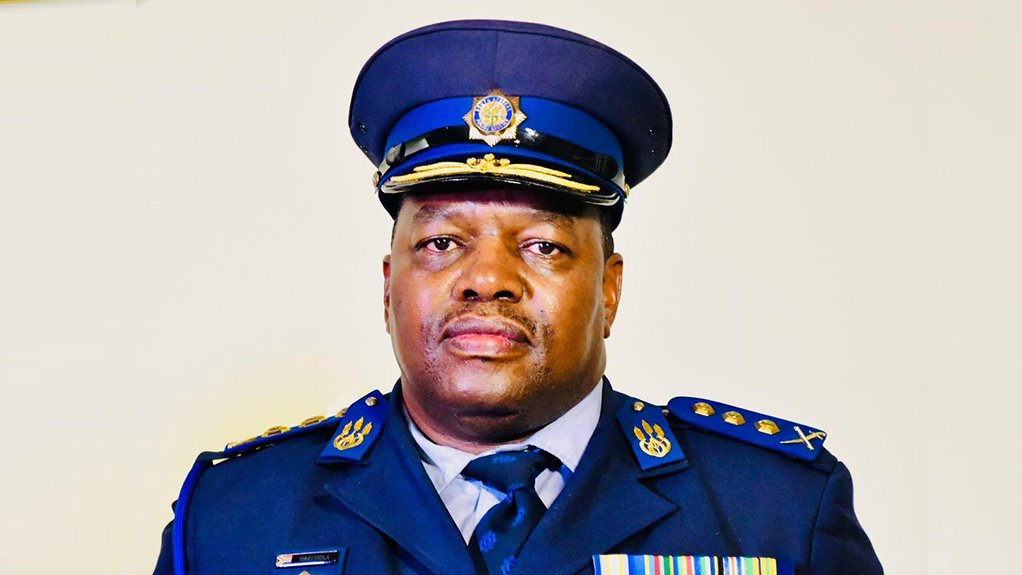
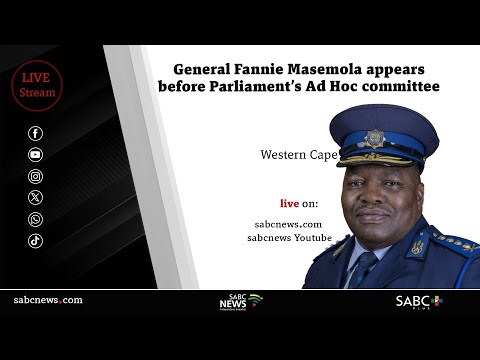
National Police Commissioner General Fannie Masemola is set to face serious questioning from ActionSA Member of Parliament Dereleen James, who says the family of slain whistleblower Babita Deokaran deserves an apology — and the country deserves accountability.
James made the comments during Thursday’s sitting of the Ad Hoc Committee investigating explosive allegations made by Lieutenant General Nhlanhla Mkhwanazi, the KwaZulu-Natal Police Commissioner. Mkhwanazi completed his testimony late on Wednesday night after a lengthy session that, according to James, was “very effective” and “thorough.”
“General Mkhwanazi’s responses were drawn out and detailed — they gave us a solid foundation for follow-up questions,” James noted. “On the whole, it went well.”
‘SAPS Should Have Known Better’ — James on Deokaran’s Death
James said her focus moving forward is ensuring that General Masemola provides clear answers regarding the police’s failure to protect Babita Deokaran, the former chief director of financial accounting at the Gauteng Department of Health who was assassinated outside her home on August 23, 2021.
Deokaran was reportedly targeted after exposing massive corruption at Tembisa Hospital, including fraudulent contracts worth billions of rands. She sustained multiple gunshot wounds in what investigators later described as a planned hit.
“SAPS knew the sensitivity of the information Babita shared — they should have known better,” James said firmly. “If anything, we owe her family an apology. And we now have to ask General Masemola: what are the current plans and processes to protect witnesses like Babita?”
R2 Billion in Looted Funds and Three Corruption Syndicates
The Special Investigating Unit (SIU) recently released an interim report detailing the shocking scale of fraud and maladministration uncovered at the hospital.
SIU head, Advocate Andy Mothibi, described the findings as “a devastating plunder of public funds,” revealing that three coordinated syndicates were responsible for the loss of over R2 billion.
“The investigation has uncovered, to date, three coordinated syndicates responsible for the loss of over R2 billion,” Mothibi said. “The evidence revealed a number of maldistributions and other procurement irregularities.”
James said South Africa cannot afford to lose sight of Deokaran’s story — a case that has come to symbolize the country’s deep-rooted corruption and the risks faced by whistleblowers who dare to expose it.
Political Accountability and Public Trust
James also pointed out the broader political implications of the ongoing parliamentary hearings, urging South Africans to follow the proceedings closely.
“These hearings are important for people to watch so they can make informed decisions come the next election,” she said. “Because we can see that the rot is politically aligned.”
Her comments underscore growing public frustration over the lack of accountability in high-profile corruption cases and the apparent failure of state institutions to protect those who risk their lives exposing wrongdoing.
With Masemola now expected to be questioned directly, many are hoping for answers — and, perhaps, the first steps toward restoring trust in a justice system that has too often failed its bravest citizens.