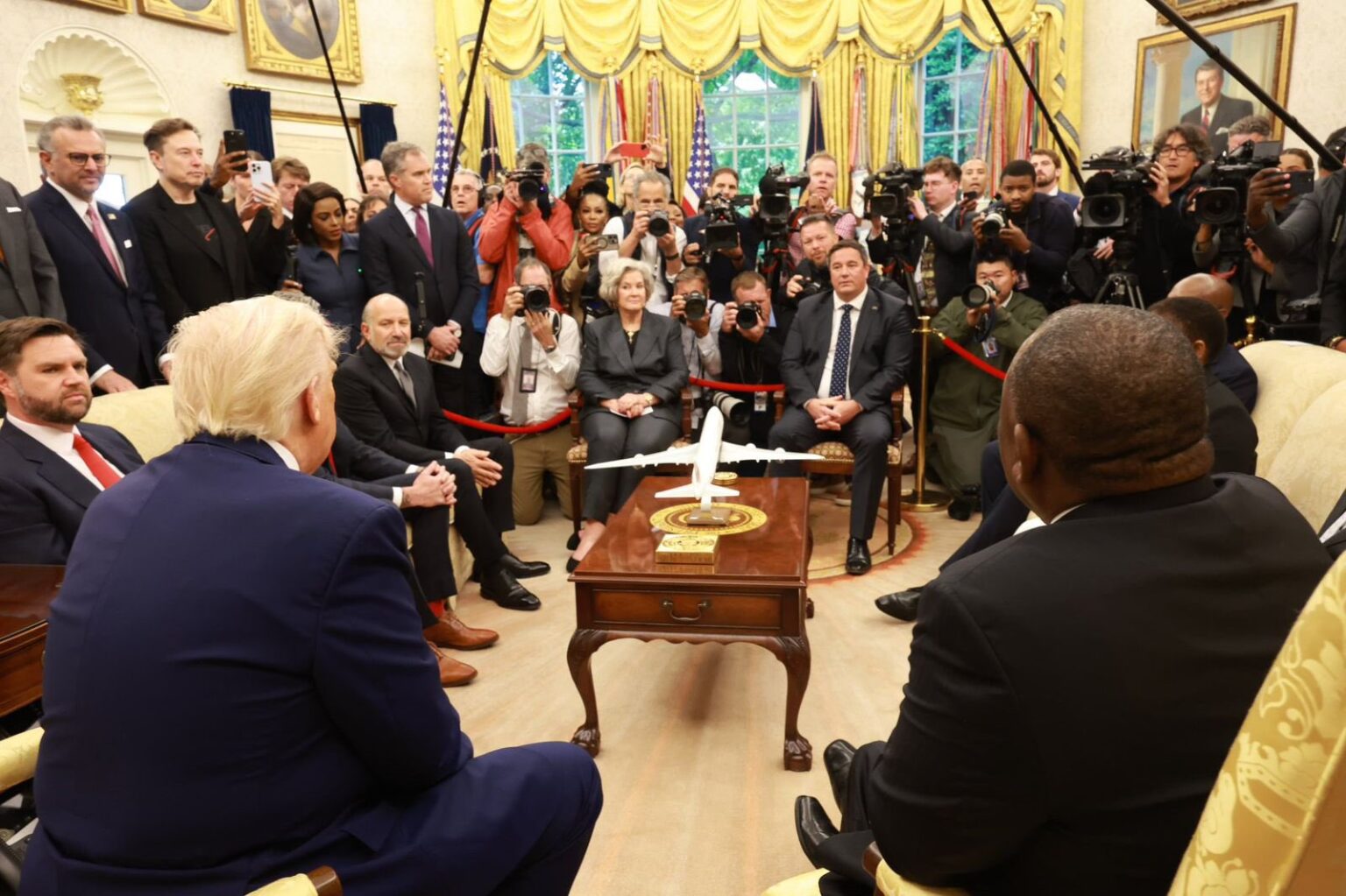
Washington, D.C. – Democratic Alliance (DA) leader and Agriculture Minister John Steenhuisen is facing a mounting wave of criticism following comments made during a high-profile briefing between South African President Cyril Ramaphosa and U.S. President Donald Trump at the White House on Wednesday.
During the diplomatic exchange, which focused heavily on U.S.-South Africa bilateral ties and security concerns, Steenhuisen was called upon to address ongoing claims of a so-called “white genocide” in South Africa—allegations that have resurfaced in American political circles and social media, often supported by edited clips of Julius Malema and MK Party members speaking about land expropriation.
In a bid to de-escalate the situation, President Ramaphosa reportedly turned to Steenhuisen for reinforcement. While Steenhuisen acknowledged the reality of rural safety challenges in South Africa, his measured response did not go over well with many watching—particularly those concerned with the plight of commercial white farmers.
A Measured Response Sparks Outrage
Steenhuisen stated that stock theft and farm attacks remain serious issues affecting all farmers in South Africa, and pointed out that these problems disproportionately impact black smallholder farmers as well.
“It affects all farmers in SA, particularly stock theft that has a disproportionate effect on black farmers,” he said.
He added that his department, along with the Police and Justice clusters, intends to prioritize these matters going forward.
But his response was met with fierce criticism online, where some accused him of downplaying the concerns of white farming communities and failing to adequately challenge anti-farmer narratives.
Social Media Reacts Harshly
Following the briefing, Steenhuisen attempted to clarify his position on social media, posting:
“During my engagement with President Trump in the Oval Office, I outlined that the DA joined the GNU to protect SA from violent anti-constitutionalists. Along with the security cluster and our US partners, my department is committed to winning the fight against farm murders.”
During my engagement with President Trump in the Oval Office, I outlined that the DA joined the GNU to protect SA from violent anti-constitutionalists. Along with the security cluster and our US partners, my department is committed to winning the fight against farm murders. 🇿🇦 pic.twitter.com/UfrW2oHTRi
— John Steenhuisen MP (@jsteenhuisen) May 21, 2025
Despite this, criticism from supporters and political opponents alike quickly gained traction on platforms like X (formerly Twitter). Among the trending reactions:
- @RickBothma: “You did not stand up for white farmers.”
- @Freshermoon2: “Don’t come back.”
- @NativeSettler1: “You lost a lot of voters today.”
- @aynrandfontein: “You allowed the ANC to use you as a prop.”
- @danielle_v73623: “You have ruined the legacy of Zille and the DA. You will never be supported again. You’re a traitor and a coward.”
Calls for Stronger Leadership
Critics contrasted Steenhuisen’s remarks with those of business tycoon Johann Rupert, who also attended the White House event. Rupert took a broader stance on crime in South Africa, highlighting the country’s widespread violent crime as a problem impacting all communities—not just white Afrikaner farmers.
He also pointed to the violence on the Cape Flats, shifting attention to crime-ridden areas often overlooked in international discourse about South African safety concerns.
Rupert’s message was viewed by some as a more effective and unifying approach, with others suggesting Steenhuisen missed a valuable opportunity to defend a key DA voter base.
Political Implications
As a prominent figure in the newly formed Government of National Unity (GNU), Steenhuisen’s comments come at a sensitive time. The DA’s involvement in the GNU has already stirred controversy among party loyalists wary of perceived compromises with the ANC. Wednesday’s briefing appears to have deepened those divisions.
Steenhuisen has yet to respond directly to the online backlash. Whether this incident will impact his leadership in the DA or shift the party’s internal dynamics remains to be seen.
In the meantime, the debate over rural safety, race, and crime in South Africa continues to be a deeply emotional and divisive topic—both at home and on the international stage.