Political sparks are flying ahead of the 2025 G20 Summit, and they’re not coming from the usual geopolitical suspects. Instead, the latest diplomatic storm involves the United States and South Africa, with Washington taking a bold—and unusually provocative—swing at Pretoria’s leadership.
US Secretary of State Marco Rubio delivered a blistering critique of South Africa’s governance, accusing the ANC-led administration of racial hostility, economic decline, and a retreat from democratic values. The remarks arrive as South Africa hosts the 2025 G20 Summit, while the US prepares to take over the presidency of the global economic bloc in 2026 for the first time since 2009.
Rubio framed the upcoming US-led summit as a showcase of American democratic strength and economic vitality. He tied the moment to the United States’ 250th anniversary, suggesting that the 2026 G20 would serve as a global advertisement for American innovation and political resilience.
He emphasised that the US intends to use its presidency to reflect its founding ideals, describing it as an opportunity to highlight the values that, in his view, offer “a roadmap to prosperity for the entire world.”
Rubio’s comments then took a sharper, more controversial turn. He accused South Africa’s government of rejecting accountability and implementing policies he claims discriminate against Afrikaner citizens. His remarks echoed talking points often found in domestic US political debates rather than diplomatic exchanges.
He argued that South Africa’s leadership was using scapegoating to avoid responsibility for its own shortcomings, going as far as to claim that racism and tolerance for violence had become embedded in state policy. His reference to former President Donald Trump further underlined the political flavour of the statement.
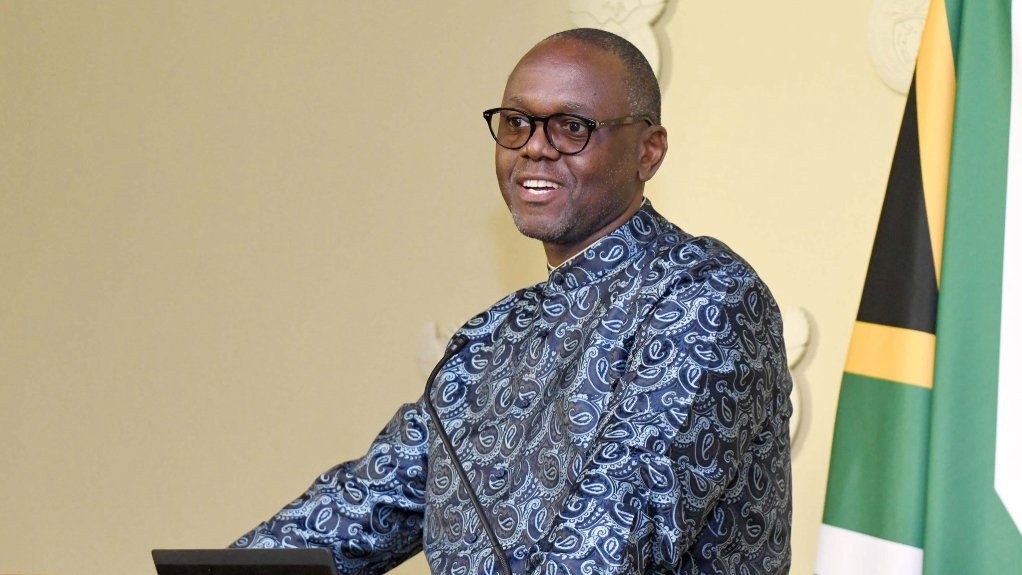
Pretoria did not take kindly to the criticism. The Presidency responded with lightly veiled sarcasm, brushing aside Rubio’s comments as political theatrics rather than serious engagement. Presidential spokesperson Vincent Magwenya offered a dry remark about South Africa’s future partnerships, subtly pointing out that the UK—not the US—will assume the G20 presidency in 2026.
Magwenya’s retort suggested that Pretoria expects calmer and more substantive engagement once the leadership baton moves. His statement signalled that South Africa is eager to refocus on global cooperation rather than political mud-slinging.
South Africa’s hosting of the 2025 G20 Summit had already placed it under the global spotlight. Now, with tensions rising between Pretoria and Washington, the event promises not only discussions on economic recovery and global stability but also an undeniable undercurrent of political friction.
The diplomatic temperature may cool over time, but for now, the US-South Africa relationship is being tested under the bright lights of international scrutiny. The G20 stage has always been a place for bold speeches and sharp disagreements, but this latest exchange hints at a particularly dramatic year ahead for global politics.






![Chinese and Iranian naval vessels dock near Simon’s Town as South Africa hosts a Chinese-led BRICS-linked maritime exercise amid renewed US scrutiny. [Dwayne Senior/Bloomberg via Getty Images] ©provided by Business Insider Africa](https://myvirgo.co.za/wp-content/uploads/2026/01/warship-south-africa-330x220.png)