US President Donald Trump has cast a notable shadow over Netflix’s ambitious R1.22 trillion acquisition of Warner Bros. Discovery, warning that the combined market share of the two entertainment giants could trigger serious antitrust problems.
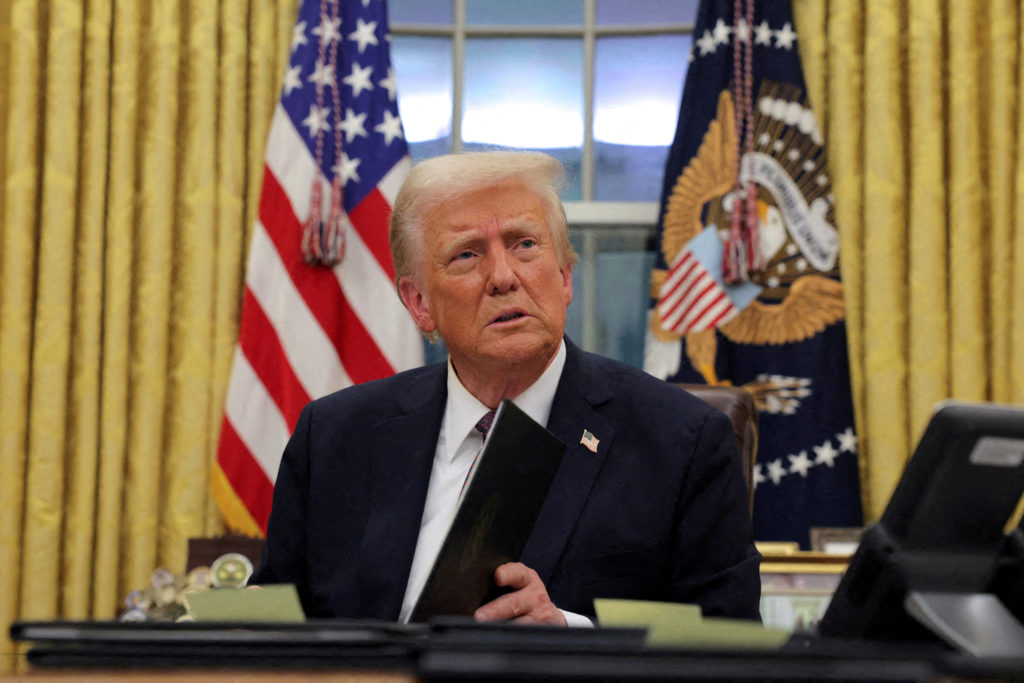
Speaking at the Kennedy Centre on Sunday, Trump hinted that the deal may hit a regulatory wall. His comments arrive as the US Justice Department begins what is expected to be a lengthy and high-stakes competition review, one that could reshape the entire global entertainment landscape.
“It’s got to go through a process, and we’ll see what happens,” Trump said, confirming that he recently met with Netflix co-chief executive Ted Sarandos. The president didn’t mince his words on the scale of the deal. “It is a big market share. It could be a problem.”
Traders certainly took note. Prediction platform Polymarket saw the odds of the deal closing by the end of 2026 plunge from roughly 60% to 23%. Warner Bros. edged upward in early Blue Ocean trading, while Netflix dipped slightly—an early sign of market jitters triggered by Trump’s remarks.
If approved, the acquisition would fuse the world’s largest streaming service with one of Hollywood’s most storied studios, including HBO Max. That combination alone has raised alarm bells in Washington. Regulators at the Justice Department’s antitrust division could argue that Netflix’s market share—already significant—would cross a threshold considered potentially anti-competitive.
Trump made it clear he plans to be personally involved in the matter. “Netflix has a very big market share, and when they have Warner Brothers, that share goes up a lot,” he said, adding a pointed indication that political oversight will be part of the review process.
Netflix, however, reportedly intends to push back hard. The company is expected to argue that the modern content battlefield is far broader than television or film streaming alone. Platforms like YouTube and TikTok, it will say, siphon massive amounts of viewer attention, reducing Netflix’s perceived dominance.
Sarandos, according to earlier reports, lobbied Trump at the White House by stressing that Netflix is hardly invincible. The company has faced subscriber losses, tough competition, and escalating production expenses—hardly the hallmarks of a monopoly.
Still, the politics around the deal are far from simple. Warner Bros.’ decision to partner with Netflix over Paramount Skydance has raised eyebrows in Washington. Paramount’s backer, billionaire Larry Ellison, is known to have close ties to Trump. Unsurprisingly, Trump has publicly praised Paramount’s own recent acquisition, while lawmakers on both sides of the aisle have criticised the Netflix-Warner move.
If the deal goes ahead, the combined platform would boast more than 450 million users globally. Critics argue this would give Netflix outsized power over content pricing and distribution. Supporters counter that technology-driven markets rarely produce lasting monopolies; innovation tends to undercut dominance before regulators can.
Meanwhile, scrutiny is growing beyond US borders. Regulators in the European Union are preparing for an intense review, and in the UK the deal has already drawn questions from lawmakers such as Baroness Luciana Berger, who pressed the government on potential impacts on competition and consumer pricing.
Netflix is expected to argue that the overlap between its subscriber base and HBO Max’s user base works in its favour. More than 75% of HBO Max viewers already subscribe to Netflix, which the streaming giant says supports the idea that the two services complement each other rather than compete head-to-head.
Behind the scenes, the company is also preparing to argue that the merger will ultimately save money—reducing content costs, combining back-end technology, and potentially allowing for more affordable bundled pricing. Whether regulators will be convinced remains uncertain, but the stakes for the entertainment industry are enormous.
As the legal, political, and financial wrangling begins, one thing is clear: Netflix’s proposed purchase of Warner Bros. may be one of the most consequential media deals of the decade, and the world will be watching every move regulators make.