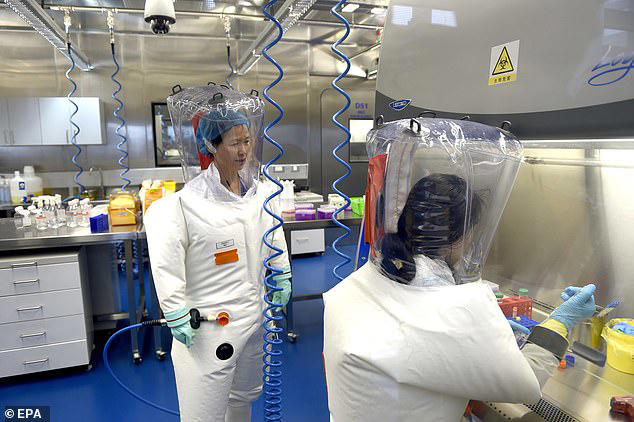
In a striking counterattack amid ongoing geopolitical tensions, China has publicly alleged that the United States, not China, may be the original source of the COVID-19 pandemic. The claim, published in an official white paper by China’s State Council Information Office on Wednesday, directly challenges longstanding U.S. assertions — especially those pushed by former President Donald Trump and his allies — that the virus leaked from the Wuhan Institute of Virology (WIV).
The Chinese white paper asserts that instead of addressing its own failures in managing the pandemic, the U.S. government has politicized the search for the virus’s origin to distract from its public health missteps. The report calls for an international investigation into the early spread of COVID-19 within the United States, suggesting that the virus may have been present there before it appeared in Wuhan, China.
“The U.S. government, instead of facing squarely its failure in response to COVID-19 and reflecting on its shortcomings, has tried to shift the blame and divert people’s attention by shamelessly politicizing SARS-CoV-2 origins tracing,” the document reads.
A Sharp Rebuttal to Trump-Era Narratives
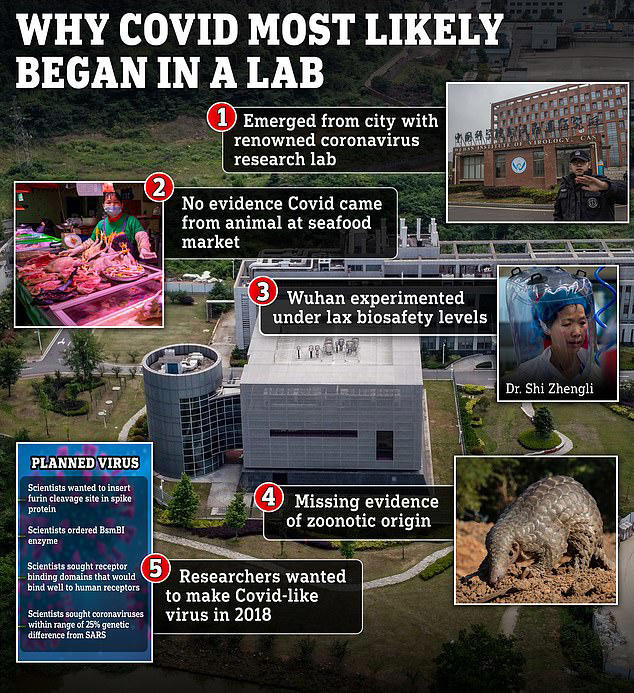
This white paper appears to be a direct rebuttal to renewed claims from the Trump campaign, which has doubled down on the theory that the virus escaped from the WIV — a lab known to be conducting research on coronaviruses. While this theory was once dismissed as conspiratorial, it has gained partial traction in recent years, with the CIA and FBI acknowledging it as a plausible scenario. Nonetheless, many scientists still argue that the virus most likely emerged through natural spillover between animals and humans.
China’s latest report aims to turn that narrative on its head, accusing the U.S. of being the real epicenter of early COVID-19 cases and charging it with a lack of transparency.
Tracing the Timeline: U.S. Cases Before Wuhan?
One of the report’s most contentious claims is that COVID-19 may have been spreading in the U.S. months before the Wuhan outbreak. Chinese officials cited a U.S. CDC study that found SARS-CoV-2 antibodies in 106 out of 7,389 blood samples collected between December 13, 2019, and January 17, 2020.
The white paper also referenced a study by the U.S. National Institutes of Health (NIH) that identified antibodies in nine out of over 24,000 blood samples gathered between January and March 2020. However, medical experts caution that such antibodies could result from other, less dangerous coronaviruses — such as those that cause the common cold — and that the presence of antibodies does not necessarily confirm active infection or sustained transmission.
What the Report Leaves Out
While China’s report insists on deeper scrutiny of U.S. handling and origins, it conspicuously omits key details about its own early handling of the virus. The earliest confirmed genetic sequences of SARS-CoV-2 were traced to samples collected in Wuhan from patients treated at Jinyintan Hospital and workers at the Huanan Seafood Market.
Moreover, the Chinese report downplays or omits its own delay in sharing crucial virus information with the global scientific community, a point repeatedly raised by international health experts and U.S. officials alike.
Laboratory Safety and Allegations
The Chinese government’s white paper claims that the U.S. recorded around 1,500 incidents involving dangerous pathogens in labs, including those related to SARS, MERS, anthrax, and Ebola. While that number may sound alarming at first glance, records show that nearly all of these incidents were minor — typically broken vials or minor containment breaches — with only a handful leading to actual infections.
Still, the Chinese report frames these incidents as indicative of broader systemic failures in U.S. biosecurity and transparency.
Political Theater or Scientific Discourse?
This latest report arrives amid intensifying political posturing, including a new COVID-19 information website launched by the White House that reaffirms the theory that the virus may have escaped from a Chinese lab. It also includes critiques of the Biden administration and former NIH official Dr. Anthony Fauci.
China, meanwhile, insists that the U.S. “should cease from shifting blame and evading responsibility” and respond to what it calls the “legitimate concerns of the international community.”
“The U.S. cannot continue to turn a deaf ear to the numerous questions over its conduct,” the report concludes.
Science Caught in the Crossfire
As both superpowers trade barbed statements and scientific studies are selectively quoted for political gain, one thing remains clear: the true origins of COVID-19 are still uncertain and require a truly global, transparent, and scientifically rigorous investigation — without the fog of blame games or nationalism.
Until then, the world remains caught between competing narratives, with the facts buried under layers of political rhetoric and mistrust.