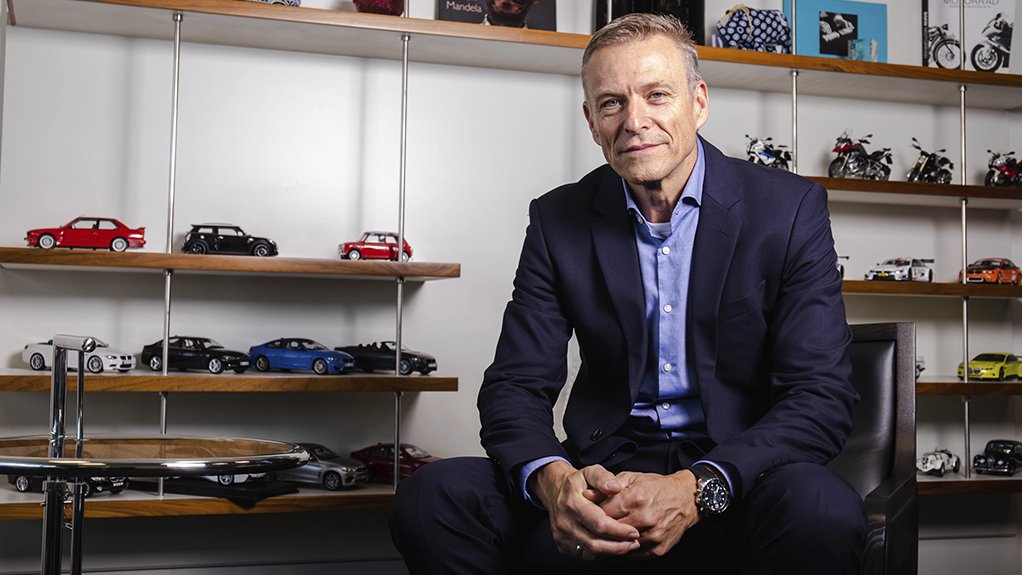
BMW Group South Africa CEO Peter van Binsbergen has raised concerns over the growing influx of low-cost vehicles imported from China and India, warning that the trend could have serious long-term consequences for South Africa’s used-car market, jobs, and automotive ecosystem.
Speaking to Business Times, Van Binsbergen said BMW remains resilient despite increased competition, but cautioned that the wider market may not be as fortunate.
“The used-car market is essential to keep the whole ecosystem running,” he said. “If that breaks down, it affects everyone — manufacturers, dealers, financiers, and consumers.”
‘Cheap cars’ argument too narrow, says BMW
Van Binsbergen criticised the view that South Africans simply need cheaper new cars, describing it as short-sighted.
“It’s costing South Africa jobs in the long run, it’s costing the economy, and it’s also affecting the consumer,” he said.
“You really need to look at the unintended consequences of measures you take and think about the big picture.”
He warned that very low-priced imports could depress resale values, leaving owners of vehicles from other brands unable to sell or trade in their cars at sustainable prices.
Used-car value goes beyond the sticker price
According to Van Binsbergen, consumers should consider more than just upfront pricing when buying vehicles, particularly in the used-car market.
“Look at how the car was looked after during ownership, parts availability, and long-term support,” he said, urging buyers to make more informed comparisons.
His comments come as South Africa’s Department of Trade, Industry and Competition (DTIC) reviews policy options to curb vehicle imports that may undermine local manufacturing.
Government considers higher import tariffs
The DTIC believes that rising imports from China and India pose a threat to South Africa’s domestic vehicle production industry and is considering tariffs of up to 50% on imported vehicles.
International Trade Administration Commission (ITAC) commissioner Ayabonga Cawe said South Africa’s current import duties are well below the limits allowed under World Trade Organisation (WTO) rules.
“For completely built-up passenger vehicles, the bound rates are at 50%, while our duties at the moment are around 25%,” Cawe said.
“On components, there is some room to manoeuvre — depending on the country of origin — of between 10% and 12%.”
Industry divided over tariff increases
Despite the policy review, Van Binsbergen told Reuters that South Africa’s automotive industry is not calling for blanket tariff increases, but rather for targeted policy interventions that support local manufacturing without destabilising the broader market.
However, consumer and industry groups have warned that higher tariffs could have unintended consequences.
A MyBroadband analysis found that imposing such tariffs could increase the price of South Africa’s most affordable cars by around R40,000, potentially excluding millions of consumers from buying new vehicles.
Fears of excluding buyers from the new-car market
The Motor Industry Staff Association (Misa) has urged government to proceed cautiously, warning that it may be “too late in the game” to reverse the gains brought by Chinese and Indian brands.
Misa operations CEO Martlé Keyter said these imports have played a major role in stimulating competition and boosting sales.
“The influx of Chinese and Indian brands stimulated the local market and created massive competitiveness,” Keyter said.
She noted that South Africa recorded three consecutive months of record new-vehicle sales at the end of 2025, surpassing pre-pandemic levels and reaching highs not seen in a decade.
Affordable cars mostly imported
According to MyBroadband, 19 of South Africa’s 20 most affordable passenger vehicles are imported from China or India. The only exception is manufactured in South Korea.
The most affordable locally built car, the Volkswagen Polo Vivo, ranks 25th on the affordability list, starting at R271,900 — nearly R100,000 more than the cheapest imported alternatives.
Other locally produced models, such as the Volkswagen Polo and Toyota Corolla Cross, are priced close to R400,000, placing them out of reach for many South Africans.