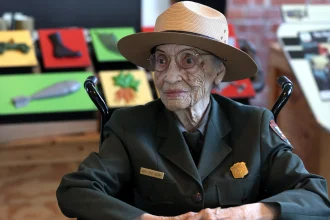
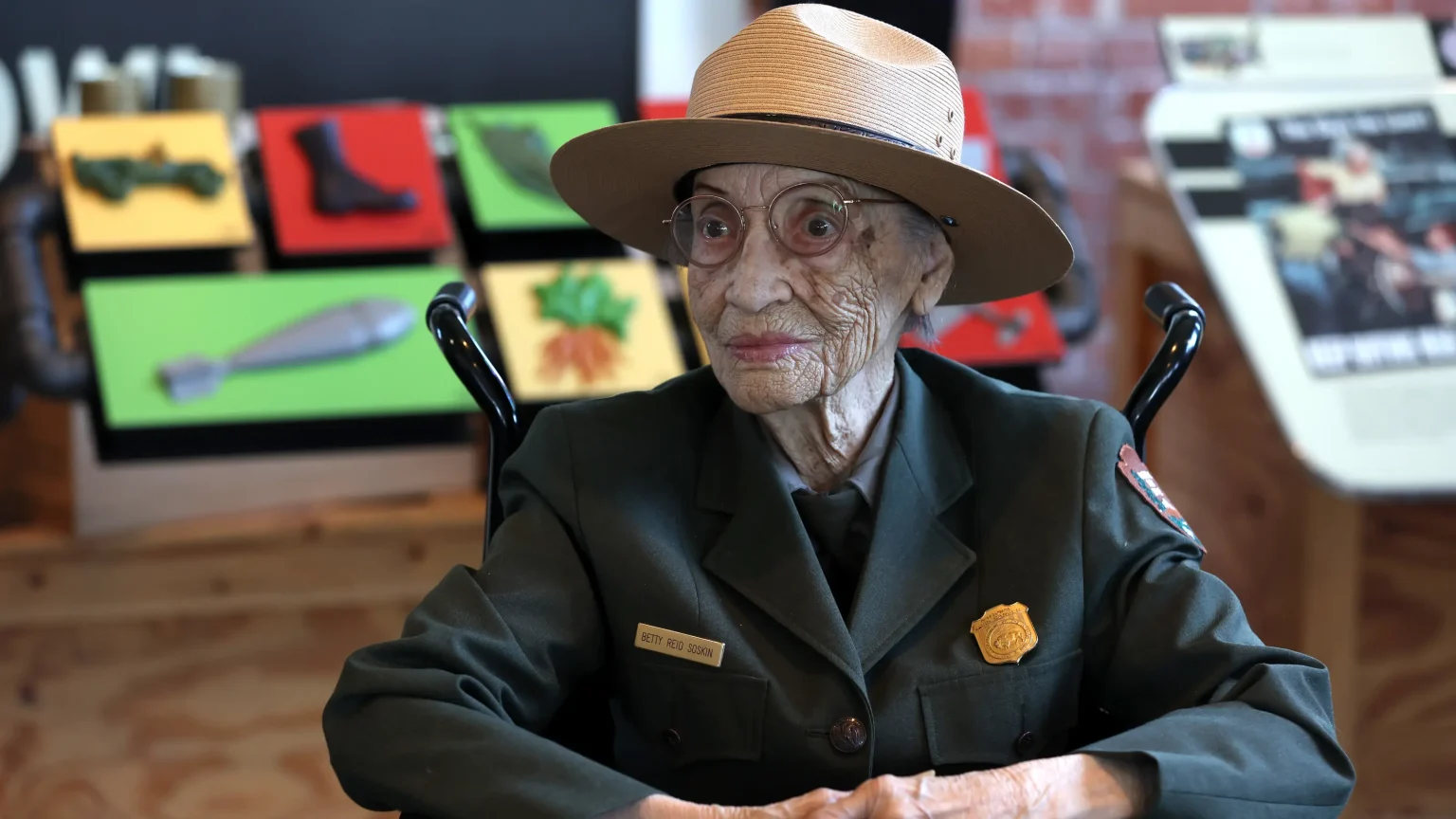
Betty Reid Soskin, the pioneering historian, civil rights advocate and former National Park Service (NPS) ranger whose life spanned more than a century of American history, has died at the age of 104.
Her family confirmed that Soskin passed away peacefully on Sunday morning at her home in Richmond, California, surrounded by loved ones, according to a report by NBC News.
“This morning on the Winter Solstice, our mother, grandmother, and great-grandmother, Betty Reid Soskin, passed away peacefully at her home in Richmond, CA at 104 years old,” her family said. They added that she had lived a “fully packed life” and was “ready to leave”.
A Late but Historic Public Service Career
Soskin was widely celebrated as the oldest active National Park Service ranger in the United States, a distinction she earned not by longevity alone, but by purpose.
Remarkably, her career with the NPS began late in life. At the age of 84, she joined the Park Service through a grant-funded project aimed at uncovering the often-overlooked experiences of Black Americans during World War II. What began as a temporary role evolved into a permanent appointment in 2011. She officially retired in 2022, closing a chapter that inspired millions.
Shaped by Segregation and Resistance
During World War II, Soskin worked as a file clerk at a segregated Boilermakers union hall. According to the National Park Service, this experience deepened her understanding of labour politics, racial discrimination and systemic inequality, themes that would later define her historical work.
In 1945, she and her husband, Mel Reid, opened Reid’s Records in Berkeley, California. The store became one of the first Black-owned music shops in the United States and a vital cultural hub. It operated for more than 70 years before closing in 2019, standing as a testament to Black entrepreneurship and cultural resilience.
Giving Voice to Untold History
Soskin played a pivotal role in shaping the Rosie the Riveter/World War II Home Front National Historical Park in Richmond. In the early 2000s, she worked closely with the City of Richmond and the National Park Service, helping to ensure that African American contributions to the wartime home front were properly recognised.
Through a PG&E-funded grant, Soskin helped bring long-suppressed narratives into the public record. As a ranger, she delivered talks and programmes that blended academic rigour with personal reflection, offering visitors a deeper and more honest account of American history.
National Recognition and Quiet Resolve
In 2013, during a federal government shutdown, Soskin gained national attention as the country’s oldest active park ranger. Despite the media spotlight, she remained steadfast in her mission, choosing education over politics and truth over spectacle.
Her focus, colleagues noted, was always on illuminating the realities of the World War II home front rather than engaging in ideological debates.
Resilience Until the End
Soskin faced significant health challenges in her later years, including a stroke in 2019 that required months of rehabilitation. True to form, she returned to work in 2020 before eventually retiring from the National Park Service.
Her determination and clarity of purpose remained undiminished, reinforcing her reputation as a quiet but formidable force in public service.
Honouring a Lasting Legacy
Soskin’s family has encouraged those wishing to honour her legacy to support the Betty Reid Soskin Middle School and to contribute towards completing her documentary film, Sign My Name to Freedom.
Her life leaves behind more than milestones. It leaves a record of truth-telling, resilience and service — a reminder that history is not just something we inherit, but something we are responsible for telling honestly.