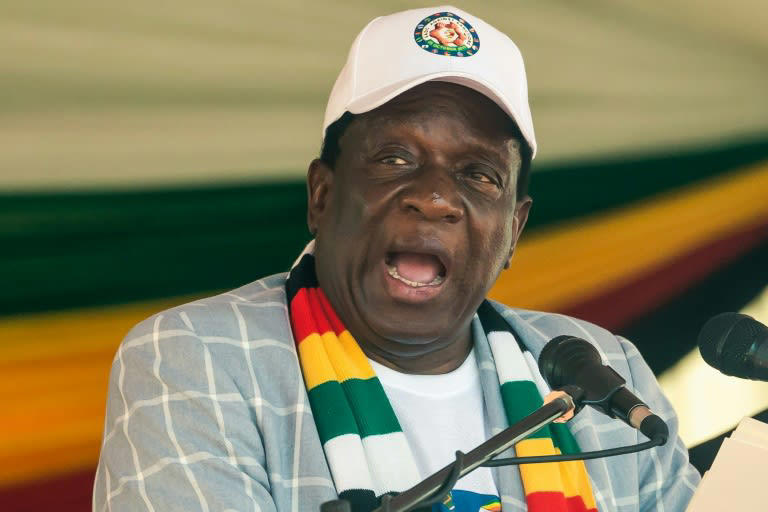
Zimbabwean President Emmerson Mnangagwa has defended the country’s controversial land reform programme, saying the seizure of land from white farmers was an act of reclaiming sovereignty rather than racial targeting.
Mnangagwa made the remarks during a panel discussion with US media personality Tucker Carlson at the World Governments Summit in Dubai, where the two discussed land reform, international sanctions and Zimbabwe’s long economic challenges.
Sanctions Linked to Land Reforms
During the discussion, Mnangagwa said Zimbabwe faced decades of international sanctions following its decision to reclaim land from former colonial owners, particularly Britain.
“Zimbabwe has been under sanctions for decades as a result of us claiming our lands from the British and making ourselves independent,” Mnangagwa said.
“We seized the land and gave it to our people, so sanctions were imposed on us. But in spite of all those constraints we have developed, and we are happy that we feel very independent.”
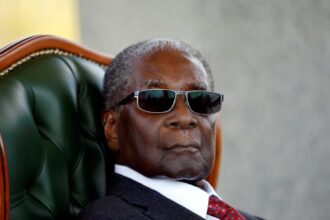
Zimbabwe’s land reform programme, most notably the Fast-Track Land Reform Programme launched in the early 2000s under former president Robert Mugabe, resulted in the redistribution of land previously owned by white commercial farmers to black Zimbabweans.
The programme drew widespread international condemnation and was followed by economic collapse, hyperinflation and strained relations with Western nations.
Race and Land Ownership
Carlson pressed Mnangagwa on whether the land seizures offered lessons about targeting people based on race, noting that many white farmers were Zimbabwean-born citizens whose land was taken.
“People had their lands seized in Zimbabwe, who were born in Zimbabwe, and they were targeted on the basis of their race,” Carlson said.
Mnangagwa rejected the idea that the land reform was racially motivated, arguing instead that the issue was historical ownership.
“Land did not belong to the rest; it belonged to Zimbabweans,” he said.
“So when the colonialists took land from us, the time came when we asserted ourselves to take the land back.”
He added that white Zimbabweans who accepted equal land ownership conditions remained in the country.
“Those who wanted to have land on the same basis as the African people of Zimbabwe remained. But those who felt they were superior left,” Mnangagwa said.
Push for Compensation and Debt Relief
The comments come as efforts intensify to resolve compensation claims by white farmers whose land was seized during the reform programme.
Last month, a United States lobbying group with close ties to former president Donald Trump reportedly began engaging the US government to support Zimbabwe’s debt clearance process and help establish new financial arrangements.
According to correspondence, the proposed arrangements could generate funds to compensate former farmers, a key condition for re-engagement with international financial institutions.
Disgruntled white farmers have long sought accelerated compensation, arguing that unresolved claims continue to block Zimbabwe’s economic recovery and access to global financing.
Ongoing Global Debate
Zimbabwe’s land reform remains one of the most polarising policy decisions in post-colonial Africa, praised by some as a correction of historical injustice and criticised by others as poorly implemented and economically destructive.
Mnangagwa’s remarks signal that his administration continues to frame the land issue as a matter of sovereignty and anti-colonial justice, even as it seeks renewed engagement with Western governments and lenders.