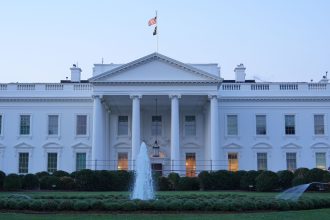
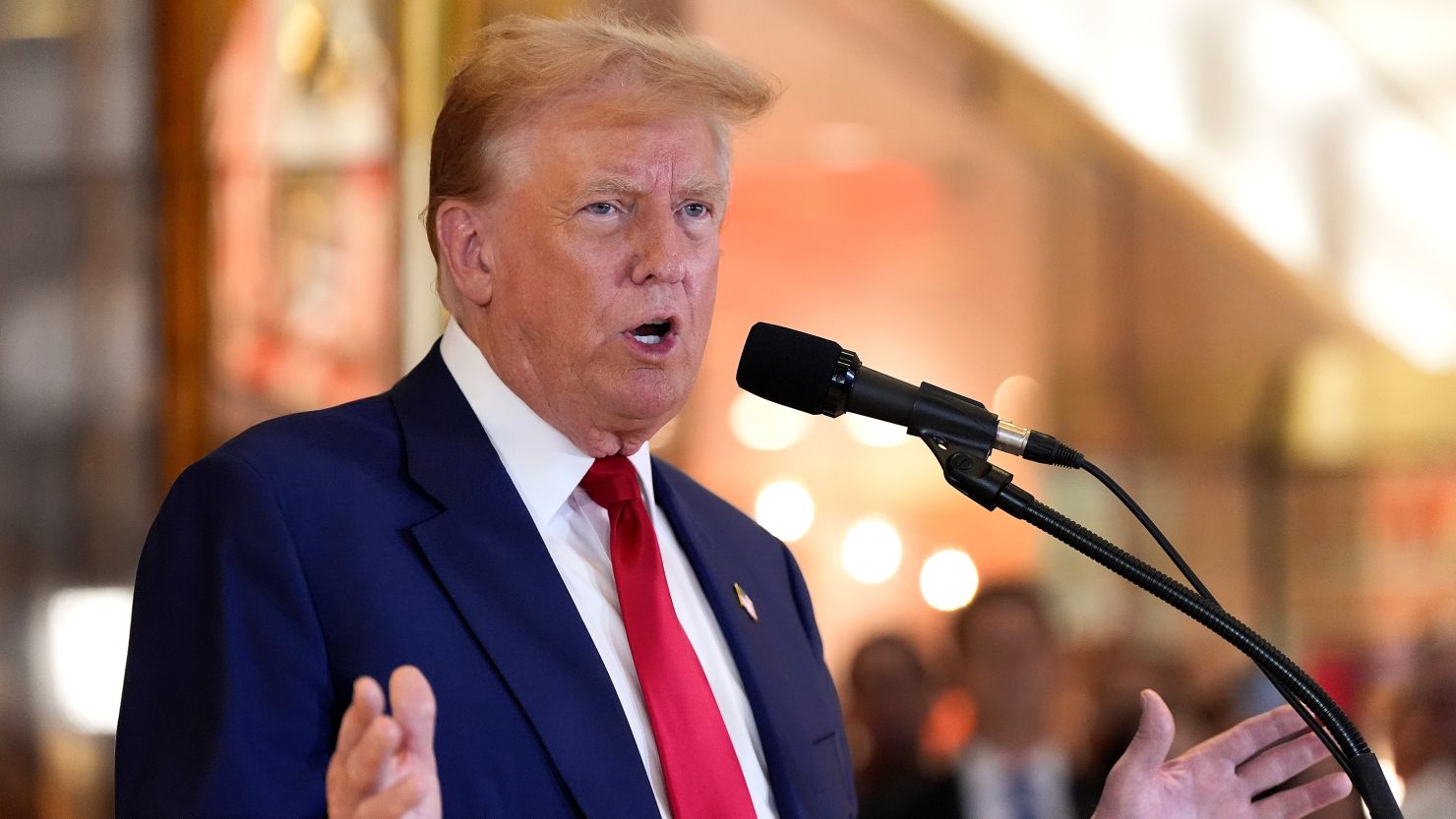
United States president Donald Trump has announced the country’s withdrawal from 66 international organisations, describing the move as a necessary step to protect American sovereignty, reduce wasteful spending and refocus government priorities on domestic interests.
The decision forms part of Executive Order 14199, which mandates a comprehensive review of international bodies receiving US funding or participation. According to the Trump Administration, the review found many of these organisations to be redundant, poorly managed or operating in ways that conflict with American national interests.
In a statement outlining the rationale for the withdrawals, the administration argued that billions of dollars in taxpayer funding had been channelled into institutions that delivered little tangible benefit to the American public. It claimed that some organisations had been captured by special interest groups or ideological agendas that undermined US freedoms, prosperity and decision-making autonomy.
Trump’s announcement reflects a broader scepticism within his administration towards what it characterises as an expanding system of global governance. Officials argue that institutions originally established to promote cooperation and peace have evolved into complex bureaucracies promoting policies on climate change, diversity and social issues that Washington no longer wishes to endorse.
Among the organisations listed are both United Nations and non-UN bodies, including prominent climate and environmental institutions. Notably, the United Nations Framework Convention on Climate Change, which underpins the 2015 Paris climate agreement, is included in the withdrawal list. The administration has described the treaty as emblematic of what it views as ideological overreach and constraints on national policymaking.
The list also includes agencies involved in development, gender equality, migration, biodiversity, renewable energy, democracy promotion and international justice. In total, 35 non-UN organisations and 31 UN-affiliated entities are affected by the decision, making it one of the most extensive retrenchments from multilateral institutions in modern US history.
Trump’s administration argues that continued participation in these bodies would require not only financial contributions but also diplomatic support that legitimises agendas it believes run counter to US priorities. Officials have framed the move as a rejection of what they call “inertia and ideology”, replacing it with what they describe as a more pragmatic, interest-driven approach to foreign engagement.
While the administration has emphasised that the United States is not retreating from international cooperation altogether, it has made clear that future participation will be selective. Cooperation, it says, will continue only where it delivers measurable benefits to Americans and respects national sovereignty.
The memorandum accompanying the announcement instructs the Secretary of State to oversee implementation and provide further guidance to government agencies. It also notes that the withdrawals will be carried out in line with existing laws and subject to available budgetary provisions.
Critics of the move argue that withdrawing from multilateral institutions risks diminishing US influence on global issues, including climate change, public health and conflict resolution. Supporters, however, see it as a long-overdue correction that reasserts national control over policy and spending.
As the review of additional international organisations remains ongoing, the announcement signals that further withdrawals may follow. The long-term impact of the decision, both for US diplomacy and for the institutions involved, is likely to remain a subject of debate well beyond Trump’s presidency.
Sec. 2. Organizations from Which the United States Shall Withdraw. (a) Non-United Nations Organizations:
(i) 24/7 Carbon-Free Energy Compact;
(ii) Colombo Plan Council;
(iii) Commission for Environmental Cooperation;
(iv) Education Cannot Wait;
(v) European Centre of Excellence for Countering
Hybrid Threats;
(vi) Forum of European National Highway Research Laboratories;
(vii) Freedom Online Coalition;
(viii) Global Community Engagement and Resilience Fund;
(ix) Global Counterterrorism Forum;
(x) Global Forum on Cyber Expertise;
(xi) Global Forum on Migration and Development;
(xii) Inter-American Institute for Global Change Research;
(xiii) Intergovernmental Forum on Mining, Minerals, Metals, and Sustainable Development;
(xiv) Intergovernmental Panel on Climate Change;
(xv) Intergovernmental Science-Policy Platform on Biodiversity and Ecosystem Services;
(xvi) International Centre for the Study of the Preservation and Restoration of Cultural Property;
(xvii) International Cotton Advisory Committee;
(xviii) International Development Law Organization;
(xix) International Energy Forum;
(xx) International Federation of Arts Councils and Culture Agencies;
(xxi) International Institute for Democracy and Electoral Assistance;
(xxii) International Institute for Justice and the Rule of Law;
(xxiii) International Lead and Zinc Study Group;
(xxiv) International Renewable Energy Agency;
(xxv) International Solar Alliance;
(xxvi) International Tropical Timber Organization;
(xxvii) International Union for Conservation of Nature;
(xxviii) Pan American Institute of Geography and History;
(xxix) Partnership for Atlantic Cooperation;
(xxx) Regional Cooperation Agreement on Combatting Piracy and Armed Robbery against Ships in Asia;
(xxxi) Regional Cooperation Council;
(xxxii) Renewable Energy Policy Network for the 21st Century;
(xxxiii) Science and Technology Center in Ukraine;
(xxxiv) Secretariat of the Pacific Regional Environment Programme; and
(xxxv) Venice Commission of the Council of Europe.
(b) United Nations (UN) Organizations:
(i) Department of Economic and Social Affairs;
(ii) UN Economic and Social Council (ECOSOC) — Economic Commission for Africa;
(iii) ECOSOC — Economic Commission for Latin America and the Caribbean;
(iv) ECOSOC — Economic and Social Commission for Asia and the Pacific;
(v) ECOSOC — Economic and Social Commission for Western Asia;
(vi) International Law Commission;
(vii) International Residual Mechanism for Criminal Tribunals;
(viii) International Trade Centre;
(ix) Office of the Special Adviser on Africa;
(x) Office of the Special Representative of the Secretary General for Children in Armed Conflict;
(xi) Office of the Special Representative of the Secretary-General on Sexual Violence in Conflict;
(xii) Office of the Special Representative of the Secretary-General on Violence Against Children;
(xiii) Peacebuilding Commission;
(xiv) Peacebuilding Fund;
(xv) Permanent Forum on People of African Descent;
(xvi) UN Alliance of Civilizations;
(xvii) UN Collaborative Programme on Reducing Emissions from Deforestation and Forest Degradation in Developing Countries;
(xviii) UN Conference on Trade and Development;
(xix) UN Democracy Fund;
(xx) UN Energy;
(xxi) UN Entity for Gender Equality and the Empowerment of Women;
(xxii) UN Framework Convention on Climate Change;
(xxiii) UN Human Settlements Programme;
(xxiv) UN Institute for Training and Research;
(xxv) UN Oceans;
(xxvi) UN Population Fund;
(xxvii) UN Register of Conventional Arms;
(xxviii) UN System Chief Executives Board for Coordination;
(xxix) UN System Staff College;
(xxx) UN Water; and
(xxxi) UN University.
Sec. 3. Implementation Guidance. The Secretary of State shall provide additional guidance as needed to agencies when implementing this memorandum.
Sec. 4. General Provisions. (a) Nothing in this memorandum shall be construed to impair or otherwise affect:
(i) the authority granted by law to an executive department or agency, or the head thereof; or
(ii) the functions of the Director of the Office of Management and Budget relating to budgetary, administrative, or legislative proposals.
(b) This memorandum shall be implemented consistent with applicable law and subject to the availability of appropriations.
(c) This memorandum is not intended to, and does not, create any right or benefit, substantive or procedural, enforceable at law or in equity by any party against the United States, its departments, agencies, or entities, its officers, employees, or agents, or any other person.
(d) The Secretary of State is authorized and directed to publish this memorandum in the Federal Register.