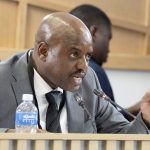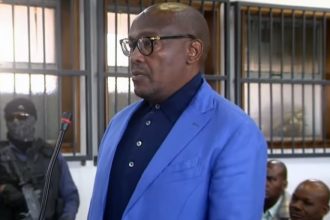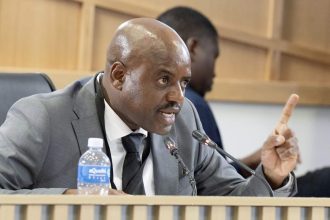
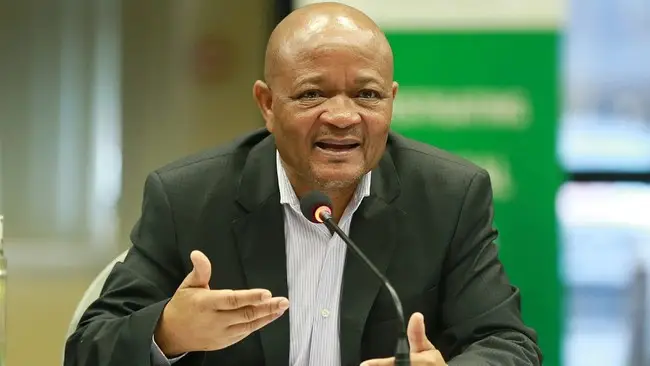
Police Minister Senzo Mchunu appeared before the Madlanga Commission of Inquiry attempting to shift accountability to National SAPS Commissioner General Fannie Masemola for the controversial decision to discontinue the Political Killings Task Team (PKTT).
Mchunu argued that his directive—issued in a letter dated 31 December 2024—would not have been necessary had Masemola approved and implemented a new SAPS organisational structure recommended by a 2019 work study. According to Mchunu, that structure would have automatically dissolved the PKTT by March 2024.
The minister’s letter, which stated that the PKTT was “not adding value” to policing, has drawn strong criticism, most notably from KwaZulu-Natal SAPS Commissioner Lieutenant-General Nhlanhla Mkhwanazi, who testified on 17 September that Mchunu’s conclusion was “misplaced”.
Masemola: Mchunu’s order was unlawful
Commissioner Masemola had previously told the inquiry he considered Mchunu’s directive to disband the PKTT “unlawful”. He testified that he escalated the matter to President Cyril Ramaphosa, who later confirmed he had spoken to the minister but did not disclose the outcome.
Mchunu: No operational interference
Testifying on Tuesday, Mchunu — currently on enforced leave — defended his actions, denying any interference in SAPS operational matters. He argued that the PKTT, created in 2018 by President Ramaphosa to curb political killings in KZN, was never intended to function as a permanent structure.
During his induction as minister, Mchunu said he raised concerns about Lieutenant-General Dumisani Khumalo, who served simultaneously as head of the PKTT and the Crime Intelligence division. He stressed the importance of Crime Intelligence and its load in national policing.
Budget strain and irregular expenditure
Mchunu noted that by late 2024, the National Operational Centre was expected to absorb the PKTT’s R94 million budget for the 2024/25 financial year. He added that the task team had not received formal extensions since 2022, rendering its continued operation irregular under the Public Finance Management Act.
According to Mchunu, the 2019 work study recommended dissolving multiple specialised units and consolidating them into a single Murder and Robbery Unit, which effectively “de-established” the PKTT. He said Masemola signed off on this restructuring on 5 June 2024, instructing that implementation be fast-tracked.
Mchunu’s testimony is scheduled to continue on Thursday, with further questioning expected to focus on governance, budget pressures, and the political implications of dismantling a unit central to addressing political violence.