
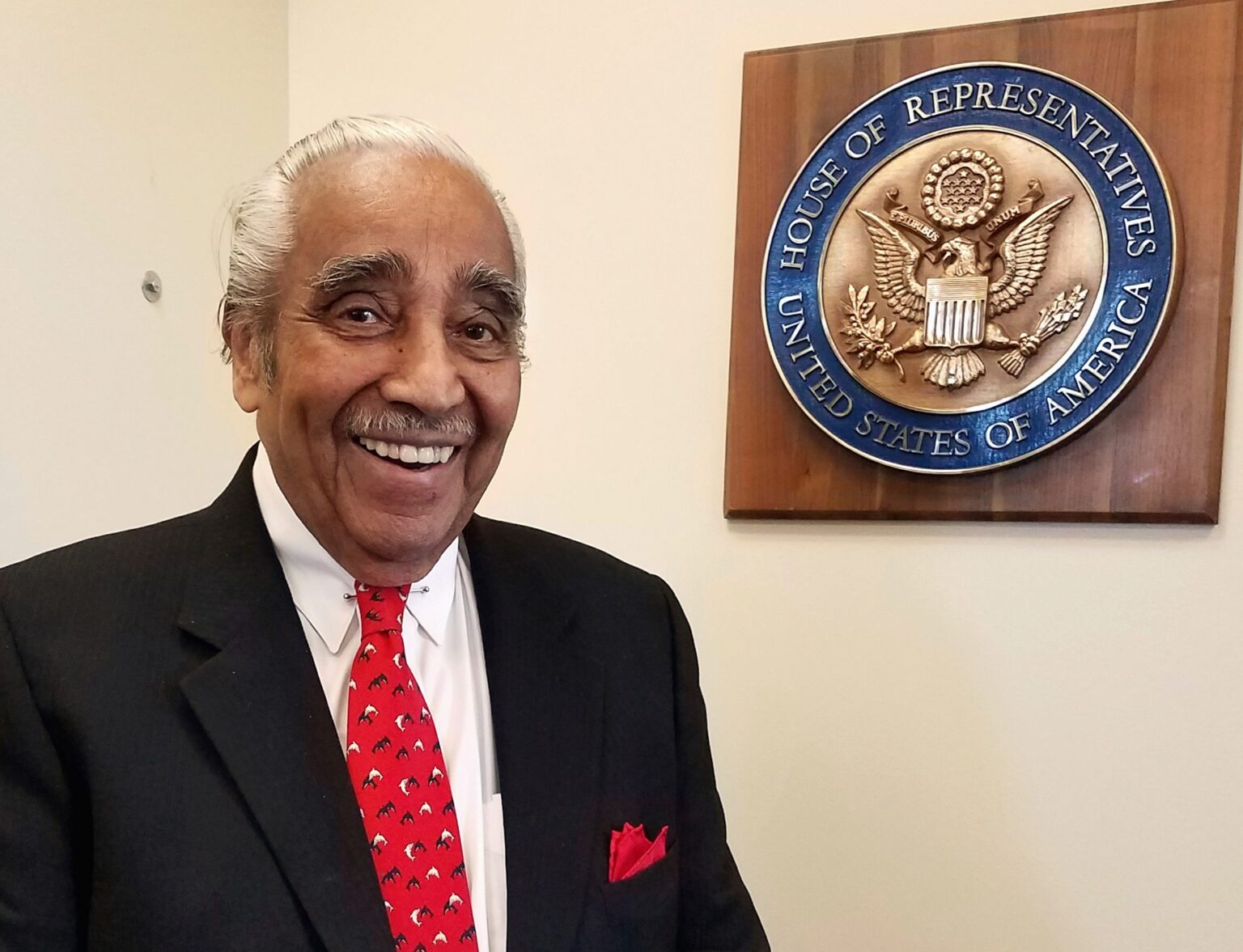
Charles B. Rangel, the legendary Harlem Democrat, decorated Korean War veteran, and longtime U.S. Representative who spent nearly five decades in Congress shaping domestic and foreign policy, passed away on May 26, 2025, at the age of 94. His family confirmed the news through a statement issued by the City College of New York.
A fixture in American politics, Rangel served 23 terms in the U.S. House of Representatives, making him one of the longest-serving members in history. His career spanned from the civil rights era to the dawn of the Trump presidency, with his influence deeply etched into the legislative fabric of the United States.
Born in Harlem on June 11, 1930, Charles Rangel’s journey was as American as it was extraordinary. He served in the U.S. Army during the Korean War, earning both the Bronze Star and the Purple Heart after surviving a near-death experience during the Battle of Kunu-ri. That brush with mortality, he often said, steeled his resolve to fight for justice and equity back home.
Upon his return, he leveraged the G.I. Bill to earn a degree from New York University and later a law degree from St. John’s University. In 1970, Rangel made history by defeating controversial incumbent Adam Clayton Powell Jr., thus beginning his tenure as the representative for New York’s 13th Congressional District — a post he would hold until retiring in 2017.
In 1971, Rangel became a founding member of the Congressional Black Caucus, a watershed moment in the fight for Black political power in Washington. His rise continued as he eventually became the first African American to chair the powerful House Ways and Means Committee in 2007 — the body responsible for taxation, tariffs, and other revenue-related policies.
One of Rangel’s most notable legislative efforts was the 1987 Rangel Amendment, which sought to curb U.S. corporate complicity in apartheid South Africa by denying tax benefits to companies that invested there. In doing so, Rangel became one of the leading U.S. voices pressuring for economic disinvestment from the apartheid regime — a stand that resonated both in South Africa and in American civil rights circles.
Rangel was also instrumental in the creation of the Low-Income Housing Tax Credit, a key tool for affordable housing development, and played a role in crafting the Affordable Care Act, Barack Obama’s signature healthcare law. Known for his legislative acumen, Rangel balanced a deep knowledge of policy with a no-nonsense, often humorous demeanor that made him a respected figure on both sides of the aisle — and a favorite of journalists.
But his career wasn’t without controversy. In 2010, the House of Representatives censured him for ethics violations, including improper financial disclosures and misuse of congressional resources. Rangel accepted the punishment with his characteristic candor, but remained in office, winning re-election and continuing to serve until his retirement.
After leaving Congress in 2017, Rangel didn’t retreat from public life. He became a Statesman-in-Residence at the City College of New York, mentoring young leaders and remaining an active voice in Democratic politics.
Rangel was also the last surviving member of New York’s influential political alliance known as the “Gang of Four,” which included former Mayor David Dinkins, Percy Sutton, and Basil Paterson. Together, they transformed Harlem’s political landscape and built the foundation for future generations of Black leadership in New York and beyond.
Tributes poured in from across the country following news of his passing. Senate Democratic Leader Chuck Schumer called Rangel “a lion of the House” whose “unwavering dedication to Harlem and to civil rights has left a mark that will not be erased.” Civil rights activist Rev. Al Sharpton shared a more personal remembrance, saying, “Charlie was a true activist — we’ve marched together, been arrested together and painted crack houses together.”
Known for his gravelly voice, razor-sharp wit, and sharply tailored suits, Rangel brought a street-smart sensibility to Congress. But it was his unshakeable commitment to justice — whether fighting apartheid, promoting affordable housing, or expanding access to healthcare — that defined his legacy.
He is survived by his wife of over 60 years, Alma Rangel, their two children, and three grandchildren.
In a political era marked by fleeting influence and short-term agendas, Charles Rangel stood as a towering figure of staying power, moral clarity, and tireless service. His story was not just one of Harlem or Congress — it was, in many ways, the story of America itself.