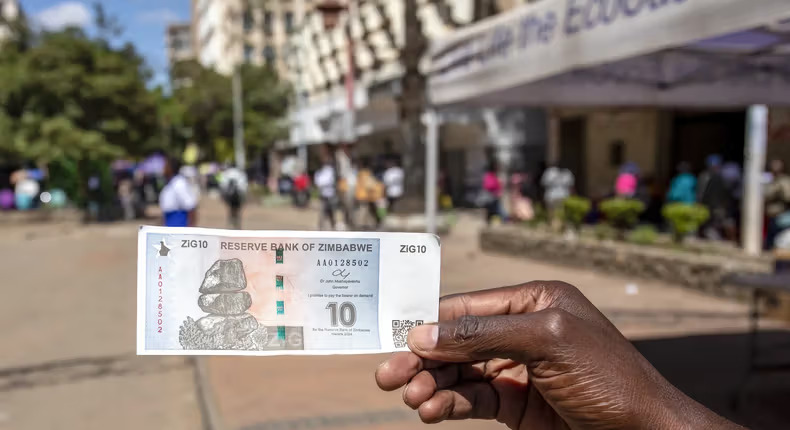
Zimbabwe’s gold-backed currency, the ZiG (Zimbabwe Gold), has climbed to its strongest level against the US dollar since early January, helped by a surge in global gold prices and a steady increase in the country’s foreign-exchange reserves.
According to data published by the Reserve Bank of Zimbabwe and cited by Bloomberg, the ZiG traded at 25.98 to the US dollar on Tuesday, its best performance since January 8.
Gold rally boosts confidence in ZiG
The currency’s recent strength comes as gold prices rally, directly benefiting Zimbabwe’s bullion-backed monetary system. The ZiG is supported by 2.5 tonnes of gold and about $100 million in foreign-currency reserves, giving it tangible backing that previous Zimbabwean currencies lacked.
Since its launch in April 2024, the ZiG has remained relatively stable. In 2025 alone, it has depreciated by just 0.7% against the dollar — a notable achievement in a country long associated with extreme currency volatility.
A sharp contrast to Zimbabwe’s past currency crises
The ZiG represents Zimbabwe’s sixth attempt in 15 years to create a stable local currency. Earlier efforts collapsed amid runaway inflation and collapsing confidence.
At the peak of the hyperinflation crisis in the late 2000s, prices were doubling almost daily, wiping out savings and forcing businesses to abandon the local currency. In 2009, Zimbabwe effectively scrapped its national currency and adopted a multi-currency system, with the US dollar becoming dominant.
Dollar still dominates everyday transactions
Despite the ZiG’s recent gains, its use in the real economy remains limited. US dollars continue to dominate transactions, particularly in retail and corporate sales.
Major companies, including Delta Corporation, have reported that around 80% of their sales are still conducted in US dollars, highlighting ongoing trust issues and the slow pace of adoption for the local unit.
Stability test still lies ahead
While the ZiG’s performance marks a rare moment of optimism for Zimbabwe’s monetary policy, analysts caution that long-term stability will depend on continued reserve discipline, sustained gold backing, and broader economic reforms.
For now, the strengthening ZiG offers a tentative sign that Zimbabwe’s latest currency experiment may avoid the dramatic failures of the past — at least in the short term.