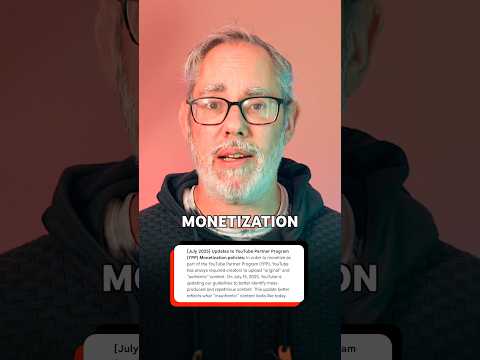
In a bid to maintain the quality of content and protect viewer trust, YouTube has announced a major update to its YouTube Partner Program (YPP) monetization policies, set to take effect from 15 July 2025. The changes will target “inauthentic” content — a term used to describe mass-produced, repetitive, or AI-generated videos that lack originality.
The update is viewed as YouTube’s strongest stance yet against the rise of low-quality AI content—often referred to as “AI slop”—which has become increasingly prevalent on the platform.
What’s Changing and Why It Matters
While YouTube has always required that monetized content be “original” and “authentic,” the company says the updated policy language will provide clearer definitions and enforcement guidance for creators.
According to a support page, the goal is to help creators “better understand what ‘inauthentic’ content looks like today,” especially in an era where generative AI tools can produce full videos in minutes.
Rene Ritchie, YouTube’s Head of Editorial & Creator Liaison, downplayed the update in a video posted this week, calling it a “minor update” and stressing that the policy does not target reaction videos or videos using permissible clips. He clarified that the focus is on spammy, repetitive, and mass-produced content—which has long been ineligible for monetization.
“This kind of content has never been allowed under YPP monetization rules. The update just helps us clarify what it looks like in 2025,” said Ritchie.
The Rise of AI Slop: A Growing Problem
Despite the calm tone of YouTube’s messaging, many in the creator community see the move as a direct response to an explosion of AI-generated videos on the platform.
AI-powered content — from fake news reports to AI music mashups — now racks up millions of views. Even deepfake videos featuring impersonations of public figures, including YouTube CEO Neal Mohan, have appeared, sometimes as part of phishing scams.
One case that drew widespread attention involved a viral true crime series, which was later revealed to be entirely AI-generated, according to reporting from 404 Media.
What Types of Content Are at Risk?
While the full policy language hasn’t been released, creators can expect stricter scrutiny on:
- AI-narrated slideshows or listicles
- Voiceovers placed on stock footage or still images
- Mass-produced content with minimal editing
- Repurposed news clips presented without original commentary
- AI-generated music or podcast episodes
- Repetitive animations or background videos
Such videos may be classified as inauthentic, low-effort, or spam-like under the new guidelines, making them ineligible for ad revenue.
What Creators Should Know
YouTube’s decision to refine its monetization rules is ultimately aimed at preserving the value of the platform and ensuring that viewers aren’t flooded with uninspired or misleading content.
Creators concerned about the update are advised to:
- Focus on original storytelling or commentary
- Avoid relying heavily on AI tools without human input
- Stay updated via YouTube’s Help Center and creator communications
- Monitor their content’s compliance through YouTube Studio
The new rules will likely come with stricter enforcement mechanisms and the potential for demonetization or removal from the YPP for those who repeatedly violate the guidelines.
Conclusion: Protecting the Creator Ecosystem
As the AI revolution reshapes digital content, platforms like YouTube face growing pressure to differentiate human creativity from machine-generated noise. This policy update, while labeled “minor,” is a clear signal that originality and authenticity remain core to YouTube’s vision—and that monetization must reflect that.
The update officially goes live on 15 July 2025, giving creators a brief window to review their content strategies and prepare.