A senior United States Navy admiral overseeing military operations in Latin America has handed over leadership responsibilities amid growing congressional scrutiny of the Trump administration’s deadly strikes on alleged drug-smuggling boats in the region.
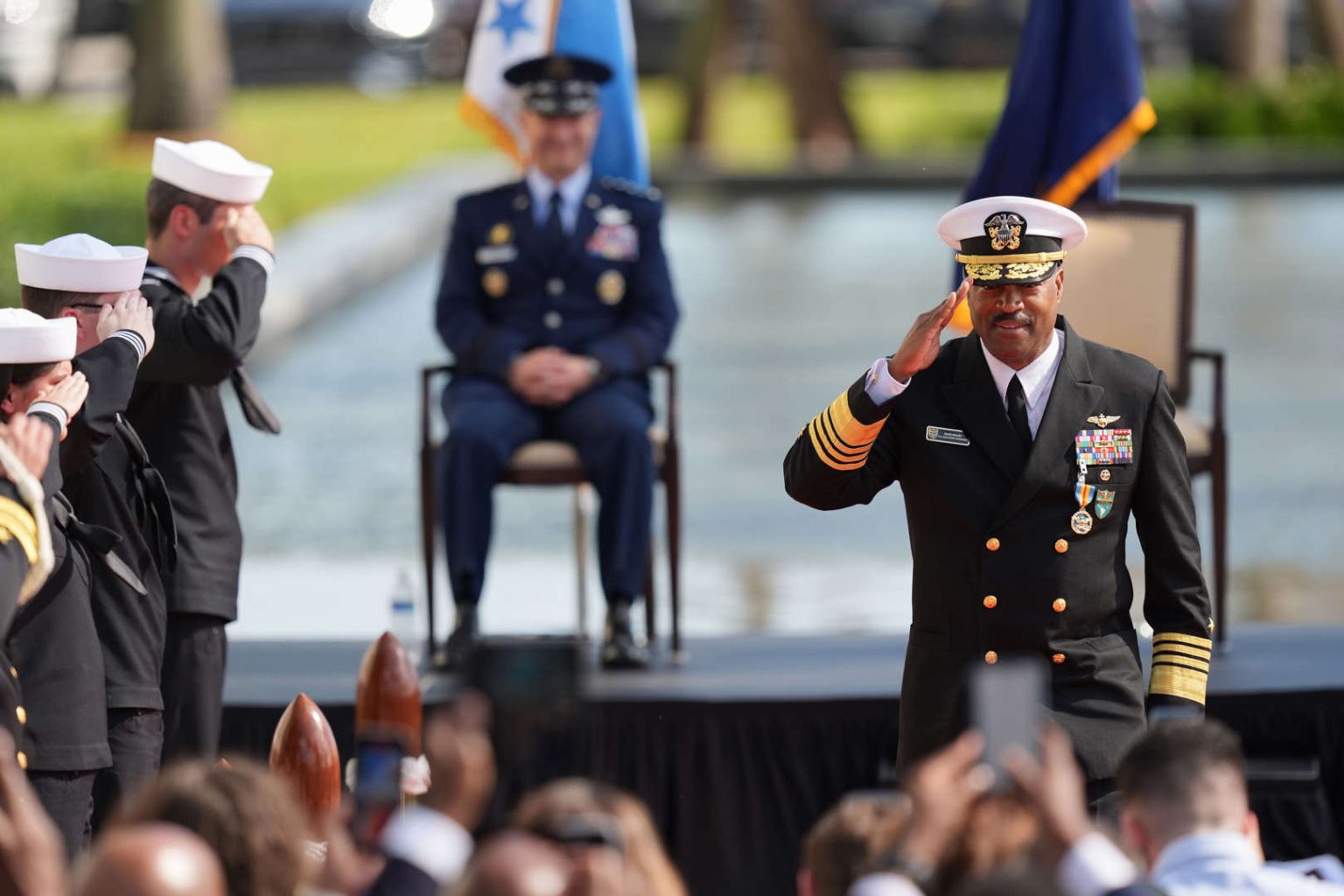
Admiral Alvin Holsey retired on Friday after serving just one year in a role that typically lasts between three and four years. He formally transferred command of US Southern Command to his deputy, Air Force Lieutenant General Evan Pettus, during a ceremony held at the command’s headquarters near Miami.
Holsey did not address the controversial military operations or the reasons for his early departure in his farewell remarks. Instead, he focused on the importance of maintaining trust and long-standing partnerships across Latin America.
“To be a trusted partner, we must be credible, present and engaged,” Holsey said, urging his successor to uphold shared democratic values and respect for the rule of law.
Early retirement raises questions
The Pentagon announced Holsey’s unexpected retirement in October, more than a month after the Trump administration began a series of air and sea strikes targeting suspected drug-smuggling vessels in the Caribbean Sea and the eastern Pacific Ocean.
Those operations have reportedly killed at least 87 people and have drawn increasing scrutiny from lawmakers, legal experts and human rights organisations.
Holsey briefed key members of Congress earlier this week as concerns mounted over the legality and conduct of the campaign. A permanent replacement for Holsey has not yet been nominated by President Donald Trump.
Subdued handover ceremony
Friday’s ceremony was notably subdued compared with past military retirements. It was held outdoors, attended mainly by Southern Command staff, and took place without the presence of Defence Secretary Pete Hegseth.
General Dan Caine, chairman of the Joint Chiefs of Staff, presided over the event but made no reference to the military operations in Latin America during his remarks.
Caine praised Holsey’s 37-year military career, describing him as a “stoic” leader and a “quiet professional”.
“It’s never been about you, it’s been about people, it’s been about others,” Caine said. “You’ve never said ‘I’. You’ve always said ‘we’. The impact you’ve had will last for a long time.”
Congressional scrutiny intensifies
Holsey’s departure comes as Congress continues to examine the boat strikes, including one incident in which two survivors were reportedly killed while clinging to wreckage from an earlier attack.
Secretary of State Marco Rubio, Defence Secretary Hegseth and other senior officials have delivered classified briefings to lawmakers this week. Holsey himself also spoke to senators overseeing the US military via a classified video call.
Senator Jack Reed, the top Democrat on the Senate Armed Services Committee, said Holsey answered lawmakers’ questions but left many unresolved.
“There are still many questions to be answered,” Reed said, adding that Holsey cited only personal reasons for his retirement.
Legal and humanitarian concerns
Experts in the laws of armed conflict, along with human rights organisations and some Republican lawmakers, have questioned whether the strikes comply with international and US law.
For decades, suspected drug traffickers intercepted at sea were arrested by the US Coast Guard and prosecuted in American courts. The current approach represents a sharp departure from that practice.
So far, at least 22 known strikes on alleged drug-smuggling vessels have been carried out, supported by a large US military presence including warships, attack helicopters, thousands of troops and the country’s most advanced aircraft carrier.
Trump administration defends strategy
The Trump administration has defended the campaign, arguing that several Latin American drug cartels now qualify as foreign terrorist organisations. Officials claim the United States is engaged in an armed conflict with these groups, relying on legal arguments developed in the aftermath of the 11 September 2001 attacks.
The operations have also intensified pressure on Venezuelan President Nicolás Maduro, who faces narcoterrorism charges in the United States.
Earlier this week, US forces seized a sanctioned oil tanker accused of smuggling illicit crude, a move analysts say could weaken Maduro’s grip on power. Maduro has accused Washington of using military force to try to remove him from office.
Leadership uncertainty continues
Holsey’s departure is the latest in a series of sudden retirements and dismissals among senior military leaders since Hegseth assumed leadership of the Pentagon.
Lieutenant General Pettus, a fighter jet pilot with combat experience in Afghanistan and Iraq, has served as Holsey’s deputy since late 2024. It remains unclear how long he will serve in the role, as any permanent appointment must be nominated by Trump and confirmed by the Senate.
Holsey, a native of Fort Valley, Georgia, whose father and several uncles served in the Vietnam War, formally relinquished command to a soulful rendition of Midnight Train to Georgia, bringing an understated close to a career ending amid growing controversy.