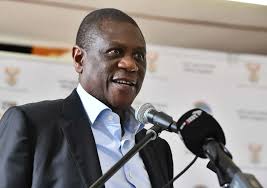
South Africa’s Deputy President Paul Mashatile has publicly invited former U.S. President Donald Trump to visit the country, following Trump’s controversial claims regarding a so-called “genocide of white Afrikaners”. The invitation was issued during the Africa Travel Indaba in KwaZulu-Natal on Tuesday, where Mashatile addressed what he described as false narratives being pushed about the state of race relations in South Africa.
“There’s no genocide here. We are beautiful, happy people — Black and White working and living together,” said Mashatile with emphasis, adding that Trump had been misled:
“They lied to you.”
Mashatile confirmed that should President Cyril Ramaphosa travel to the United States, he would extend a formal invitation for Trump to visit South Africa and see the reality for himself.
Trump’s Explosive Accusations
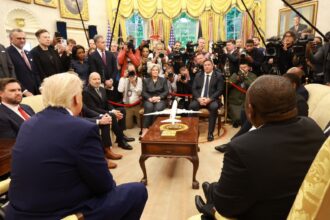
Mashatile’s comments follow recent statements made by Trump during a White House press briefing on Monday, where he threatened to boycott the G20 Summit set to take place in South Africa in November.
“South African leadership is coming to see me, I understand, sometime next week, and we are supposed to have a G20 meeting there or something. I don’t know how we can go unless that situation is taken care of,” Trump said.
Trump cited claims that white farmers are being brutally murdered and that their land is being confiscated, further accusing the mainstream media of ignoring the violence.
“If it were the other way around, that would be the only story they talk about,” Trump added, maintaining that his administration had already granted refugee status and even citizenship to a group of 49 Afrikaners who reportedly fled South Africa.
SA Government Pushes Back
The South African government has repeatedly denied claims of an orchestrated campaign of violence targeting white South Africans. Speaking at the Africa CEO Forum, President Cyril Ramaphosa said he had personally told Trump over a phone call that the allegations were not supported by facts.
“There is no genocide. These claims are false and dangerous,” Ramaphosa reiterated.
The government argues that while crime and farm attacks do occur, they affect South Africans of all races, and do not constitute genocide or state-sanctioned targeting of any racial group.
G20 in the Crosshairs
South Africa is currently chairing the G20, with the U.S. set to assume the presidency later this year. However, the controversy has raised concerns over Washington’s participation, especially as some of Trump’s former cabinet allies have already boycotted official G20-related meetings, citing issues like land expropriation and alleged human rights concerns.
Despite tensions, all G20 leaders, including Trump, have been formally invited to the summit. Whether Trump will attend remains uncertain, as his rhetoric continues to cast a shadow over diplomatic relations between the two nations.
The Bigger Picture
The issue of farm attacks and land reform has long been politicized in South Africa and abroad. Critics argue that Trump’s repeated focus on white Afrikaner victimhood plays into white nationalist narratives, while ignoring the historical and socio-economic complexities of South Africa’s land ownership patterns.
Mashatile’s invitation may be seen as both a diplomatic olive branch and a strategic challenge — to show Trump and the world that South Africa is not defined by division, but by its continued efforts to build a united, inclusive society.