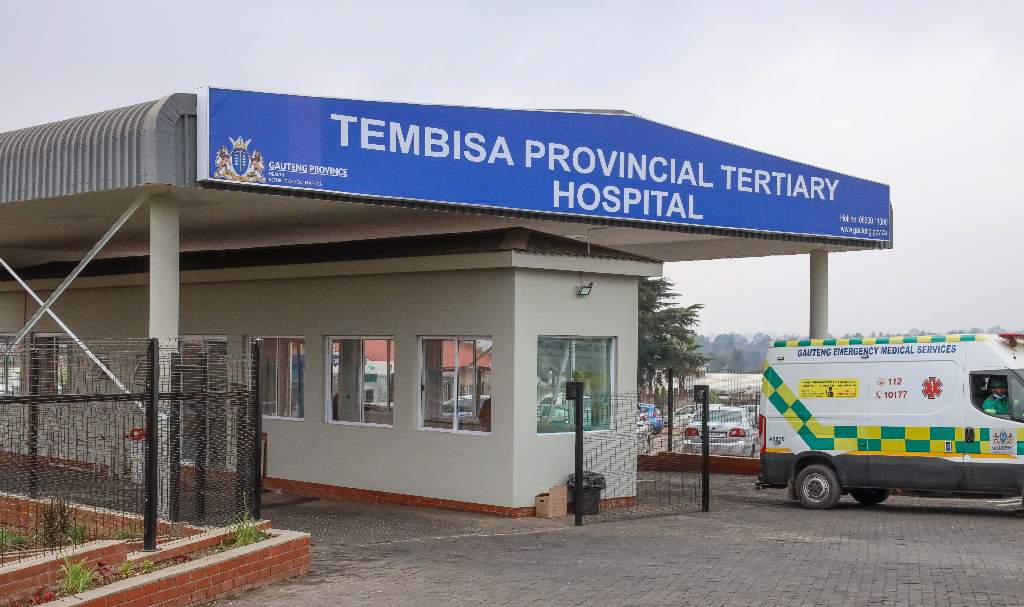
The Special Investigating Unit (SIU) has blown the lid off what it calls a “devastating plunder of public funds” at Tembisa Hospital, exposing a vast web of corruption that has drained over R2 billion from the public health facility.
SIU head, Advocate Andy Mothibi, released the interim report at a media briefing on Monday, flanked by Minister of Health Dr Aaron Motsoaledi, Gauteng Premier Panyaza Lesufi, and Gauteng Health MEC Nomantu Nkomo-Ralehoko.
“Devastating Plunder of Public Funds”
According to Mothibi, investigators discovered that the looting was orchestrated by at least three coordinated syndicates. The fraud, which began surfacing in 2022, was initially believed to amount to around R850 million. However, as the SIU dug deeper, the figure ballooned to R2 billion — funds meant to support healthcare services for some of Gauteng’s most vulnerable patients.
“This staggering sum of money intended for the provision of healthcare at Tembisa Hospital was instead ruthlessly siphoned off through a complex web of fraud and corruption, representing an egregious betrayal of the public trust,” said Mothibi.
An Interim Report, More Findings to Come
The SIU stressed that this is an interim update, not the final word. Spokesperson Kaizer Kganyago explained that further investigations are ongoing, but releasing the report at this stage underscores the unit’s commitment to transparency and accountability.
“This media briefing is a significant step, providing the public and stakeholders with a formal update on the investigation’s progress,” said Kganyago.
Links to High-Profile Figures
The scandal has already ensnared well-known names. Earlier this month, the National Prosecuting Authority (NPA), working with the Asset Forfeiture Unit (AFU), seized assets belonging to businessman Hangwani Maumela, who allegedly pocketed R415 million in irregular contracts at Tembisa Hospital.
Maumela is reported to be President Cyril Ramaphosa’s nephew through a previous marriage, though the president has distanced himself, telling Parliament that he does not know Maumela personally.
Maumela’s companies were flagged in a report by the late Babita Deokaran, the chief director of financial accounting at the Gauteng Department of Health. Her whistleblower report, submitted in August 2021, exposed suspicious procurement deals and systemic abuse of the hospital’s supply chain processes.
Just three weeks later, Deokaran was assassinated, a killing widely believed to be linked to her efforts to expose corruption.
Confirming Deokaran’s Findings
The National Treasury’s Specialised Audit Service Unit later confirmed Deokaran’s concerns, finding that:
-
14 entities linked to Maumela’s syndicate unlawfully benefitted from contracts worth R415 million.
-
18 entities linked to businessman Rudolph Mazibuko irregularly secured contracts worth R300 million.
These findings align with the SIU’s broader investigation, which continues to unravel the complex networks that allegedly siphoned off billions in public funds.
A Turning Point for Accountability?
The Tembisa scandal is one of the most damning cases of corruption in South Africa’s healthcare system. For a hospital already under strain to lose billions meant for patient care underscores not just systemic weaknesses but also the high stakes of accountability in the public sector.
With investigations ongoing, arrests and prosecutions are expected. For many South Africans, however, the real measure of justice will not only be in convictions but also in whether stolen funds can be recovered and redirected to where they are needed most — saving lives.