President Cyril Ramaphosa has declared an “economic emergency” in South Africa as the government unveiled a sweeping 10-point economic recovery plan to stimulate growth, create jobs, and restore confidence in the country’s public institutions.
The announcement comes as South Africa battles stubbornly high unemployment, sluggish economic growth, and persistent energy challenges, while financial instability within the ruling African National Congress (ANC) adds to uncertainty.
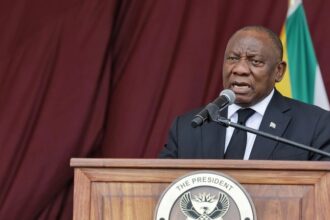
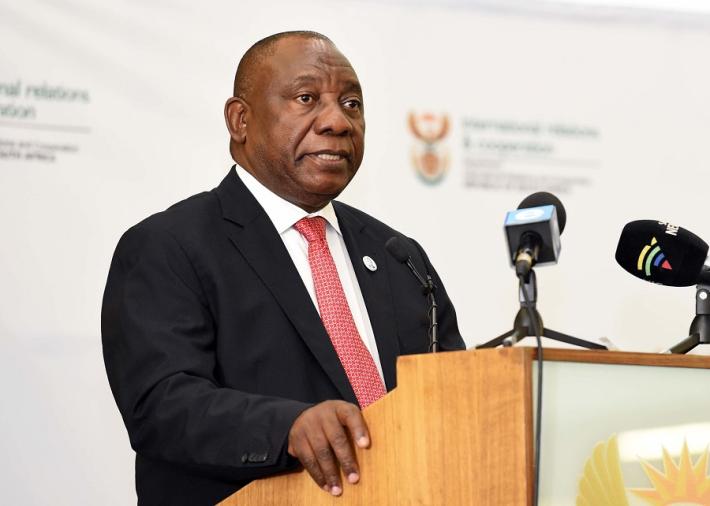
Speaking at the launch event, Ramaphosa said the government would establish an Economic War Room within the Presidency to monitor progress and ensure accountability.
“We are treating this as an emergency because it is one,” Ramaphosa said. “The Economic War Room will ensure that government departments are held accountable, that delivery is tracked, and that South Africans see the impact of our actions.”
The 10-point plan reportedly focuses on job creation, state efficiency, industrial revitalisation, energy security, and anti-corruption measures. It also seeks to boost public-private partnerships to attract investment and enhance infrastructure development.
Eskom Wage Tensions Threaten Stability
In a parallel development, South Africa’s state-owned power utility Eskom is facing fresh wage tensions as its largest labour union demands a 15% salary increase — more than four times the current inflation rate.
Eskom, which has made limited progress in stabilising the national grid after years of rolling blackouts, is now preparing for tough wage negotiations that analysts warn could reignite disruptions in the energy sector.
Eskom spokesperson Daphne Mokwena declined to comment on specific wage demands, saying formal talks had not yet begun.
Analysts cautioned that renewed labour unrest could undermine fragile power recovery efforts and impact investor confidence in the broader economy.
ANC Faces Financial Turmoil
Meanwhile, the ANC itself is grappling with mounting financial pressure, with reports indicating that the party faces insolvency proceedings after debts exceeded $4.5 million (R85 million).
The financial strain could hamper the party’s campaign capacity ahead of upcoming elections, further complicating the political landscape as Ramaphosa seeks to stabilise the economy.
Rand Holds Firm, Reserves Rise
Despite the turbulence, the South African rand remained stable this week, trading at around R17.21 to the dollar. The South African Reserve Bank also reported an increase in foreign reserves to $67.9 billion, up from $65.9 billion in August — slightly above market expectations.
Economists say the reserve uptick and currency stability may provide temporary relief but warn that sustained economic reform will be essential to maintain investor confidence.
Outlook
Ramaphosa’s declaration of an economic emergency marks one of his administration’s most decisive responses to South Africa’s long-standing structural challenges.
However, analysts note that implementation and accountability will be key to ensuring that the ambitious 10-point plan translates into real economic recovery for millions of South Africans.