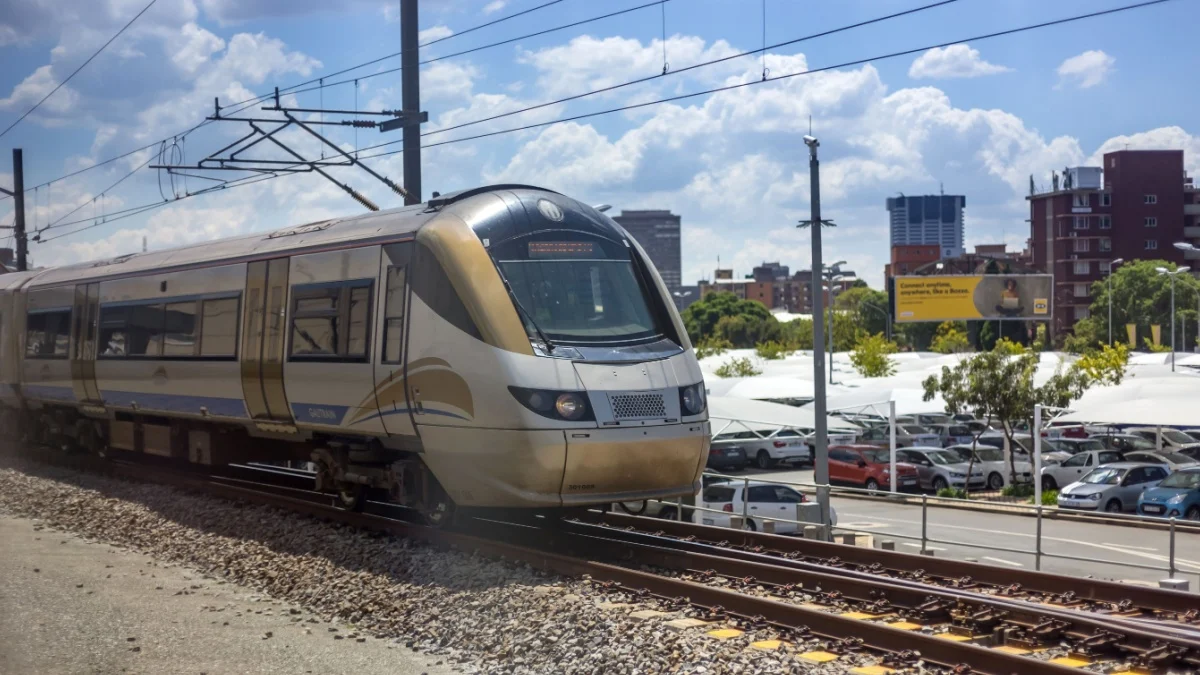
The Gauteng Provincial Government has officially gazetted new routes and stations for the expansion of the Gautrain, marking a significant step forward in one of South Africa’s largest public transport projects.
The expansion will introduce new rail connections across key areas, including Soweto, Centurion, Fourways and the West Rand — with a major highlight being a direct link to Lanseria International Airport.
New Gautrain Stations Confirmed
According to the government gazette, several new stations have been confirmed as part of the expansion plan. These include:
- Jabulani Station
- Roodepoort Station
- Lanseria Station
- Cradle Station
- Smart City Station
- Samrand Station
- Fourways Station
- Sunninghill Station
- Olievenhoutbosch Station
These additions are expected to significantly improve connectivity between residential, commercial and economic hubs across Gauteng.
Soweto and Cosmo City Routes Finalised
The gazette also confirms that route determinations have been finalised for the Soweto Extension and the Cosmo City Junction — a key development in linking underserved areas to the broader rail network.
The Cosmo City Junction will act as a central connector between Soweto, Centurion and Sandton, integrating with existing Gautrain infrastructure.
A future station in Randburg is expected to serve as a major interchange point connecting new and existing routes.
Underground Rail Between Roodepoort and Soweto
One of the most ambitious aspects of the expansion is the planned underground route between Little Falls and Jabulani.
This section will span approximately 19.9km and run beneath Roodepoort into Soweto, passing under major roads such as the R41 and M77.
Although station buildings will be above ground, the rail platforms themselves will remain underground — a design aimed at minimising surface disruption in densely populated areas.
Lanseria Airport Link Takes Shape
A major highlight of the project is the new route connecting Cosmo City to Lanseria Airport.
This section will stretch about 17.4km, with roughly 7km of the track elevated on viaducts — bridge-like structures that carry trains above roads and infrastructure.
The route will terminate at the proposed Lanseria Station, located just north of the airport’s parking area, providing a direct rail link to one of Gauteng’s growing aviation hubs.
Smart City and Centurion Connections
The expansion also includes a proposed “Smart City” route branching off from Cradle Station.
This line will run underground beneath major routes such as the R114, R512 (Malibongwe Drive) and the N14, ending at the planned Smart City Station.
Another key extension will connect Cosmo City to Samrand in Centurion, running through Fourways, Sunninghill and Olievenhoutbosch.
Large portions of this route — approximately 25km — will be underground, including sections passing beneath Kyalami and major highways such as the N1 and R101.
Major Infrastructure Investment
Overall, the expansion will add around 72km of new rail infrastructure, including:
- Approximately 44km of tunnels
- Around 7km of elevated viaducts
This масштаб of development underscores the province’s ambition to modernise public transport and reduce congestion on Gauteng’s roads.
Impact on Urban Development
The gazette makes it clear that the Gautrain expansion will have wide-ranging implications for urban planning across the province.
Future developments in affected areas — including housing projects, land subdivisions and zoning changes — will need to align with the new rail routes.
Developers will be required to submit engineering and environmental reports to assess how proposed projects may impact the planned infrastructure.
A Transformational Transport Shift
The Gautrain expansion is expected to reshape how people move across Gauteng, particularly in areas that have historically lacked efficient public transport options.
By linking key economic nodes, residential areas and transport hubs like Lanseria Airport, the project aims to support economic growth, improve mobility and reduce travel times.
While construction timelines and costs are yet to be finalised, the gazetting of routes signals that planning is now firmly in motion — bringing the next phase of Gauteng’s rail future closer to reality.