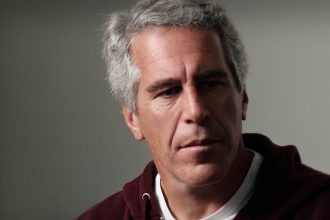
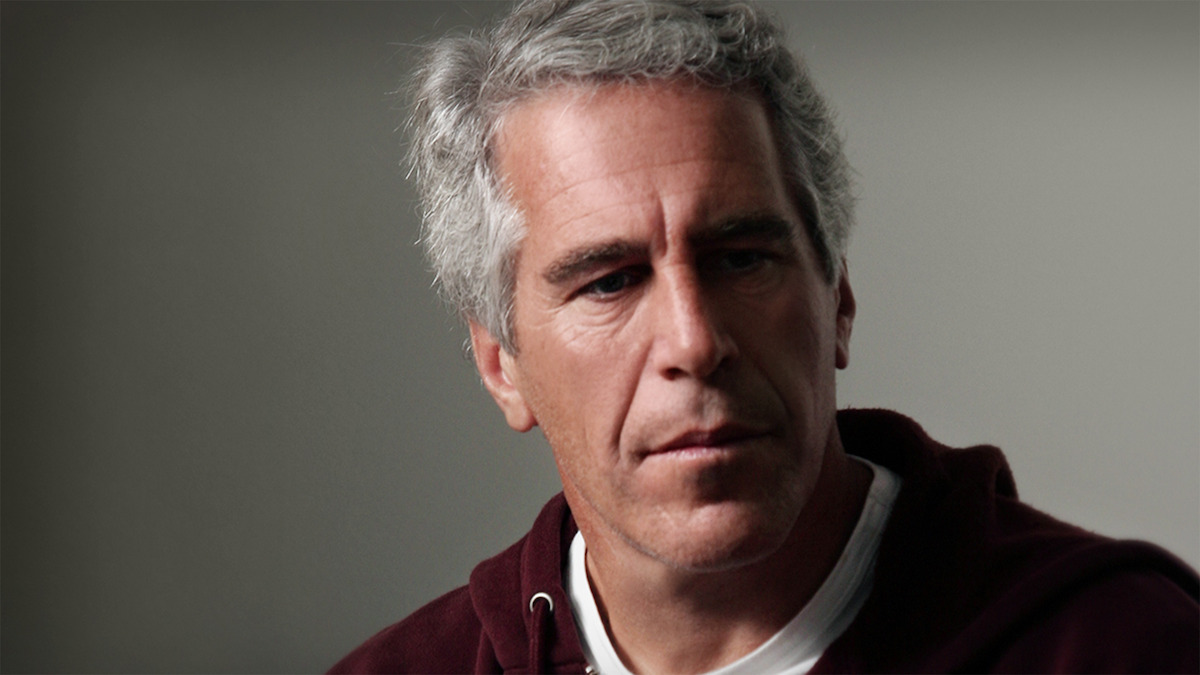
Newly released records from the United States Department of Justice have shed disturbing new light on how convicted sex offender Jeffrey Epstein embedded South Africa into his global web of influence, money flows and sexual exploitation.
The latest tranche of roughly three million documents shows that Epstein had extensive South African links stretching back decades, combining elite business contacts with a far darker focus on recruiting and exploiting young South African women under the guise of opportunity.
In one 2013 exchange, an unknown correspondent asked Epstein who he knew in South Africa “beside President Mandela and President Zuma”.
“Many,” Epstein replied.
The records suggest he was not exaggerating.
South African Ties Dating Back to the 1980s
Emails show that Epstein’s South African connections date back as far as the 1980s. In a 2010 message from the office of late hotel magnate Sol Kerzner, Epstein was reminded that his first contact with Kerzner had been facilitated decades earlier through David and Cathy Lurie.
Other documents reference Epstein’s interactions with prominent South African-born or South Africa-linked business figures. These include references to meetings with former Glencore chief executive Ivan Glasenberg, the presence of businessman Rob Hersov’s contact details in Epstein’s address book, and a 2014 email in which Epstein suggested African Rainbow Minerals CEO Patrice Motsepe as a potential investor in a business proposal.
In that exchange, Epstein described Motsepe as among those “most likely” to provide funding and floated ideas about channelling Black wealth into Silicon Valley. There is no evidence that Motsepe, Glasenberg or Hersov were aware of Epstein’s criminal activities or had relationships with him beyond superficial business or social contact.
Hersov has previously stated that he met Epstein only once, at a cocktail party in New York. There is no indication that any of the South Africans mentioned in the records participated in, or were aware of, Epstein’s abuse.
More Than Elite Networking
While Epstein cultivated influential figures across the world, the documents make clear that his interest in South Africa went far beyond business and politics.
He also engaged in intellectual exchanges about the country’s history. In a 2015 email discussion, academic Noam Chomsky explained to Epstein the geopolitical forces behind the apartheid-era sports boycott and delayed sanctions against the apartheid state.
Epstein’s reply was brief and revealing: “I add little to this dialogue.”
It is South Africa’s people — particularly its women — that appear to have been his primary focus.
Recruiting South Africans and Sending Money Locally
Multiple emails show Epstein actively seeking South African staff. In 2011, he instructed an associate to “find me a South African assistant” and separately asked whether anyone knew a South African manager to oversee his multiple properties.
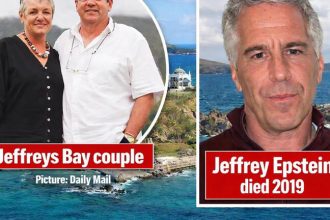
South Africans did become part of his inner circle. Travel arrangements show Epstein being accompanied by a South African personal assistant, and it is well documented that a couple from Jeffreys Bay assisted with hospitality operations on his private Caribbean island.
The records also reveal sustained financial transfers to South Africa. Between 2003 and 2004, Epstein sent multiple payments from his personal bank account to Standard Bank accounts in South Africa, with amounts ranging from roughly R9,000 to R110,000 per transfer. The recipients are unknown due to redacted account details.
In 2010, the payments resumed. Over the course of that year, Epstein transferred at least R250,000 to one or more Standard Bank accounts linked to a Cape Town branch. The purpose of these payments is unclear, though the documents show Epstein regularly wiring money to individuals across several countries.
One particularly chilling exchange, involving a young person in Brazil, suggests money transfers were sometimes linked to medical procedures, highlighting the coercive and transactional nature of his abuse.
Targeting South African Girls
The documents also expose how Epstein actively sought out young South African women, often through intermediaries presenting themselves as modelling scouts.
Emails include photographs and brief profiles of South African women, particularly from Cape Town, described as being interested in international modelling opportunities. In one such message, a woman is described as wanting to travel to Paris or New York.
Epstein relied heavily on a recruiter identified as Daniel Siad, who sent him photographs of young women from cities around the world for approval. Epstein’s responses reveal a chilling level of control and objectification, including comments about altering women’s bodies to suit his preferences.
Siad described Cape Town to Epstein as a place where the “potential of girls was huge”, reinforcing concerns that South Africa was viewed as fertile ground for exploitation.
In another disturbing exchange, Epstein and an associate discussed devising a plan to lure a young South African man, using the same predatory language that appears throughout the records.
South African Survivor Speaks Out
One of Epstein’s most prominent survivors is South African-born Juliette Bryant, who received compensation from Epstein’s estate after his death. Bryant has publicly detailed her experiences, adding a human face to what might otherwise remain abstract documents and redacted emails.
Her account underscores the reality behind the paper trail: young people drawn in by promises of work, travel or opportunity, only to be subjected to abuse and control.
A Disturbing Pattern
Taken together, the newly released records paint a grim picture of how Epstein incorporated South Africa into his global system of exploitation. Elite connections provided cover and credibility, while economic inequality, aspiration and weak scrutiny created conditions that could be manipulated.
The full extent of Epstein’s South African network may never be known. What is clear, however, is that South Africa was not incidental to his operations, but one of several countries where vulnerable people were targeted under the veneer of legitimacy.
For the South African women and men caught in his orbit, the promise of international opportunity concealed a far darker reality — one whose consequences continue to surface years after Epstein’s death.