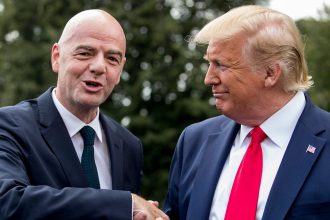
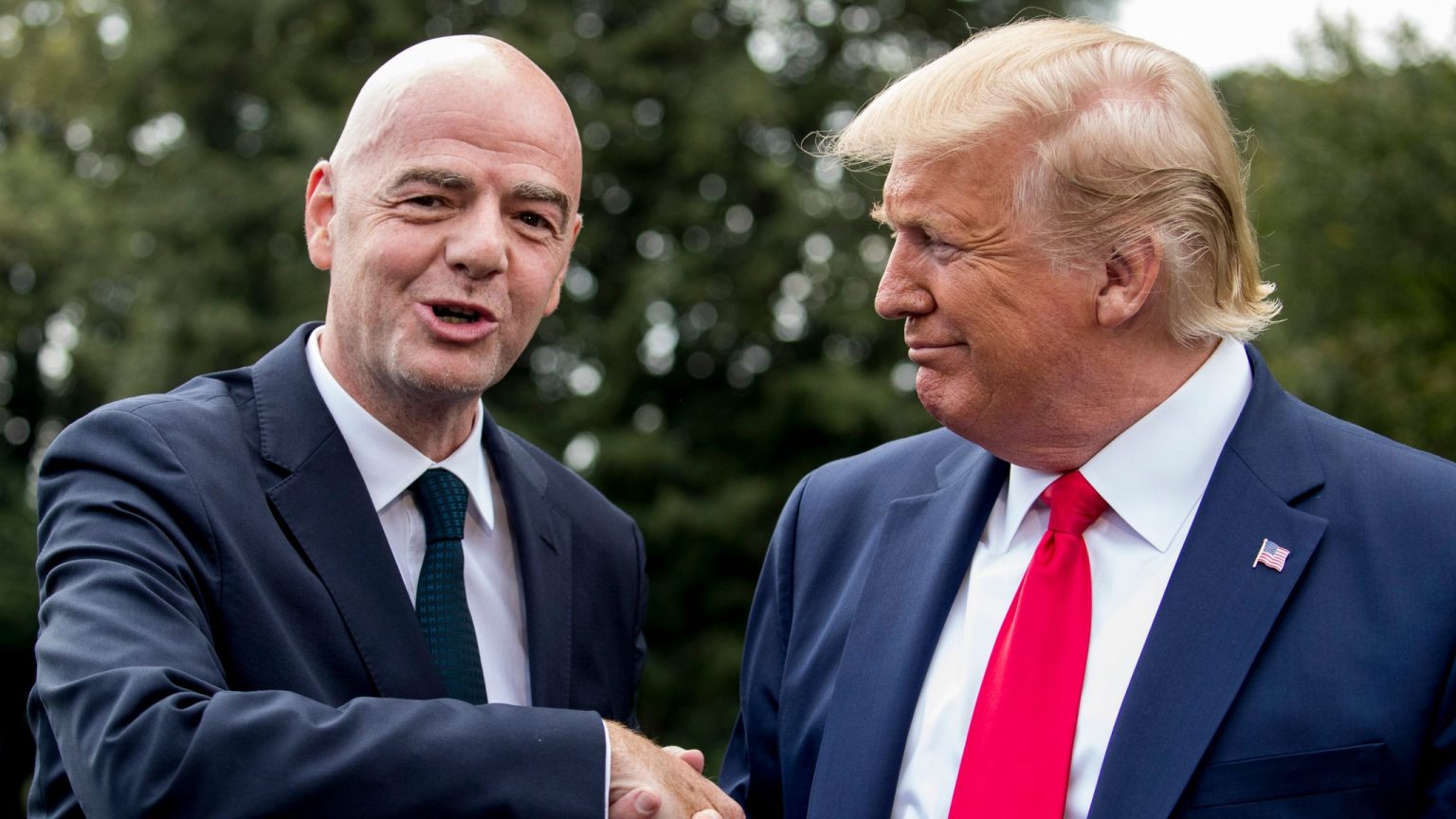
FIFA president Gianni Infantino has doubled down on his decision to award United States President Donald Trump the inaugural FIFA Peace Prize, insisting that Trump “objectively … deserves it”, even as the choice continues to provoke debate in global football circles.
The peace prize was presented to Trump in December 2025 at the World Cup draw in Washington DC — a new accolade created by FIFA to recognise individuals it says have made significant contributions to peace. FIFA said the award celebrates those who help “unite people across the world”, and cited Trump’s role in diplomatic efforts including ceasefire initiatives as part of the reasoning behind the honour.
Infantino defended the decision in a recent interview with Sky News, rejecting suggestions that the award was inappropriate or politically motivated and describing Trump’s actions as aligning with FIFA’s stated goal of promoting unity through football. “Whatever we can do to help peace in the world, we should be doing it … [and] he deserves it,” Infantino said.
Backlash and controversy
The award has drawn significant criticism since it was announced. Observers and football stakeholders questioned whether it was appropriate for football’s governing body to bestow a peace prize on a current political leader, especially one with a highly polarising record on foreign policy and domestic issues. Rights groups and watchdogs also raised concerns about FIFA’s political neutrality rules and the transparency of the selection process.
The controversy has been amplified by criticism from fans and media commentators in several countries, with some calling the decision “vulgar” and questioning FIFA’s motives in presenting the prize.
Apology over fans comment
Separately, Infantino apologised for remarks he made last month about British football supporters at the 2022 World Cup in Qatar. At the World Economic Forum in Davos, he joked that “for the first time in history no Brit was arrested” during the tournament — a comment critics said was misleading and unfair to fans. Infantino said the remark was meant as a light-hearted reference to the peaceful nature of that World Cup, and he acknowledged the backlash, saying he had “no intention” of offending supporters.
Infantino on broader FIFA policy
In the same interview, Infantino also spoke about other issues facing global football, including the potential readmission of Russia to international competitions and criticism of boycotts of major tournaments. His broader comments suggest a desire to use sport as a platform for inclusion and peace, even in the face of geopolitical tension.
The debate over the FIFA Peace Prize illustrates the challenges global sporting bodies face in balancing sporting neutrality with recognitions that intersect with political leadership — and how such decisions can reverberate beyond the pitch as the 2026 World Cup approaches.