
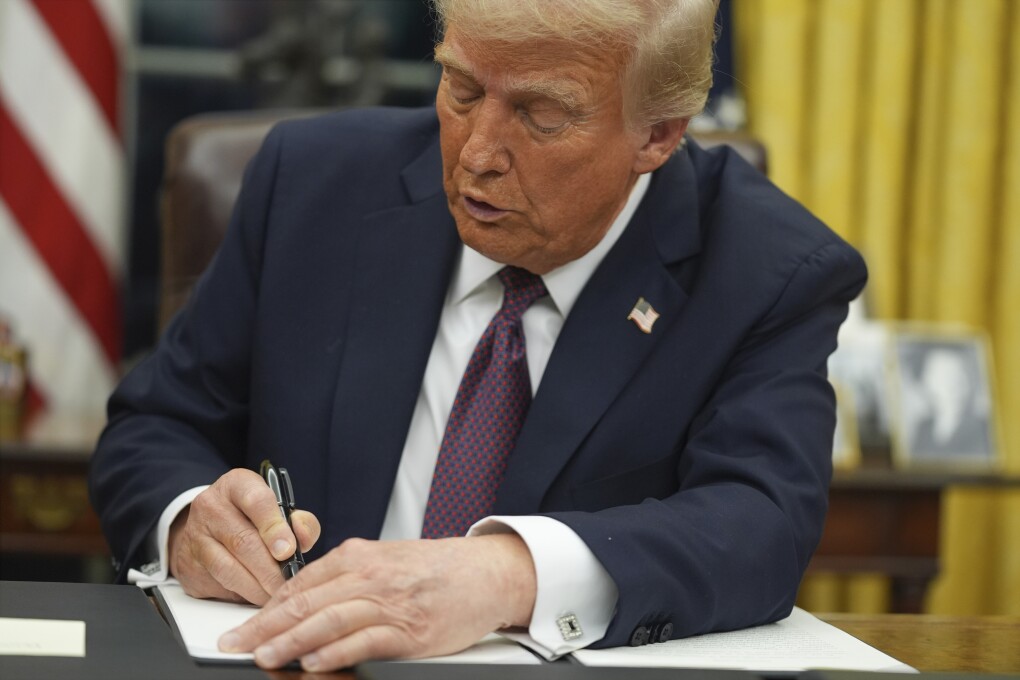
United States President Donald Trump has signed into law a one-year extension of the African Growth and Opportunity Act (AGOA), temporarily restoring duty-free access for eligible African exports to the American market and averting feared disruptions to trade and employment across the continent.
The extension applies retroactively from September 30, 2025, and will run until December 31, following months of uncertainty after the programme lapsed.
Temporary Relief After Months of Uncertainty
AGOA, first enacted in 2000, provides duty-free access to the US market for more than 1,800 products from qualifying sub-Saharan African countries. Over the past two decades, it has supported export-driven growth in sectors such as automotive manufacturing, apparel, agriculture, and minerals, underpinning hundreds of thousands of jobs.
Its expiry in September sparked alarm among African governments and exporters, who warned of factory shutdowns, cancelled export orders, and declining investor confidence—particularly in economies heavily reliant on US market access.
America First Signals Future Changes
According to Reuters, US Trade Representative Jamieson Greer said the Trump administration would now work with Congress to reshape AGOA in line with the president’s broader trade philosophy.
The goal is to update AGOA “to provide more market access for US businesses, farmers and ranchers, and to align with Trump’s America First trade policy,” Greer said.
The statement signals that while AGOA has been preserved for now, its future renewals may come with stricter economic and political conditions.
Political Compromise in Washington
The extension follows tense negotiations in Congress. While the US House of Representatives initially approved a three-year renewal, the Senate reduced it to a single year, a compromise the House ultimately accepted.
The shortened timeframe has deepened concerns among African governments about the programme’s long-term stability, particularly given Trump’s past criticism of Africa-focused trade preference schemes.
South Africa Watches Closely
The extension is especially significant for South Africa, AGOA’s largest beneficiary and Africa’s most industrialised economy. Automotive exports and agricultural products remain highly dependent on preferential access to the US market.
The decision comes amid strained diplomatic relations between Washington and Pretoria. Trump last year boycotted a G20 meeting hosted by South Africa and later indicated the country would not be invited to G20 meetings hosted by the US after it assumed the rotating presidency in December.
Despite the tension, Trade Minister Parks Tau welcomed the extension.
“It will provide certainty and predictability for African and American businesses that rely on the program,” Tau said.
AGOA’s Importance — and Fragility
For many African nations, the extension underscores both AGOA’s continued importance and its growing fragility. While the programme remains a cornerstone of US–Africa trade relations, the emphasis on America First priorities suggests future renewals may be less automatic and more conditional.
For exporters—particularly in countries viewed sceptically in Washington—the message is clear: AGOA remains vital, but it is no longer guaranteed.