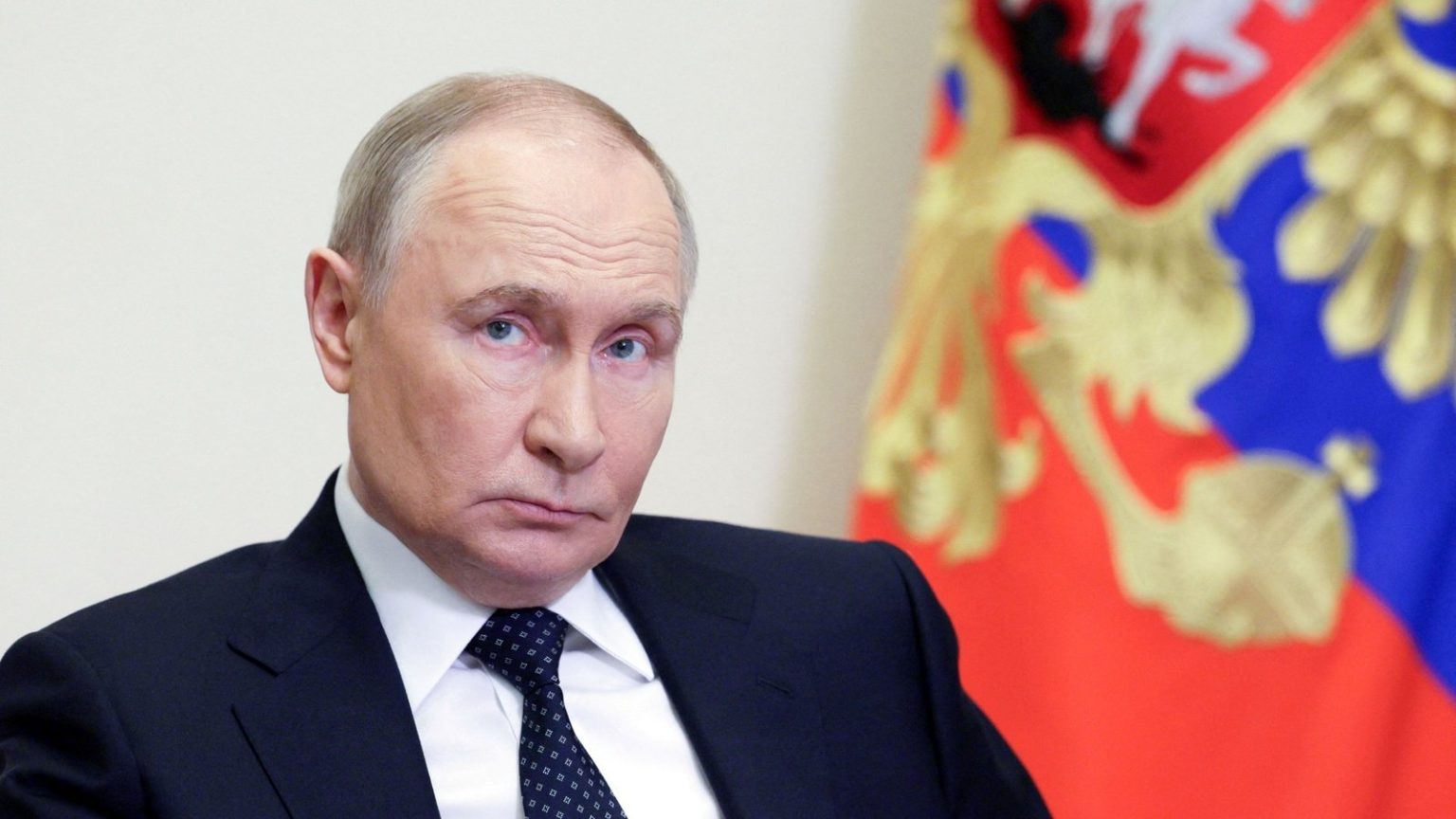
Donald Trump is facing the prospect of a serious diplomatic confrontation with Vladimir Putin after US forces seized a Russian-flagged oil tanker in the Atlantic Ocean, a move Moscow has warned could trigger a crisis in relations between the two powers.
The vessel, the Marinera, previously known as Bella-1, was intercepted as it travelled through waters between Iceland and Scotland on Wednesday. The UK later confirmed that British armed forces supported the US-led operation, with RAF surveillance aircraft and the Royal Fleet Auxiliary ship RFA Tideforce involved in the interception.
The tanker is linked to Venezuela and forms part of what Western officials describe as a “shadow fleet” used to move oil in breach of US and international sanctions. Although the ship was empty at the time of its seizure, US authorities say it had been pursued for weeks after allegedly evading a naval blockade imposed on Venezuela in December.
UK defence secretary John Healey said the operation was conducted in full compliance with international law and described the tanker as part of a “Russian-Iranian axis of sanctions evasion” that fuels conflict and instability from the Middle East to Ukraine. Addressing MPs, Healey argued that the seizure was legally justified, claiming the ship had initially been stateless and falsely flying the flag of Guyana before changing its name and attempting to adopt the Russian flag.
Russia has strongly rejected that interpretation. Its transport ministry said the Marinera had been granted a temporary permit to sail under the Russian flag on Christmas Eve and warned that international maritime law prohibits the use of force against vessels properly registered under another state’s jurisdiction.
The incident comes amid wider global tensions involving the US administration. Relations between Washington and Europe have already been strained by Trump’s repeated threats to take control of Greenland, a territory belonging to Nato member Denmark. These threats followed an extraordinary US military operation in which Venezuelan president Nicolas Maduro was seized and transported to New York to face charges including drug trafficking and “narco-terrorism”.
Following the tanker seizure, Trump appeared to criticise America’s Nato allies despite confirmed British involvement, posting on social media that the US would “always be there for Nato, even if they won’t be there for us”. The comments drew attention to growing friction within the alliance.
US European Command confirmed the Marinera was seized for violations of US sanctions, and it later emerged that another Venezuela-linked tanker, the Sophia, was captured during a pre-dawn raid in the Caribbean. US Southern Command said both vessels were either en route to Venezuela or had last docked there.
The White House said the crew of the Marinera could face prosecution, while US officials confirmed the ship has been handed over to law enforcement authorities. Ahead of the seizure, Kremlin adviser Andrei Fedorov warned that such an action could be interpreted as an attack on Russia, potentially leading to a serious deterioration in US-Russia relations.
Critics of Trump’s foreign policy have also raised broader concerns. Former Nato deputy secretary-general Rose Gottemoeller accused the US president of undermining the post-Second World War international order based on the UN Charter, warning that Europe could one day face a future without US nuclear deterrence.
Meanwhile, European leaders, including UK Prime Minister Sir Keir Starmer, have pushed back against Trump’s rhetoric on Greenland, publicly reaffirming their commitment to defending the island’s territorial integrity. Senior British military figures and former defence officials have urged the UK government to take a firmer stance against any attempt to annex the strategically important, mineral-rich territory.
As the seizure of the Marinera reverberates through diplomatic circles, the incident underscores the increasingly volatile state of global geopolitics, with sanctions enforcement, alliance unity and great-power rivalry all colliding on the high seas.