A Soweto man allegedly emptied his partially blind cousin’s bank account within hours, stealing a R421,000 Road Accident Fund (RAF) payout and leaving the disabled victim unable to afford basic medical care.
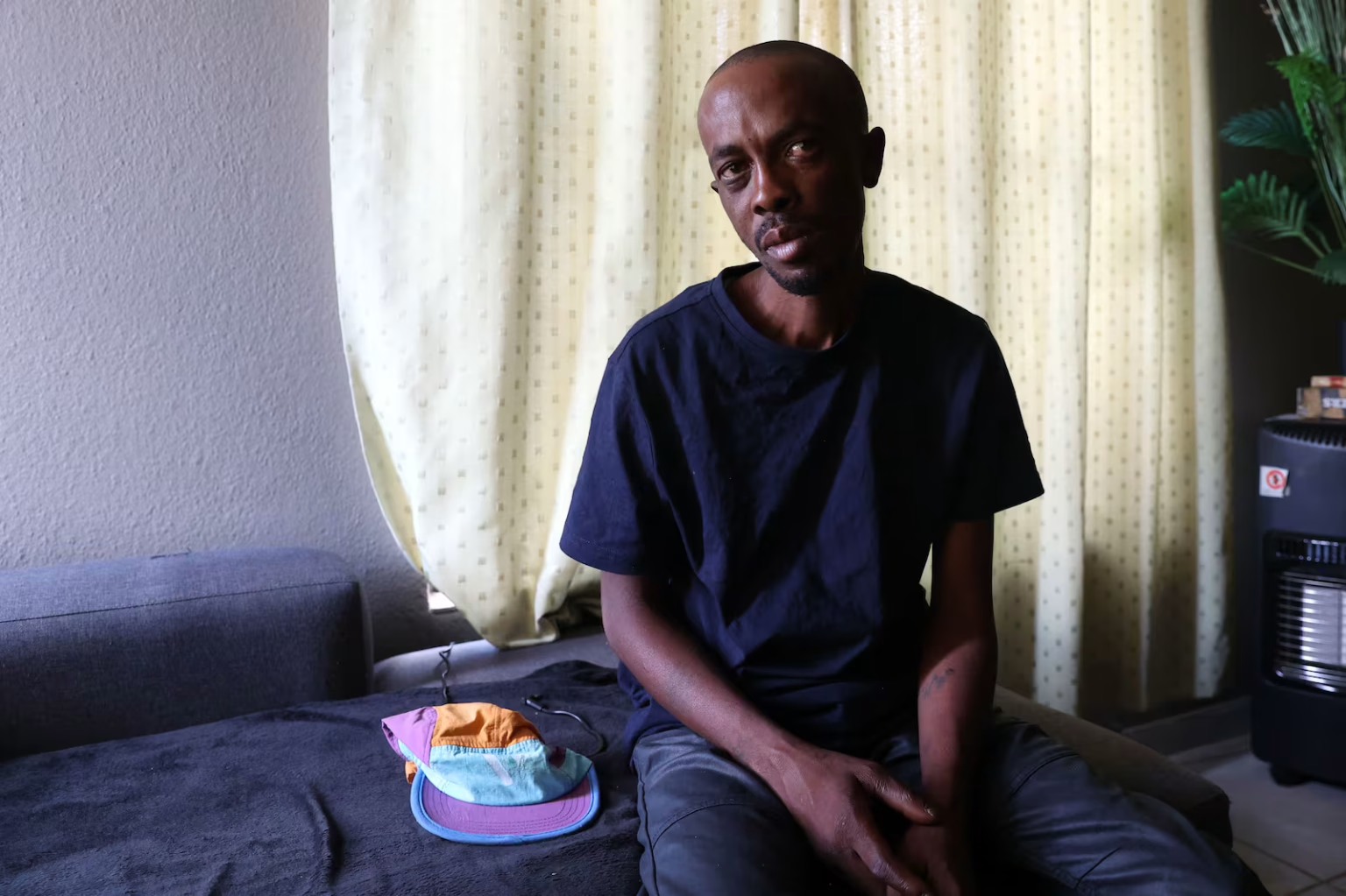
The victim, Thabo Khoza (39), who was injured in a car accident seven years ago, says the money was transferred out of his account just a day after it was paid in. Khoza, who lost hearing, broke a leg, and now suffers from chronic headaches following the accident, says he is struggling to make ends meet and cannot afford medical consultations.
Khoza was hit by a car in 2019 while crossing a street in Soweto to sell food to schoolchildren. His lawyer deposited the RAF compensation into his Capitec Bank account on March 25 last year.
According to Khoza, the following day the funds were transferred out of his account in three transactions — R20,000, R350,000 and R25,000 — using the bank’s mobile application.

“I wasn’t even aware that the RAF had paid,” Khoza said. “I only noticed the large amounts in my account three days later, but by then almost all the money was gone.”
With the help of his brother, Welcome Ndou, Khoza later discovered that the money had allegedly been transferred into the personal account of his cousin, Samukelo. Capitec Bank reportedly confirmed this after the matter was reported.
Khoza said he had trusted his cousin, who regularly assisted him due to his partial blindness.
“He helped me get around, go to the ATM and even helped me install the banking app on my phone,” Khoza said. “Sometimes I would say my PIN code out loud at the ATM. I never thought he would steal from me.”
When confronted, Khoza said his cousin denied the theft and claimed he had come into money through online sports betting.
Within a month of the payout, the unemployed relative allegedly bought a second-hand BMW, hosted a birthday party for his child, and extended his mother’s house.
Khoza also claims the bank failed to adequately suspend his account after the incident, placing his social grant payments at further risk.
Ndou said Samukelo managed to bypass the bank app’s facial recognition security.
“He spent all the money, and now I have to take care of my brother while we can’t even afford his medical bills,” Ndou said.
Capitec Bank spokesperson Inganathi Mnyasane said the transactions were conducted using valid access credentials linked to Khoza’s account.
“The beneficiary to whom the funds were paid was added and authenticated using biometric verification through the client’s selfie,” Mnyasane said. “An affidavit provided by the client confirms that a close family member received the funds.”
She added that Capitec’s investigation found no evidence of system failure or security breaches.
“The transactions could not have been completed without access to the client’s confidential security details and successful biometric authentication,” she said. “The matter was therefore classified as a civil dispute between the client and the family member, not bank-related fraud.”
Police spokesperson Captain Tintswalo Sibeko confirmed that a case of theft was opened against Samukelo (37). He appeared in court in April and again in September.