Canada and the United States once shared a bilateral relationship widely regarded as one of the strongest in the world. Their political, economic, and security interests have long been deeply intertwined. However, the return of US President Donald Trump has forced Ottawa to reassess that relationship and seek alternative allies and trading partners.
In this shifting geopolitical landscape, the United Kingdom appears to be one of the biggest potential beneficiaries.
Trump began targeting Canada even before his return to the White House. During his 2024 election campaign, he repeatedly floated the idea of imposing sweeping tariffs, not only on Canada but on global trading partners more broadly. While many of these threats were initially dismissed as rhetoric, Canada became the first country to face tangible action.
In February 2025, an initial tariff attempt was launched, followed by a more concrete round of tariffs imposed in March. These moves marked a sharp escalation in trade tensions between Washington and Ottawa.
Trump’s rhetoric soon went beyond trade. After returning to office, he openly suggested that Canada should become the 51st state of the United States, raising alarm among Canadian political leaders and the public alike. However, Canada’s response to US pressure had already begun taking shape before these sovereignty comments emerged.
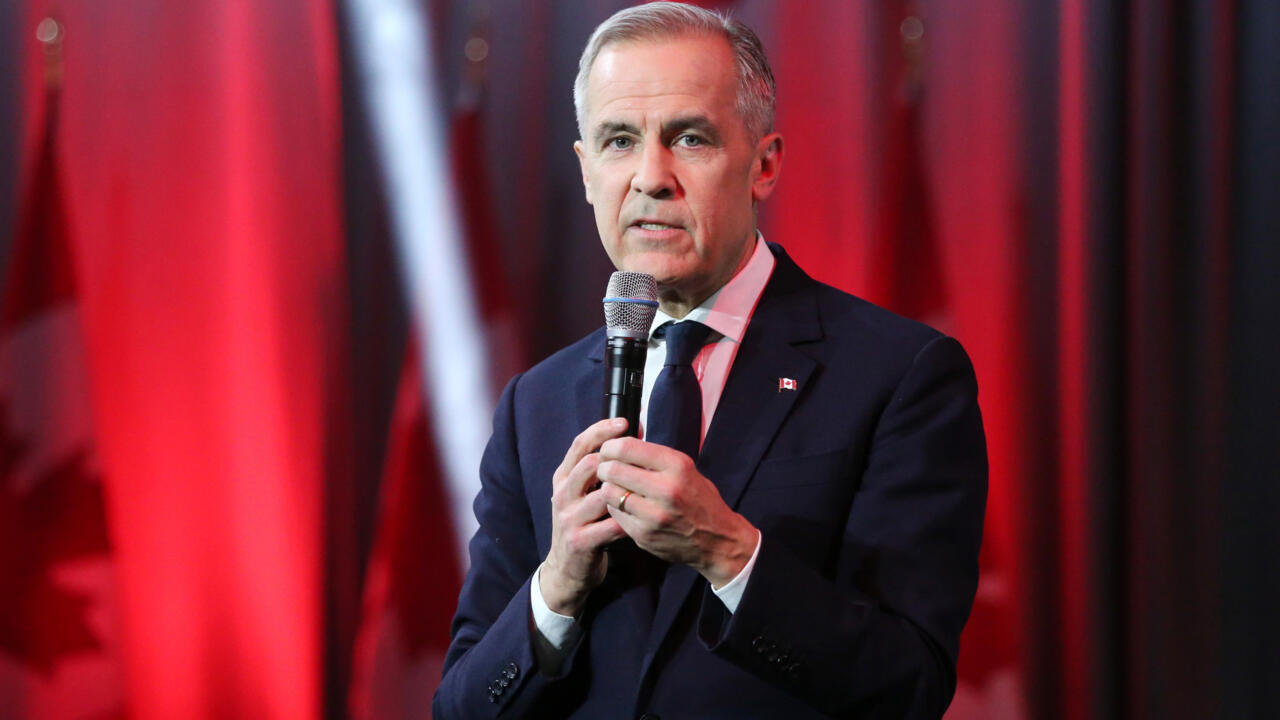
In late March 2025, Canada’s new Liberal Prime Minister, Mark Carney, publicly declared that the country’s traditional relationship with the United States was effectively over. Speaking after a cabinet meeting on US-Canada relations, Carney said Canada could no longer rely on deep economic integration and close security cooperation with Washington.
“Over the coming weeks, months, and years, we must fundamentally reimagine our economy,” Carney said, according to Global News. “The old relationship we had with the United States, based on deepening integration of our economies and tight security and military cooperation, is over.”
After securing a mandate in the April 2025 federal election, Carney moved to turn that rhetoric into policy. Central to his agenda was the diversification of Canada’s export markets, reducing reliance on the US. One of the most strategically important alternatives identified was the United Kingdom.
As Washington pulled back from traditional alliances, Ottawa and London began laying the groundwork for a new strategic partnership set to take shape in 2026. According to Canada’s High Commissioner to the UK, Ralph Goodale, Trump’s tariffs created renewed urgency on both sides to revive and strengthen UK-Canada relations.
Speaking to Politico, Goodale said centre-left governments in Ottawa and London saw an opportunity to deepen cooperation, despite the fact that negotiations for a free trade agreement collapsed in 2024.
That collapse stemmed largely from disputes over food standards, particularly Canada’s push to include hormone-fed beef in any trade deal, which the UK’s Conservative government at the time rejected. Trump’s trade policies, however, have brought both sides back to the negotiating table.
Goodale revealed that Carney and UK Prime Minister Keir Starmer have tasked officials with exploring a wide range of partnerships, spanning trade, critical minerals, defence, and artificial intelligence.
“These relationships are incredibly valuable in the kind of dangerous and turbulent world in which we live,” Goodale said, as he prepares to conclude his five-year term in London.
Officials from Downing Street and Canada’s Prime Minister’s Office have been reviewing the bilateral relationship since June 2025, ahead of the G7 Summit. According to Politico, the review is expected to be finalised before the end of 2025.
“The two prime ministers are very ambitious about what they want to achieve together,” Goodale said, adding that both leaders are pushing officials to think beyond incremental gains and pursue more ambitious outcomes.
Beyond trade, Canada and the UK are also strengthening cooperation on critical minerals, a sector seen as essential to future economic and security resilience. Both countries want any broader agreement to include binding commitments on minerals, though Goodale cautioned that discussions need to move from potential frameworks to concrete deals.
London’s financial sector is expected to play a key role in funding Canadian mining and mineral development projects. Canada and the UK already operate a supply chain mapping programme that aligns British demand with Canadian suppliers.
“We want to then target that down to the areas where there’s a common interest and get investment into those projects going,” said Oliver Richards, Head of International Critical Minerals and Mining at the UK Department for Business and Trade, speaking at the Critical Mineral Association UK’s annual conference in December 2025.
Defence and security cooperation also feature prominently in the renewed partnership. In June 2025, Carney and Starmer agreed to enhance collaboration not only in military operations, but also in defence innovation and industrial cooperation.
Canada has expressed interest in the UK-led Global Combat Air Programme, a sixth-generation fighter jet initiative being developed with Italy and Japan, and is exploring ways to contribute. The two countries are also working more closely on intelligence sharing and broader security initiatives, according to a joint statement issued earlier this year.
How far and how fast the UK-Canada relationship will deepen in 2026 remains uncertain. However, if Trump continues to apply political and economic pressure on both countries, Ottawa and London appear increasingly aligned in their efforts to strengthen mutual defence ties and open new markets for trade, signalling a notable shift in the transatlantic balance.