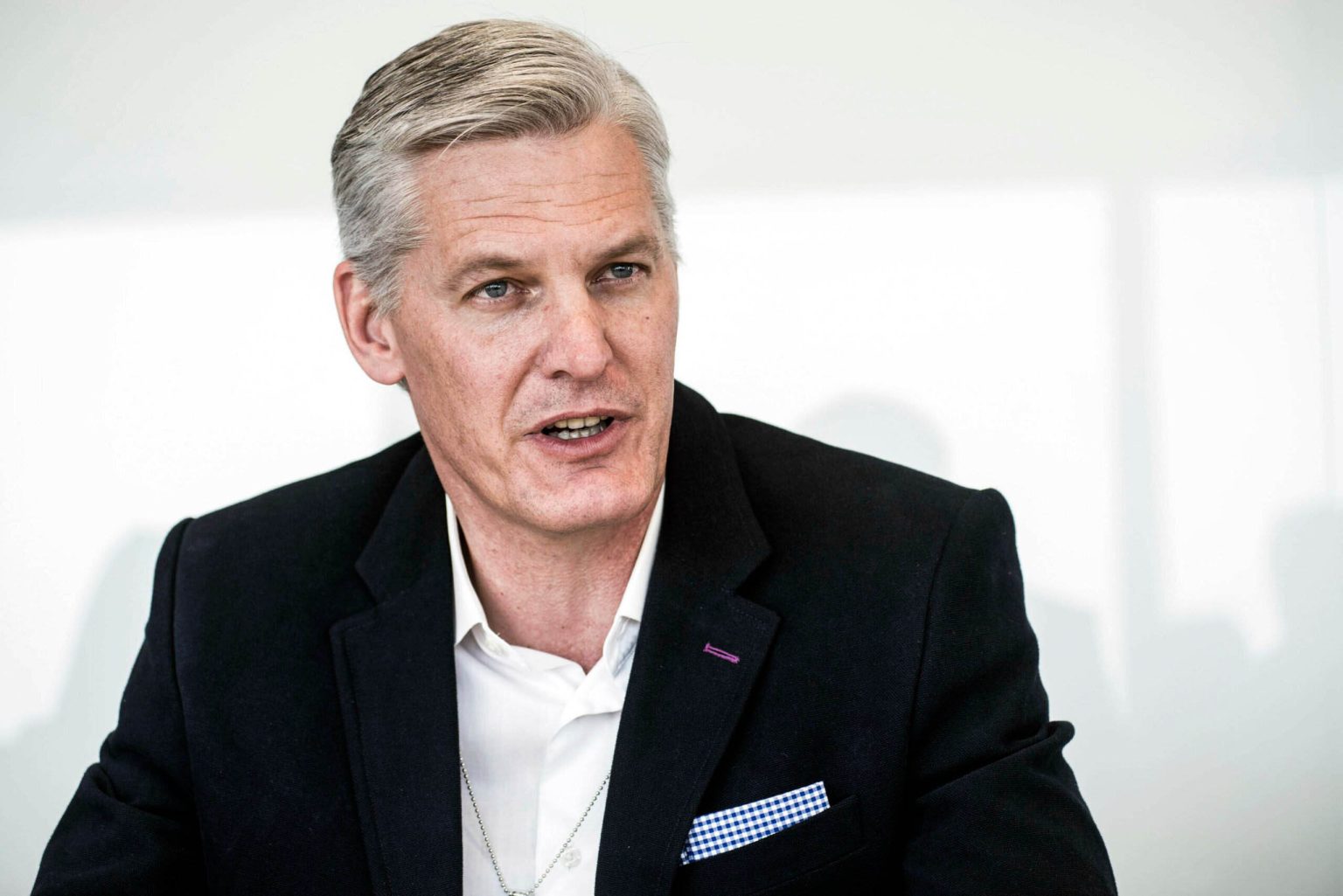
Former Eskom chief executive André de Ruyter has warned that South Africa is heading for significant economic trouble unless it urgently reforms its domestic policies and recalibrates its international alliances.
Speaking to economist Dawie Roodt on the television programme Ontbytsake, De Ruyter said the country is systematically deterring foreign investment — the very capital it needs to grow the economy and create jobs.
“If you look at what we need to get the economy growing and create jobs, it’s investment, and that money has to primarily come from outside South Africa,” De Ruyter said.
Investors Losing Patience
De Ruyter argued that government policy often places unnecessary obstacles in the way of foreign direct investment, making South Africa less competitive than its peers.
“Foreign investors are not very patient. They have a lot of options, so they simply take their money and invest it elsewhere,” he said.
He added that international investors typically have only minutes to assess a country’s investment case. If that pitch is unconvincing, South Africa is quickly ruled out in favour of other destinations.
From Eskom to the Global Stage
De Ruyter left South Africa in February 2023 after a widely publicised interview in which he alleged that senior ANC figures were complicit in corruption at Eskom. He later spent nearly two years in the United States, serving as a senior fellow at Yale University’s Jackson School of Global Affairs between August 2023 and July 2024.
That experience, he said, gave him insight into how South Africa is viewed in Washington.
Under Democratic administrations led by Bill Clinton, Barack Obama and Joe Biden, De Ruyter noted that the United States historically showed strong loyalty to the ANC-led government. However, he said this dynamic has changed sharply.
Foreign Policy Becoming a Bipartisan Flashpoint
De Ruyter warned that South Africa’s perceived alignment with China, Russia and Iran has become a bipartisan concern in the United States.
“There is tremendous noise in the United States about this issue,” he said. “In Washington, the Republicans and Democrats say South Africa’s position is unacceptable.”
He described Pretoria’s foreign policy as repeatedly undermining itself, saying the government was “scoring own goals all the time”.
Race-Based Policies Under Fire
Another major concern, according to De Ruyter, is South Africa’s race-based economic framework, particularly Black Economic Empowerment (BEE) and affirmative action.
He argued that these policies discourage foreign investors, who face fewer constraints in other markets.
“You have five to ten minutes to state your case to foreign investors. If that story is not convincing, they’ll simply say, ‘Thank you very much, I’m choosing another country,’” he said.
De Ruyter has repeatedly called for BEE to be replaced with a means-tested empowerment model that targets the poorest South Africans, regardless of race.
“The vast majority of beneficiaries will be black anyway, but without racialising the policy,” he said.
Warning of Possible Collapse
At the BizNews Investment Conference in September, De Ruyter delivered an even starker message, warning that South Africa could face collapse without decisive leadership.
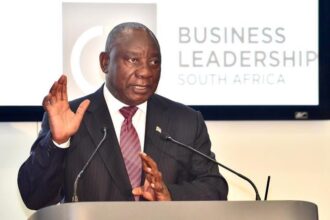
He said President Cyril Ramaphosa must act urgently to restore confidence, prioritise growth and reverse the country’s economic decline.
Among his recommendations were a moratorium on equity requirements for new investments, strict fiscal discipline through zero-based budgeting, and safeguarding the independence of the Reserve Bank.
Call for Institutional Reform
De Ruyter also urged the government to re-establish a specialised anti-corruption unit similar to the Scorpions, which were disbanded in 2009.
“Cut the size of the cabinet, deregulate and stop state-owned enterprises from crowding out the private sector with government-guaranteed funds,” he said, adding that “state entrepreneurship has reached the end of the road”.
On land reform, he warned that uncertainty around property rights further undermines investor confidence.
“Don’t praise Zimbabwean land grabs as ambitious reforms, denounce ‘Kill the Boer’, and commit to protecting property rights,” he said.
‘Grow, Grow, Grow’
Despite his warnings, De Ruyter said he remains cautiously optimistic about South Africa’s future, provided bold action is taken.
“Grow, grow, grow, because that solves almost all of our problems,” he said.
He argued that more regulation, racial quotas and ideological interventions would only accelerate decline.
“The world has grown tired of South Africa’s empty promises,” De Ruyter said, adding that repeated assurances at global forums such as Davos are losing credibility.
He described President Ramaphosa’s expected 2026 State of the Nation Address as a final opportunity to change course.
“The country cannot afford more prevarication, procrastination and commissions,” he said. “We now need to deliver; we now need to perform.”