In a dramatic escalation of rural resistance, hundreds of farmers in Victoria’s north-west have confronted government-backed survey teams — determined to block the development of a large-scale transmission project set to shape the state’s clean energy future.
The centre of the storm is VicGrid (and formerly Transmission Company Victoria, TCV), which has been tasked with preparing the 240-kilometre VNI West transmission line. The line aims to link Victoria’s electricity grid with that of New South Wales, enabling greater use of renewable energy as coal-fired plants shut down.
Under recently passed legislation, authorised officers may forcibly enter private farmland — with police support — to carry out ecological and site surveys for VNI West. Farmers who obstruct access risk fines of up to A$6,000 (roughly R70,000).
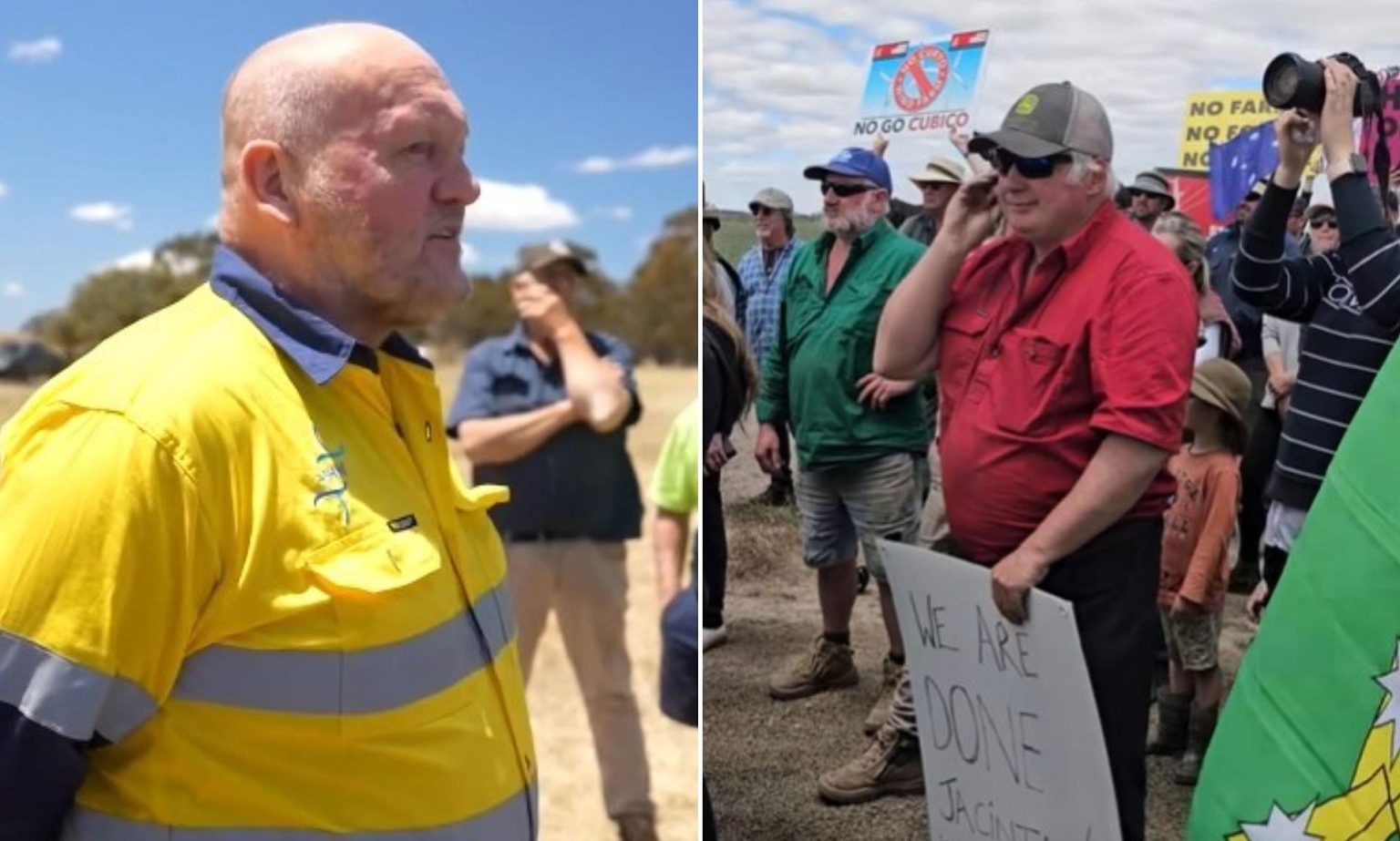
That law appears to have emboldened some survey attempts — but also triggered fierce pushback. On Monday, 17 November, more than 50 landowners blocked VicGrid from entering two properties around Wycheproof and Stawell. Eventually, survey crews retreated without gaining access.
Among the protest leaders is sheep and grain farmer Ben Duxson, who denied entry to his property in Kanya. He stood with dozens of supporters — some carrying signs that read “Stop Labor’s powers” and “Stop violating our land” — vowing to keep gates locked. “I think we can double our numbers next time — are they going to fine us all?” he told reporters.
Local sentiment runs deep. Many farmers say the project threatens farmland value, disrupts operations, increases fire and biosecurity risks, and undermines their autonomy.
At the same time, VicGrid maintains that VNI West is essential to ensure the lights stay on across Victoria — especially as coal-fired generation winds down. The company insists that voluntary access remains its preference, and that surveys are only intended to minimize environmental and agricultural impact.
Even so, the project has already seen major delays and cost blowouts. Estimates for building VNI West have risen from roughly A$3.9 billion to as high as A$7.6 billion — with some projections reaching A$11.4 billion. Completion has been pushed back to 2030.
Local government bodies have also pushed back. The Northern Grampians Shire Council passed a motion in mid-2025 calling on the state government to seek alternate solutions, citing concerns over farmland loss, food security, and community wellbeing.
As the dispute rages, the broader question emerges: can Victoria simultaneously transition to renewable energy and respect the rights, livelihoods and voices of rural landowners?
For now, the paddocks remain locked, gates closed — and tensions rising.